Complete breed guide
Manchester Terrier OWNERSHIP GUIDE
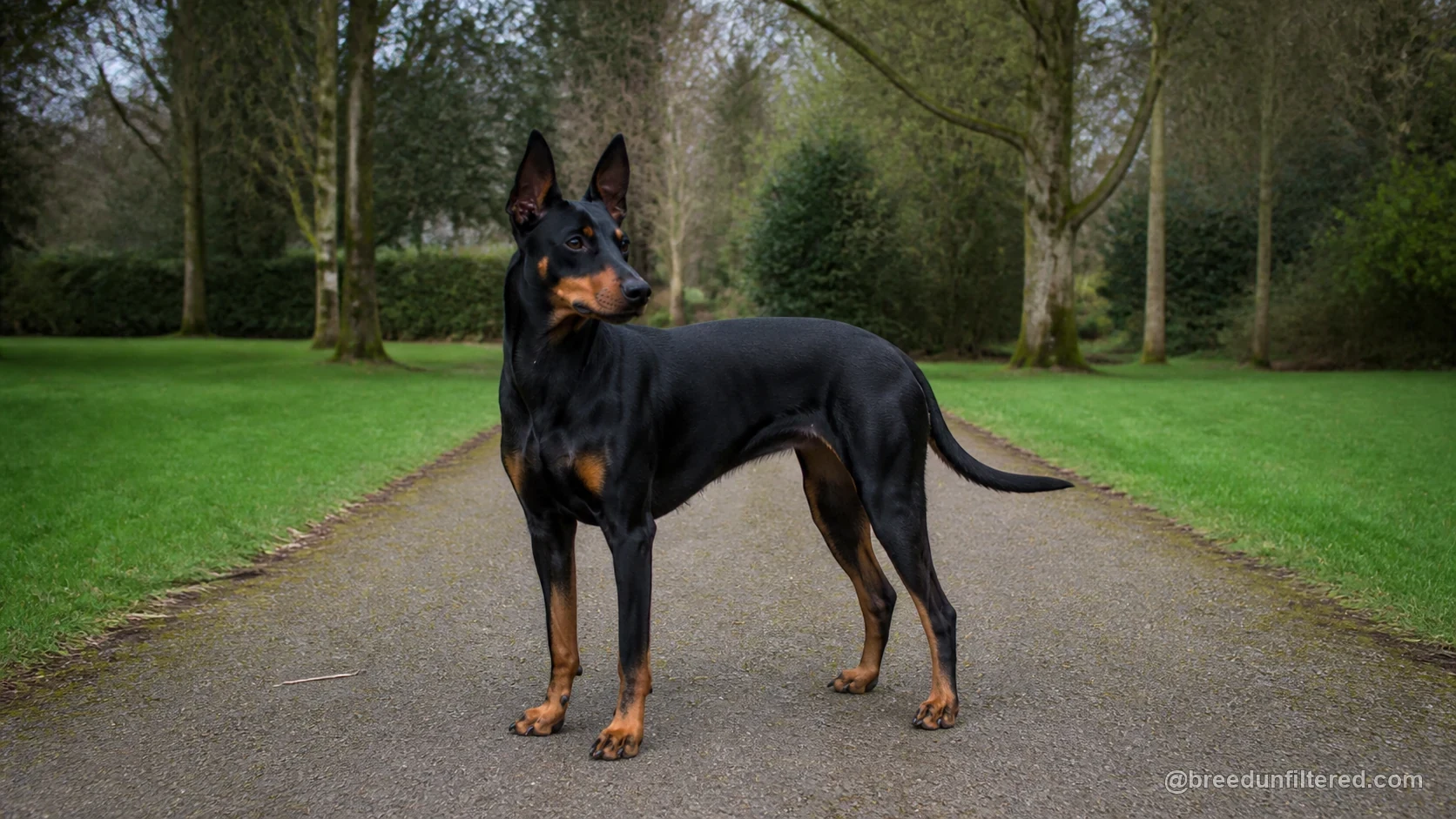
The Manchester Terrier is a sleek, athletic dog with roots in 19th-century England, where it was bred to hunt rats and compete in vermin-catching contests. Its name reflects its origins in the city of Manchester, and it is recognized by the Fédération Cynologique Internationale (FCI) under standard number 71. This breed combines the tenacity of a terrier with the elegance of a companion, making it a distinctive choice for those who appreciate a dog with both history and versatility.
Prospective owners should understand that the Manchester Terrier is not a one-size-fits-all pet. It is a lively, intelligent dog that thrives on human interaction and mental challenges. While it can adapt to various living situations, it requires consistent training, adequate exercise, and a clear understanding of its terrier instincts. This guide aims to provide a balanced overview of the breed's characteristics, care requirements, and potential challenges, helping you decide if this breed aligns with your lifestyle.
Origin and Purpose
The Manchester Terrier originated in England during the Industrial Revolution, when rat-baiting and vermin control were common urban pastimes. Breeders crossed the now-extinct Black and Tan Terrier with the Whippet to create a fast, agile dog capable of chasing and dispatching rats. The result was a sleek, muscular dog with a keen prey drive and a compact size, ideal for navigating narrow alleys and burrows.
Over time, the breed's role expanded beyond vermin hunting to include companionship and even show competition. The FCI recognized the Manchester Terrier as a distinct breed, and today it is classified under Group 3 (Terriers). Despite its working heritage, the modern Manchester Terrier is primarily a companion, but it retains the instincts and energy of its ancestors, which prospective owners should be prepared to manage.
Temperament and Variation
Manchester Terriers are known for their alert, lively, and sometimes reserved demeanor. They are typically devoted to their families and can be wary of strangers, making them good watchdogs. However, individual temperament varies widely based on genetics, socialization, and training. Some may be more outgoing, while others are more cautious. It is essential to meet the parents or observe the puppy's behavior to gauge its personality.
There are two size varieties within the breed: standard and toy. The standard Manchester Terrier stands about 15-16 inches at the shoulder, while the toy variety is under 12 inches. Both share similar temperaments, but the toy variety may be more fragile and better suited to adult-only homes. Regardless of size, Manchester Terriers are intelligent and can be stubborn, so early and consistent training is crucial.
Exercise and Mental Work
Manchester Terriers are energetic dogs that require regular physical activity to stay healthy and content. Daily walks, play sessions, and opportunities to run in a securely fenced area are typically recommended. However, the exact amount of exercise depends on the individual dog's age, health, and energy level. As a general guideline, a couple of moderate walks plus active playtime can meet their needs, but they are not couch potatoes.
Mental stimulation is equally important for this intelligent breed. Puzzle toys, obedience training, and games that engage their problem-solving skills can help prevent boredom and destructive behaviors. Activities like lure coursing or barn hunt can tap into their natural instincts, but these are optional. Without adequate mental and physical outlets, Manchester Terriers may develop undesirable habits such as excessive barking or digging.
Training and Socialisation
Training a Manchester Terrier requires patience, consistency, and positive reinforcement methods. They respond well to reward-based training, but they can be independent and may test boundaries. Early obedience training is essential to establish good manners and a strong bond. Harsh methods are counterproductive and can damage trust. Keep sessions short and engaging to hold their attention.
Socialisation is critical from a young age. Expose your Manchester Terrier to a variety of people, environments, and other animals to help it become a well-adjusted adult. While they can get along with other dogs if properly introduced, their terrier instincts may lead to chasing small animals. Supervised interactions and positive experiences are key to fostering sociability and reducing potential reactivity.
Family and Pets
Manchester Terriers can make affectionate companions for families, but they may not be ideal for households with very young children. Their small size and energetic nature mean they can be easily injured by rough handling, and they may not tolerate teasing. Older, respectful children can form strong bonds with them. As with any dog, supervision and teaching children how to interact safely are essential.
Regarding other pets, Manchester Terriers have a high prey drive, which can make them a risk to small animals like rodents, birds, and even cats if not raised with them. They may coexist peacefully with other dogs, especially if socialised early, but same-sex aggression can occur. Prospective owners should assess their household dynamics and be prepared to manage these instincts through training and management.
Grooming and Health
The Manchester Terrier has a short, smooth coat that is relatively low-maintenance. Weekly brushing with a soft bristle brush or rubber mitt can remove loose hair and keep the coat shiny. They shed moderately, and more frequent brushing during shedding seasons can help manage loose fur. Bathing is only needed occasionally, unless the dog gets dirty. Regular nail trimming, ear cleaning, and dental care are also part of routine grooming.
As a breed, Manchester Terriers are generally healthy, but they may be prone to certain conditions such as von Willebrand's disease, patellar luxation, and eye issues like glaucoma. Responsible breeders screen for these conditions. It is important to obtain a puppy from a breeder who performs health tests and provides documentation. Regular veterinary check-ups and a balanced diet contribute to overall well-being, but no breed is immune to health problems.
Costs and Responsibility
Owning a Manchester Terrier involves financial and time commitments. Initial costs include the purchase price from a reputable breeder, which can vary widely, plus supplies like a crate, bedding, food, and veterinary care. Ongoing expenses include high-quality dog food, routine vet visits, vaccinations, parasite prevention, and potential emergency care. Pet insurance is an option to consider to mitigate unexpected costs.
Beyond finances, responsible ownership means dedicating time to training, exercise, and companionship. Manchester Terriers are social animals and should not be left alone for long periods regularly. They thrive in homes where they are included in daily activities. Prospective owners should evaluate their lifestyle, living situation, and ability to meet the breed's needs before committing. Adoption from a rescue is also a noble option, as many breeds end up in shelters.
Clear answers
FREQUENTLY ASKED QUESTIONS
Are Manchester Terriers good with children?
Manchester Terriers can be good with children, especially older, respectful ones who understand how to interact with dogs. Their small size and energetic nature mean they can be easily injured by rough handling, so supervision is essential. Early socialisation and training help them become tolerant and well-mannered around kids, but they may not be the best fit for very young children.
How much exercise does a Manchester Terrier need?
Manchester Terriers are active dogs that need regular exercise to stay healthy and happy. A typical routine might include a couple of moderate walks per day plus active playtime in a fenced area. The exact amount varies by age and health, but they are not couch potatoes. Mental stimulation is equally important to prevent boredom and destructive behaviors.
Do Manchester Terriers get along with other pets?
Manchester Terriers have a strong prey drive, which can make them a risk to small animals like rodents, birds, and cats if not raised with them. They may get along with other dogs, especially if socialised early, but same-sex aggression can occur. Careful introductions and management are necessary to ensure harmony in a multi-pet household.
Are Manchester Terriers easy to train?
Manchester Terriers are intelligent and can be trained with positive reinforcement methods, but they can also be independent and stubborn. Consistency, patience, and short, engaging sessions work best. Harsh training methods are counterproductive. Early socialisation and obedience training are essential to shape a well-behaved adult dog.
What health issues are common in Manchester Terriers?
Manchester Terriers are generally healthy, but they may be prone to certain conditions like von Willebrand's disease, patellar luxation, and eye problems such as glaucoma. Responsible breeders screen for these issues. Regular veterinary check-ups and a balanced diet help maintain health, but no breed is immune to genetic or acquired conditions.
Sources and further reading
Scores describe typical breed tendencies from 1 to 10. They are not a quality ranking or a prediction for an individual dog.
Size and presence4/10
CompactVery large
Physical strength6/10
LightExceptional
Energy level8/10
LowRelentless
Exercise demand8/10
ModestVery demanding
Mental work needed8/10
ModerateDaily job
Trainability6/10
ChallengingExceptional
Everyday manageability3/10
SpecialistStraightforward
First-time owner fit4/10
Poor fitGood fit
Family-life fit6/10
LimitedExcellent
Dog sociability3/10
SelectiveVery social
Prey drive10/10
LowVery high
Guarding tendency4/10
MinimalSerious
Independence7/10
Handler-focusedSelf-directed
Grooming demand4/10
LightHeavy
Apartment fit5/10
Poor fitGood fit