Complete breed guide
Macedonian Shepherd Dog Karaman OWNERSHIP GUIDE
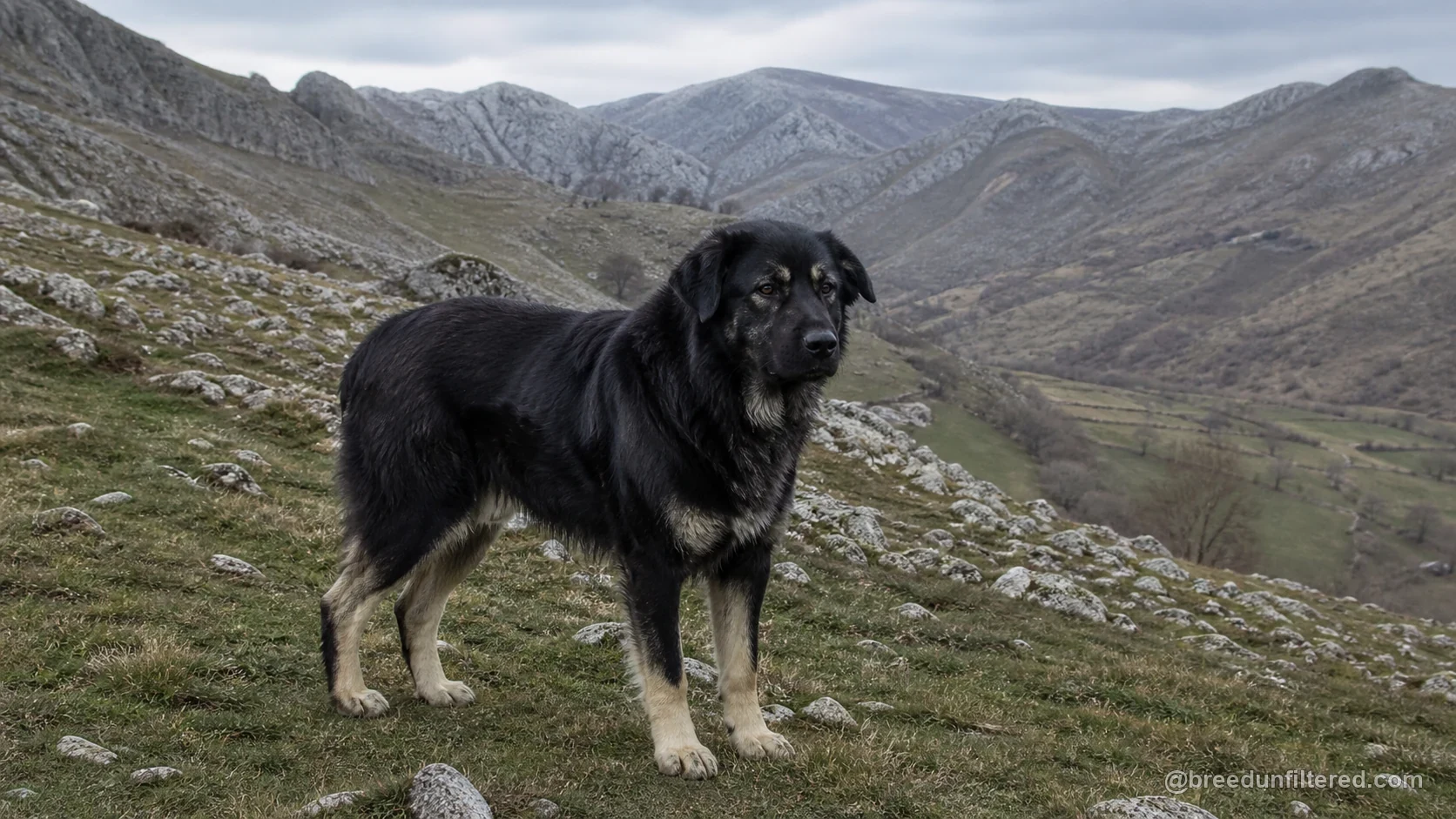
The Macedonian Shepherd Dog Karaman, also known simply as the Karaman, is a large and powerful livestock guardian breed from the mountainous regions of North Macedonia. Recognized provisionally by the Fédération Cynologique Internationale (FCI) under standard number 378, this breed has been shaped for centuries to protect flocks from predators such as wolves and bears. Its name reflects its dual heritage: 'Macedonian' ties it to its geographic origin, while 'Karaman' is a traditional Turkish word for a dark-colored sheepdog, hinting at the breed's historical connections across the Balkans and Anatolia.
For prospective owners, the Karaman is not a typical companion dog. It is a working guardian with a calm, watchful demeanor, a strong protective instinct, and a deep bond with its family and territory. While it can be a loyal and gentle presence in the right home, it requires experienced handling, ample space, and a clear understanding of its guarding nature. This article provides an evidence-conscious overview of the breed's origin, temperament, care needs, and the responsibilities involved in owning a Karaman.
Origin and Purpose
The Karaman is a traditional livestock guardian dog from the Balkan region, particularly associated with North Macedonia. Its development is closely tied to the transhumant shepherding practices of the area, where dogs accompanied flocks across vast, rugged terrains. The breed's ancestors likely include ancient molosser-type dogs and other regional shepherd breeds, and its name 'Karaman' is believed to derive from a Turkish word for a dark-colored sheepdog, reflecting historical Ottoman influence in the region.
The breed's primary purpose has always been to protect livestock from predators, including wolves, bears, and thieves. This role has shaped its physical and behavioral traits: a large, sturdy frame, a thick double coat for harsh weather, and a vigilant, independent temperament. The FCI granted provisional recognition to the Macedonian Shepherd Dog Karaman in 2023, acknowledging its distinct identity and cultural significance. Today, while still used as a working dog, it is also gaining attention as a guardian of property and family, though its suitability as a pet depends heavily on the owner's experience and environment.
Temperament and Variation
The Karaman is known for its calm, steady, and watchful temperament. As a livestock guardian, it is not typically aggressive without cause but is highly alert and protective of its charges, which may include family members and property. It tends to be reserved with strangers and may exhibit a strong territorial instinct. Individual variation exists: some Karamans may be more sociable, while others are more aloof, depending on genetics, socialization, and environment.
This breed is not a high-energy dog in the way a retriever might be; instead, it has a moderate energy level and is often content to lie quietly while observing its surroundings. However, it is always ready to act if it perceives a threat. The Karaman is intelligent and independent, traits that can make training a challenge for novice owners. It forms strong bonds with its family and can be gentle and affectionate with those it trusts, but it is not a dog that demands constant attention. Understanding these nuances is crucial for anyone considering the breed.
Exercise and Mental Work
The Karaman's exercise needs are moderate compared to many working breeds, but they are essential for its physical and mental well-being. A large, securely fenced yard is ideal, as the breed benefits from space to patrol and survey its territory. Daily walks or supervised free time are important, but the Karaman is not a jogging companion or a dog that requires hours of vigorous activity. Its historical role as a guardian means it is more inclined to conserve energy and remain vigilant rather than engage in sustained play.
Mental stimulation is equally important. The Karaman is a problem-solver by nature, and without adequate mental challenges, it may become bored and develop undesirable behaviors such as excessive barking or digging. Activities that engage its guarding instincts, such as scent work or obedience exercises that reinforce its role, can be beneficial. However, it is not a breed that excels in high-intensity sports like agility; its strengths lie in tasks that require patience, observation, and decision-making. Prospective owners should be prepared to provide both physical outlets and mental enrichment tailored to the breed's guardian mindset.
Training and Socialisation
Training a Karaman requires patience, consistency, and a calm, confident approach. This breed is intelligent but independent, and it may question commands if it does not see their purpose. Positive reinforcement methods, such as treats and praise, tend to work best, while harsh or forceful techniques can damage trust and exacerbate stubbornness. Early training should focus on basic obedience, impulse control, and recall, though recall may never be reliable off-leash due to the breed's guarding instincts.
Socialisation is critical from an early age. Exposing the Karaman to a wide range of people, animals, and environments helps it learn to discriminate between genuine threats and normal occurrences. Without proper socialisation, it may become overly suspicious or reactive. However, even with excellent socialisation, the Karaman is likely to remain aloof with strangers and may not welcome unfamiliar dogs into its territory. Owners must be prepared to manage these tendencies through management and training, and they should seek professional guidance if they are new to livestock guardian breeds.
Family and Other Pets
The Karaman can be a devoted and protective family member, especially when raised with children. It is generally patient and tolerant, but due to its large size and guarding nature, supervision is essential when it interacts with young children. The breed may see children as part of its flock and will protect them, but it may also be wary of unfamiliar children. As with any large dog, teaching children how to behave around the dog is crucial to prevent accidents.
Regarding other pets, the Karaman's compatibility varies. It has been bred to live with livestock, so it may coexist peacefully with other dogs and farm animals if raised with them. However, its prey drive can be significant, and it may not be safe around small pets such as cats, rabbits, or rodents, especially if they are not part of its original household. The breed's territorial nature also means it may not tolerate other dogs entering its space. Prospective owners should assess their household composition and be realistic about the Karaman's ability to adapt to a multi-pet environment.
Grooming and Health
The Karaman has a thick, double coat that sheds seasonally, with heavier shedding during spring and autumn. Regular brushing, at least two to three times a week, is necessary to manage loose hair and prevent matting, especially in the dense undercoat. During peak shedding periods, daily brushing may be required. Bathing should be infrequent to preserve natural oils, and routine care such as nail trimming, ear cleaning, and dental hygiene should not be overlooked.
As a large breed, the Karaman may be prone to certain health conditions, including hip dysplasia, elbow dysplasia, and bloat (gastric dilatation-volvulus). However, the breed is generally robust and has not been extensively studied in terms of health prevalence. Responsible breeders should screen their breeding stock for common orthopedic issues. Prospective owners should ask about health clearances and be prepared for the potential costs of veterinary care. A nutritious diet, regular exercise, and routine check-ups are essential to support the dog's overall health and longevity.
Costs and Responsibility
Owning a Karaman is a significant financial and time commitment. Initial costs include purchasing a puppy from a reputable breeder, which can be substantial, as well as supplies such as a crate, bedding, and fencing. Ongoing expenses include high-quality food, routine veterinary care, vaccinations, and parasite prevention. Emergency medical costs can be considerable, and pet insurance is worth considering. Additionally, the breed's size means that larger quantities of food and larger equipment are needed, increasing overall costs.
Beyond finances, the Karaman demands a responsible owner who understands its guarding instincts and is willing to invest time in training, socialisation, and daily care. This breed is not suitable for apartment living or for owners who are away from home for long periods. It thrives in a rural or suburban setting with ample space and a clear job to do. Prospective owners should research the breed thoroughly, meet adult Karamans if possible, and honestly assess their ability to meet the dog's physical, mental, and emotional needs. Responsible ownership also includes adhering to local regulations regarding large breeds and ensuring the dog is properly contained and supervised.
Clear answers
FREQUENTLY ASKED QUESTIONS
Is the Macedonian Shepherd Dog Karaman a good family dog?
The Karaman can be a loyal and protective family dog when raised with children and properly socialized. It is generally patient and gentle with its family, but its large size and guarding instincts require supervision around young children. It may be wary of strangers and other animals, so early and ongoing socialisation is essential. This breed is best suited to experienced owners who can provide firm, consistent leadership and a secure environment.
How much exercise does a Karaman need?
The Karaman has moderate exercise needs compared to many working breeds. Daily walks and access to a securely fenced yard are important, but it is not a high-energy dog that requires hours of vigorous activity. Its historical role as a livestock guardian means it is more inclined to patrol and observe than to engage in sustained play. Mental stimulation, such as scent work or training sessions, is equally important to prevent boredom and destructive behaviors.
Is the Karaman easy to train?
Training a Karaman can be challenging due to its independent and intelligent nature. It may question commands if it does not see their purpose, and it responds best to positive reinforcement methods such as treats and praise. Harsh training techniques are counterproductive. Early socialisation and consistent, patient training are crucial. This breed is not recommended for first-time dog owners who lack experience with independent or guarding breeds.
Does the Karaman get along with other dogs and pets?
The Karaman's compatibility with other animals varies. It has been bred to live with livestock, so it may coexist peacefully with other dogs and farm animals if raised with them. However, its prey drive can be significant, and it may not be safe around small pets such as cats or rodents. It is also territorial and may not tolerate unfamiliar dogs entering its space. Careful introductions and management are necessary.
What are the grooming requirements for a Karaman?
The Karaman has a thick double coat that sheds seasonally, with heavier shedding in spring and autumn. Regular brushing, at least two to three times a week, is needed to manage loose hair and prevent matting. During peak shedding, daily brushing may be necessary. Bathing should be infrequent to preserve natural oils. Routine care includes nail trimming, ear cleaning, and dental hygiene.
Sources and further reading
Scores describe typical breed tendencies from 1 to 10. They are not a quality ranking or a prediction for an individual dog.
Size and presence7/10
CompactVery large
Physical strength7/10
LightExceptional
Energy level7/10
LowRelentless
Exercise demand7/10
ModestVery demanding
Mental work needed7/10
ModerateDaily job
Trainability6/10
ChallengingExceptional
Everyday manageability2/10
SpecialistStraightforward
First-time owner fit1/10
Poor fitGood fit
Family-life fit6/10
LimitedExcellent
Dog sociability6/10
SelectiveVery social
Prey drive6/10
LowVery high
Guarding tendency7/10
MinimalSerious
Independence7/10
Handler-focusedSelf-directed
Grooming demand7/10
LightHeavy
Apartment fit2/10
Poor fitGood fit