Complete breed guide
Komondor OWNERSHIP GUIDE
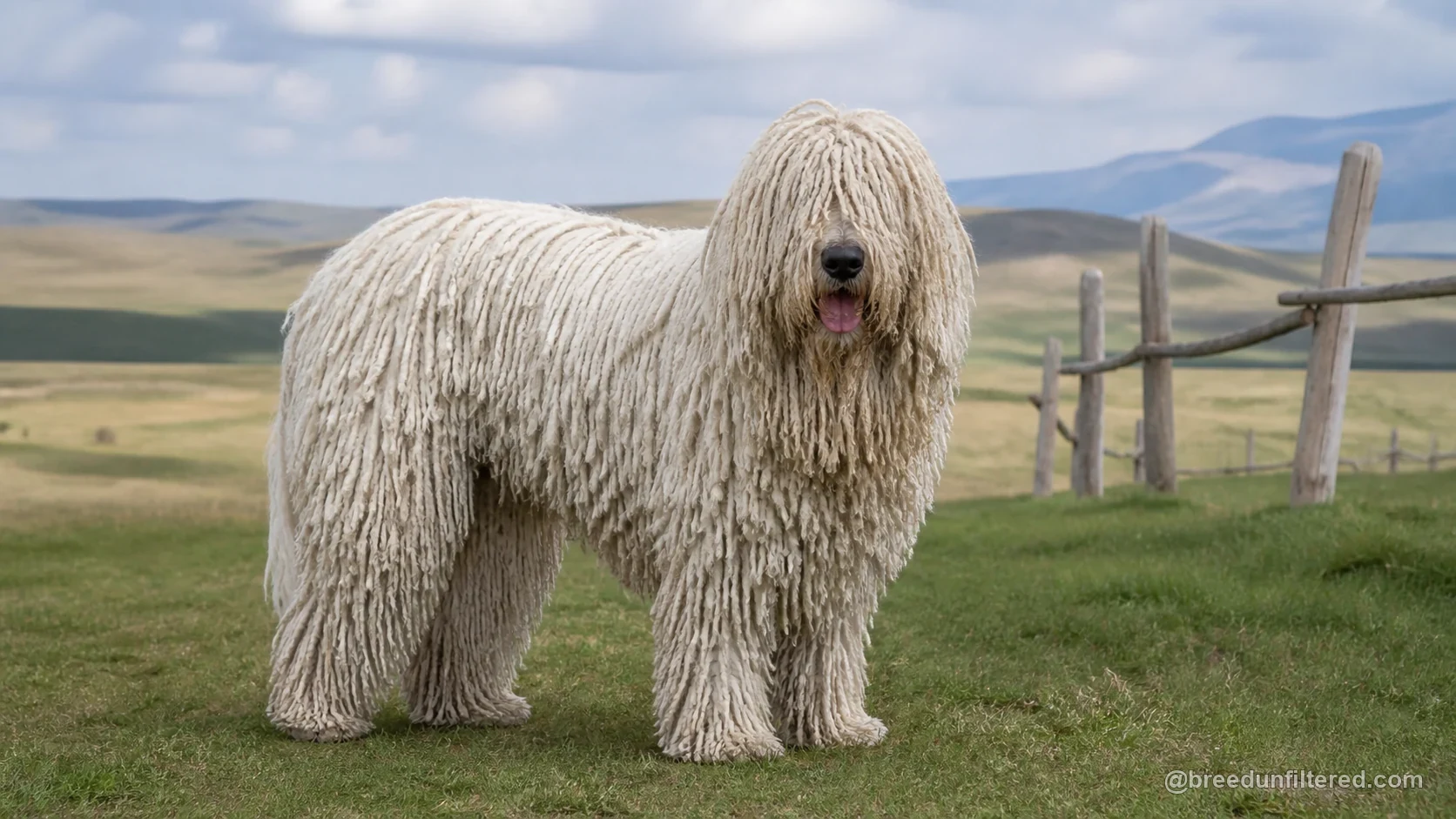
The Komondor, with its striking corded coat, is one of the most visually distinctive dog breeds in the world. Originating from Hungary, this large livestock guardian has been protecting flocks for centuries. Its appearance is not just for show; the cords provide protection from harsh weather and predator bites. But beneath that unique exterior lies a complex, independent, and deeply loyal guardian that demands experienced handling.
Prospective owners must understand that the Komondor is not a typical companion dog. Bred to make decisions independently while guarding sheep, it is intelligent, stubborn, and highly protective. This breed thrives in rural settings with a job to do, and it can be a challenge in suburban or urban environments. This guide provides an evidence-based overview of the Komondor's characteristics, care requirements, and suitability for various homes, helping you make an informed decision.
Origin and Purpose
The Komondor is an ancient Hungarian livestock guardian dog, believed to have arrived with the Magyars over a thousand years ago. Its primary role was to protect sheep and cattle from wolves, bears, and human thieves. The breed's name, meaning 'mop dog' or 'shaggy dog,' reflects its distinctive corded coat, which evolved to blend with the flock and withstand the elements.
Recognized by the Fédération Cynologique Internationale (FCI) in Group 1 (Sheepdogs and Cattle Dogs), the Komondor is a definitive breed with a standard that outlines its physical and temperamental traits. The FCI standard emphasizes its courage, devotion, and natural guarding instincts. Today, while still used as a working dog in many parts of the world, the Komondor also serves as a guardian of family and property, though its instincts remain deeply rooted in its pastoral past.
Temperament and Variation
The Komondor is a calm, steady, and brave dog when mature, but it is also highly territorial and protective. It forms a strong bond with its family and is typically gentle with children it knows. However, it is wary of strangers and can be aggressive toward unfamiliar people or animals if it perceives a threat. This breed is not naturally friendly or outgoing; it is reserved and watchful.
Individual temperament varies based on genetics, socialization, and environment. Some Komondors may be more tolerant of strangers, while others are more reactive. Early and ongoing socialization is crucial to help them distinguish between normal and threatening situations. However, even with excellent socialization, the Komondor retains a strong guarding instinct, making it unsuitable for households that frequently host visitors or have an open-door policy.
Exercise and Mental Work
Despite its large size, the Komondor is not a high-energy dog. It requires moderate daily exercise, such as a long walk or a romp in a securely fenced area. However, its true need is for a job or purpose. Without mental stimulation, it can become bored and destructive. Activities like scent work, obedience training, or simply patrolling a property can fulfill its need to work.
Mental work is as important as physical exercise for this intelligent breed. Puzzle toys, training sessions, and tasks that engage its problem-solving abilities are beneficial. However, the Komondor is not a playful, fetch-obsessed dog; it prefers to observe and guard. Owners should provide structured activities that channel its natural instincts, such as guarding a designated area or participating in dog sports like herding trials, if available.
Training and Socialisation
Training a Komondor requires patience, consistency, and a firm but gentle hand. This breed is independent and can be stubborn, so traditional obedience methods may not work. Positive reinforcement, such as treats and praise, is effective, but owners must be prepared for a dog that may question commands. Early socialization with people, dogs, and various environments is essential to prevent excessive suspicion or aggression.
The Komondor is not recommended for first-time dog owners. Its strong will and protective nature demand an experienced handler who can establish leadership without using force. Professional training classes can be helpful, but they must be tailored to the breed's unique temperament. Owners should focus on building a trusting relationship, as the Komondor is more likely to cooperate with someone it respects.
Family and Other Pets
The Komondor can be a devoted family dog, especially when raised with children. It is typically patient and protective of its human pack. However, its size and strength mean that interactions with young children should always be supervised, as the dog may inadvertently knock them over. The breed's guarding instinct can also lead to overprotectiveness, so clear boundaries are necessary.
With other pets, the Komondor's behavior varies. It may be tolerant of dogs it has been raised with, but it can be aggressive toward unfamiliar dogs, especially those of the same sex. Its prey drive is moderate but can be triggered by small animals, particularly if it is not socialized with them. Cats and other small pets may be viewed as prey, so caution is advised. The Komondor is best suited to a home where it is the sole guardian of its territory.
Grooming and Health
The Komondor's corded coat is its most iconic feature, but it requires significant maintenance. The cords form naturally from the soft undercoat and coarse outer coat, but they must be separated by hand to prevent matting. This process can take several hours and should begin when the dog is young. Bathing is a major undertaking, as the cords absorb water and take a long time to dry. Regular inspection for debris, parasites, and skin issues is necessary.
Health-wise, the Komondor is generally a robust breed, but it is prone to certain conditions, including hip dysplasia, bloat (gastric dilatation-volvulus), and eye problems such as entropion. Responsible breeders screen for these issues. Owners should be aware of the signs of bloat, a life-threatening emergency, and seek immediate veterinary care if suspected. The breed's average lifespan is around 10-12 years, though individual health varies.
Costs and Responsibility
Owning a Komondor is a significant financial and time commitment. Purchase price from a reputable breeder can be high, and ongoing costs include high-quality food, routine veterinary care, grooming supplies, and potential health treatments. Grooming, whether done at home or professionally, is time-consuming and may require special equipment. Pet insurance is advisable to cover unexpected medical expenses.
Beyond finances, the Komondor demands a responsible owner who can provide secure fencing, ample space, and a lifestyle that accommodates its guarding nature. It is not a dog that can be left alone for long periods or kept in an apartment. Prospective owners must be prepared for a long-term commitment of 10-12 years, during which they must manage the dog's protective instincts and ensure it is a safe and well-adjusted member of the community.
Clear answers
FREQUENTLY ASKED QUESTIONS
Is the Komondor good with children?
The Komondor can be good with children in its own family, especially when raised with them. It is typically patient and protective. However, due to its large size and guarding instincts, interactions with young children should always be supervised. The dog may not tolerate rough handling or unfamiliar children, so early socialization and clear boundaries are essential.
Does the Komondor shed?
The Komondor's coat is unique in that it does not shed in the traditional sense. Instead, the hair grows continuously and forms cords. Dead hair becomes trapped in the cords, which means the dog does not release much hair into the environment. However, this also means that regular maintenance is required to prevent matting and to keep the coat healthy.
Can a Komondor live in an apartment?
Generally, no. The Komondor is a large, active guardian breed that requires space to move and a territory to protect. Apartment living can lead to frustration and behavioral issues. A home with a securely fenced yard is ideal. Even then, the dog needs daily exercise and mental stimulation to thrive.
How much grooming does a Komondor need?
Grooming a Komondor is a significant commitment. The cords must be separated by hand regularly, especially during the formation phase. Bathing is infrequent but labor-intensive, as the coat takes a long time to dry. Owners should expect to spend several hours per week on coat care, and professional grooming may be needed periodically.
Is the Komondor aggressive?
The Komondor is not inherently aggressive, but it is a protective breed with a strong guarding instinct. It is wary of strangers and may act aggressively if it perceives a threat to its family or territory. Proper socialization and training can help manage this behavior, but the breed is not suitable for everyone. Owners must be prepared to manage its protective nature responsibly.
Sources and further reading
Scores describe typical breed tendencies from 1 to 10. They are not a quality ranking or a prediction for an individual dog.
Size and presence6/10
CompactVery large
Physical strength6/10
LightExceptional
Energy level9/10
LowRelentless
Exercise demand9/10
ModestVery demanding
Mental work needed10/10
ModerateDaily job
Trainability8/10
ChallengingExceptional
Everyday manageability2/10
SpecialistStraightforward
First-time owner fit1/10
Poor fitGood fit
Family-life fit8/10
LimitedExcellent
Dog sociability6/10
SelectiveVery social
Prey drive7/10
LowVery high
Guarding tendency9/10
MinimalSerious
Independence6/10
Handler-focusedSelf-directed
Grooming demand8/10
LightHeavy
Apartment fit4/10
Poor fitGood fit