Complete breed guide
Irish Wolfhound OWNERSHIP GUIDE
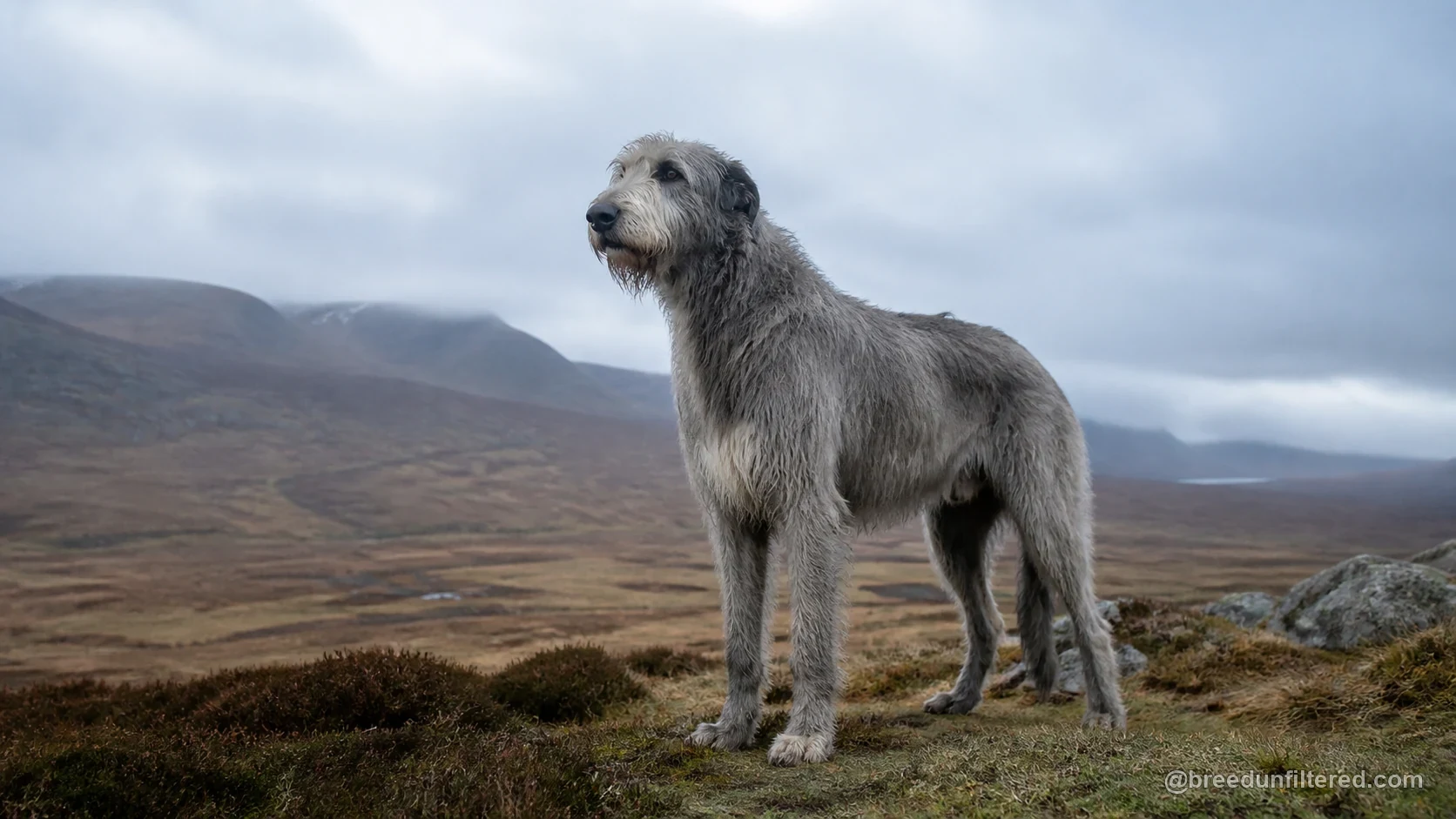
The Irish Wolfhound is a breed that commands attention not only for its towering stature but also for its gentle and dignified character. Often described as the gentle giant of the dog world, this ancient breed has a history that is as rich as its presence is imposing. For those considering welcoming an Irish Wolfhound into their home, understanding the breed's unique blend of strength, sensitivity, and loyalty is essential to ensuring a harmonious partnership.
This article aims to provide a balanced and practical overview of the Irish Wolfhound, covering everything from its origins and purpose to the daily realities of living with such a large and noble companion. We will explore temperament, exercise and mental stimulation, training and socialisation, family compatibility, grooming and health considerations, and the financial and time commitments involved. By the end, you will have a clearer picture of whether this magnificent breed is the right fit for your lifestyle.
Origin and Purpose
The Irish Wolfhound's roots trace back to ancient Ireland, where they were bred as war dogs and hunters of large game, including wolves and elk. Historical records and Irish mythology often depict these dogs as formidable companions to chieftains and warriors, valued for their courage and strength. The breed's size and power were essential for bringing down prey that could easily overpower smaller dogs, and their loyalty made them trusted guardians.
As wolves and large game became scarce in Ireland, the breed's numbers dwindled, and by the 19th century, it was on the brink of extinction. Thanks to the dedicated efforts of breed enthusiasts, particularly Captain George Graham, the Irish Wolfhound was revived through careful crossbreeding with other sighthounds such as the Deerhound and Great Dane. Today, the breed is recognised by the FCI under standard number 160 and is celebrated as a national treasure, though its original hunting purpose has largely given way to a role as a gentle companion.
Temperament and Variation
Irish Wolfhounds are known for their calm, affectionate, and patient demeanour. They often form strong bonds with their families and are typically gentle with children, earning them the 'gentle giant' moniker. However, like all breeds, individual temperament can vary based on genetics, socialisation, and training. While many are laid-back indoors, they retain a sighthound's instinct to chase, and their reaction to small animals may be unpredictable.
It is important to recognise that the Irish Wolfhound is not a guard dog in the traditional sense; they are more likely to greet strangers with a wagging tail than aggression. Their size alone can be a deterrent, but their friendly nature means they are not typically protective in a confrontational way. Prospective owners should be prepared for a dog that is sensitive and responsive to their household's mood, often thriving in a calm and consistent environment.
Exercise and Mental Work
Despite their large size, Irish Wolfhounds do not require excessive exercise. They are sprinters rather than endurance athletes, and a few moderate walks each day, along with opportunities to stretch their legs in a securely fenced area, usually suffice. Puppies and young dogs have growing bones and joints, so exercise should be carefully managed to avoid overexertion. As adults, they enjoy a good run but are equally content to lounge around the house.
Mental stimulation is just as important as physical exercise for this intelligent breed. Puzzle toys, scent games, and basic obedience training can help keep their minds engaged. Without adequate mental and physical outlets, an Irish Wolfhound may become bored and develop undesirable behaviours such as digging or chewing. However, they are generally not hyperactive, and their exercise needs are moderate compared to many smaller, high-energy breeds.
Training and Socialisation
Training an Irish Wolfhound requires patience, consistency, and positive reinforcement. They are intelligent but can be independent and somewhat stubborn, so harsh methods are counterproductive. Early socialisation is crucial to help them become well-adjusted adults, exposing them to various people, environments, and other animals in a controlled manner. Puppy classes and regular, gentle handling can build their confidence and reinforce good manners.
Because of their size, basic obedience is non-negotiable. A well-trained Irish Wolfhound should walk calmly on a lead and respond to recall, though their sighthound instincts may make off-lead reliability challenging in open areas. Crate training can provide a safe haven and aid in housebreaking. With a consistent, kind approach, most Irish Wolfhounds are eager to please and can excel in activities like lure coursing, though they are not typically known for high-level obedience competition.
Family and Pets
Irish Wolfhounds are generally excellent family dogs, known for their tolerance and affection towards children. Their gentle nature makes them suitable playmates, but supervision is always recommended simply because of their size; an accidental knock can knock over a small child. They often get along well with other dogs, especially if raised together, and can be friendly with cats and other small pets if socialised early, though their prey drive may still be triggered by fast-moving animals.
Potential owners should consider the space and furniture implications of a giant breed. An Irish Wolfhound will likely want to share the sofa and may not be aware of its own bulk. They are not typically destructive, but they do shed and drool, and their sheer presence means they need room to move comfortably. For families with older children and a reasonably spacious home, the Irish Wolfhound can be a loving and loyal addition.
Grooming and Health
Grooming an Irish Wolfhound is relatively straightforward. Their rough, wiry coat requires brushing once or twice a week to remove dead hair and prevent matting, with more frequent grooming during seasonal sheds. They are not heavy shedders, but they do shed. Bathing is only needed occasionally, and regular nail trimming, ear cleaning, and dental care are essential for overall health.
Health-wise, Irish Wolfhounds are prone to certain conditions, including hip dysplasia, heart issues like dilated cardiomyopathy, and bloat (gastric dilatation-volvulus), which is a life-threatening emergency. They also have a notably short lifespan, often only 6 to 8 years, which is a significant consideration for prospective owners. Regular veterinary check-ups, a balanced diet, and appropriate exercise can help manage some risks, but the breed's health challenges require a committed and informed owner.
Costs and Responsibility
Owning an Irish Wolfhound is a significant financial and time commitment. The initial cost of a puppy from a reputable breeder can be high, and ongoing expenses include high-quality food, which they consume in large quantities, routine veterinary care, and potential treatments for breed-specific health issues. Pet insurance is strongly recommended to help offset unexpected medical bills. Additionally, their short lifespan means owners may face the emotional challenge of losing a beloved companion relatively early.
Beyond finances, responsible ownership involves providing adequate space, time for exercise and companionship, and a safe environment. Irish Wolfhounds thrive on human interaction and should not be left alone for long periods. They are not suited to apartment living unless the owner is committed to providing sufficient exercise and outdoor access. Prospective owners should honestly assess their lifestyle and resources to ensure they can meet the needs of this majestic breed for its entire life.
Clear answers
FREQUENTLY ASKED QUESTIONS
Are Irish Wolfhounds good with children?
Irish Wolfhounds are generally gentle and patient with children, making them good family dogs. However, due to their enormous size, supervision is essential to prevent accidental injuries, especially with young children. Early socialisation and training can help them learn appropriate behaviour around kids, but their sheer bulk means they may unintentionally knock over a toddler. Always teach children how to interact respectfully with any dog.
How much exercise does an Irish Wolfhound need?
Irish Wolfhounds have moderate exercise needs. They enjoy daily walks and opportunities to run in a secure area, but they are not high-energy dogs. Puppies should have limited exercise to protect their developing joints, while adults typically need about 30 to 60 minutes of activity per day, split into sessions. Mental stimulation is also important to prevent boredom. Always avoid excessive exercise, especially in hot weather.
What is the lifespan of an Irish Wolfhound?
The Irish Wolfhound has a relatively short lifespan compared to many breeds, typically ranging from 6 to 8 years. Some individuals may live longer, but this is not common. This is a crucial consideration for prospective owners, as the emotional impact of losing a beloved pet can be significant. Regular veterinary care and a healthy lifestyle can help maximise their quality of life, but the breed's genetic predispositions remain a factor.
Are Irish Wolfhounds easy to train?
Irish Wolfhounds are intelligent but can be independent and somewhat stubborn, which can make training a challenge for novice owners. They respond best to positive reinforcement techniques, such as treats and praise, and consistent, patient training. Early socialisation and obedience classes are highly recommended. Their sighthound instincts may affect recall, so training should emphasise reliable off-lead behaviour in safe areas.
Do Irish Wolfhounds get along with other pets?
Irish Wolfhounds can get along with other dogs and even cats, especially if raised together from a young age. However, their prey drive may be triggered by small, fast-moving animals, so caution is advised. Early and ongoing socialisation can help them learn to coexist peacefully with other pets. Supervision is always recommended when introducing them to new animals, and individual temperament varies.
Sources and further reading
Scores describe typical breed tendencies from 1 to 10. They are not a quality ranking or a prediction for an individual dog.
Size and presence8/10
CompactVery large
Physical strength8/10
LightExceptional
Energy level9/10
LowRelentless
Exercise demand9/10
ModestVery demanding
Mental work needed6/10
ModerateDaily job
Trainability6/10
ChallengingExceptional
Everyday manageability3/10
SpecialistStraightforward
First-time owner fit4/10
Poor fitGood fit
Family-life fit7/10
LimitedExcellent
Dog sociability7/10
SelectiveVery social
Prey drive10/10
LowVery high
Guarding tendency2/10
MinimalSerious
Independence8/10
Handler-focusedSelf-directed
Grooming demand3/10
LightHeavy
Apartment fit3/10
Poor fitGood fit