Complete breed guide
Griffon Bruxellois OWNERSHIP GUIDE
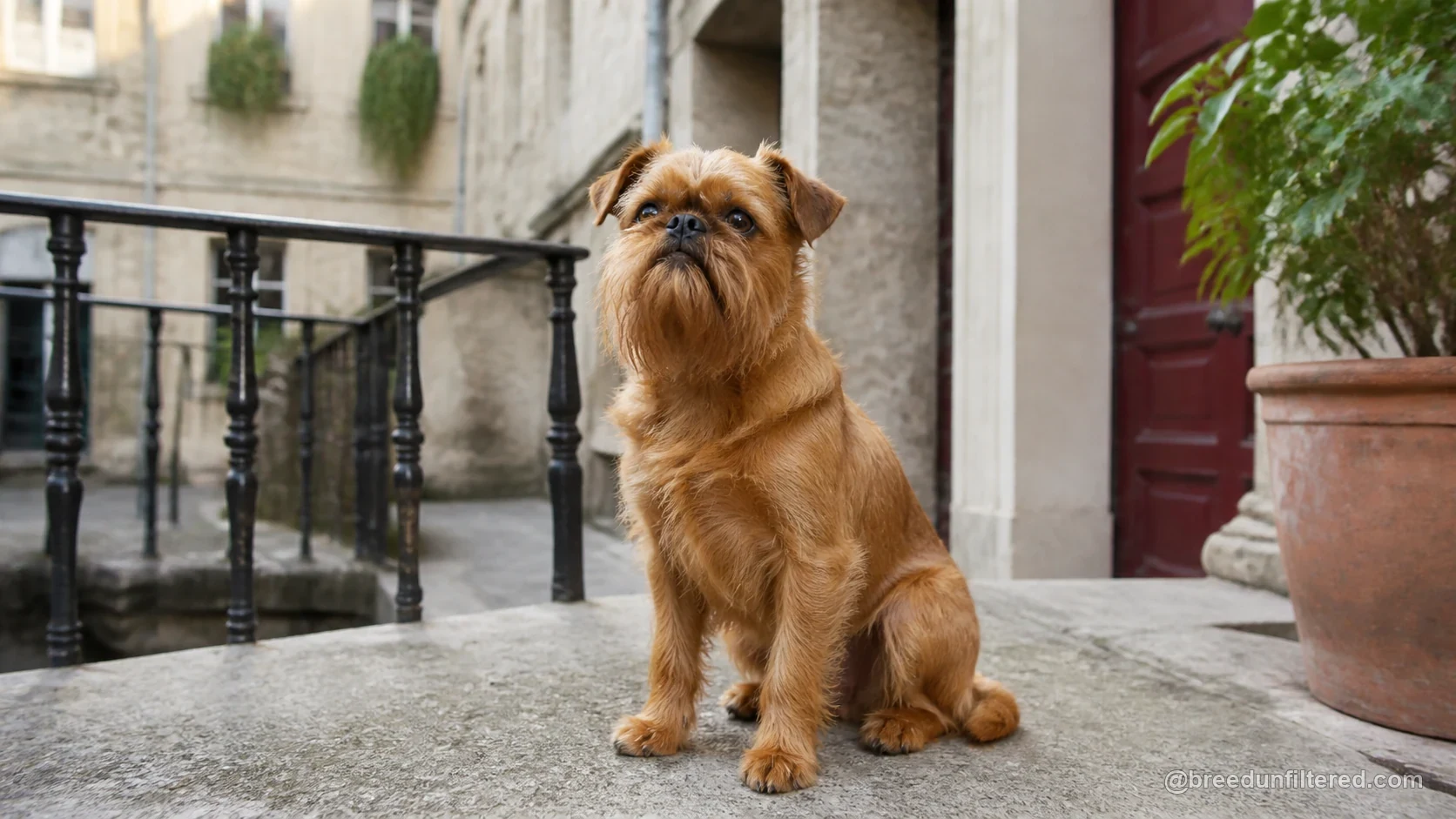
The Griffon Bruxellois, a small Belgian toy breed, is known for its distinctive, almost human-like expression and a personality that belies its size. Recognized by the FCI in Group 9 (Companion and Toy Dogs), this breed was originally bred to hunt rats in the stables of Brussels, but today it thrives as a devoted companion. Prospective owners should understand that this is not a passive lapdog; it is an intelligent, alert, and often stubborn character that forms intense bonds with its family.
Before welcoming a Griffon Bruxellois into your home, it's essential to consider the breed's specific needs. They require consistent training, early socialisation, and a commitment to grooming and potential health monitoring. While they can adapt to apartment living, their spirited nature means they need mental and physical engagement. This article provides an evidence-based overview of the breed's origin, temperament, care requirements, and the responsibilities of ownership, helping you decide if this charming but demanding companion is the right fit for your lifestyle.
Origin and Purpose
The Griffon Bruxellois originated in Belgium, specifically in the Brussels area, during the early 19th century. They were developed from small terrier-type dogs, often including the Affenpinscher and possibly the Pug, to create a ratting dog for stables and coach houses. The breed's name 'Griffon' refers to its wiry coat, and 'Bruxellois' indicates its Brussels roots. The FCI recognized the breed in 1904, and it remains a beloved companion in its homeland and beyond.
While the Griffon Bruxellois's historical role was that of a working ratter, its modern purpose is primarily as a companion. The breed's alertness and keen senses, once used for hunting vermin, now manifest as a watchful and sometimes vocal nature. Understanding this background helps owners appreciate the breed's intelligence and need for purposeful activity, even if that purpose is simply learning tricks or participating in dog sports like agility or obedience.
Temperament and Variation
The Griffon Bruxellois is often described as having a 'big dog in a small body' personality. They are typically confident, curious, and affectionate with their families, but can be reserved or wary around strangers. This breed is known for its strong attachment to its owner, sometimes leading to separation anxiety if not properly conditioned. Individual temperaments vary, and early socialisation plays a crucial role in shaping a well-adjusted adult.
There are four coat and color varieties within the breed: the rough-coated Griffon Bruxellois, the smooth-coated Petit Brabancon, and the long-coated Belgian Griffon (though the latter is not always recognized in all registries). The rough coat is wiry and requires regular hand-stripping, while the smooth coat is easier to maintain. Despite these physical differences, temperament is generally consistent across varieties, though individual dogs may exhibit varying levels of energy and sociability.
Exercise and Mental Work
Despite their small size, Griffon Bruxellois have moderate exercise needs. Daily walks and play sessions are essential, but they are not high-energy athletes. However, they are intelligent and require mental stimulation to prevent boredom and destructive behaviors. Puzzle toys, training sessions, and interactive games can help satisfy their need for mental engagement. Owners should be prepared to provide at least 30-60 minutes of activity per day, adjusted to the individual dog's age and health.
Mental work is as important as physical exercise for this breed. They excel in activities that challenge their minds, such as obedience, rally, and nose work. Without adequate mental stimulation, a Griffon may become anxious or develop compulsive behaviors. Incorporating short, positive training sessions into daily routines not only strengthens the bond but also provides the mental outlet this breed craves.
Training and Socialisation
Training a Griffon Bruxellois requires patience and consistency. They are intelligent but can be stubborn, so positive reinforcement methods work best. Harsh corrections can lead to fearfulness or defensiveness. Early socialisation is critical to help them become well-mannered around other dogs and people. Puppy classes and controlled introductions to various environments can help mitigate their natural wariness of strangers.
Because of their terrier heritage, Griffons may have a tendency to chase small animals, so recall training is important. They are also known to be somewhat independent, which can make training a challenge for first-time owners. However, with a firm but gentle approach, they can learn a wide range of commands and tricks. Consistency and rewards are key to harnessing their intelligence and eagerness to please.
Family and Other Pets
Griffon Bruxellois can make excellent companions for families, but they are best suited to households with older children who understand how to interact respectfully with a small dog. They are generally affectionate and playful, but their small size makes them vulnerable to accidental injury from rough handling. Supervision is recommended when they are around young children. They often form a strong bond with one primary caregiver.
With other pets, Griffons can vary. They may get along well with other dogs, especially if raised together, but their prey drive can be triggered by small animals like rodents or birds. Early socialisation can help them coexist peacefully with cats, but it is not guaranteed. Prospective owners should assess their household dynamics and be prepared to manage introductions carefully.
Grooming and Health
Grooming needs depend on the coat type. Rough-coated Griffons require regular hand-stripping or clipping every few months to maintain their wiry texture, while smooth-coated Petit Brabancons need only occasional brushing. Both types shed little, making them a potential choice for allergy sufferers, though no dog is truly hypoallergenic. Regular ear cleaning, nail trimming, and dental care are essential for overall health.
As a brachycephalic breed, Griffon Bruxellois can be prone to respiratory issues, especially in hot or humid weather. They may also be susceptible to eye problems such as cataracts and progressive retinal atrophy, as well as patellar luxation. Responsible breeders screen for these conditions. Prospective owners should be prepared for potential veterinary costs and ensure they obtain a puppy from a breeder who performs health testing.
Costs and Responsibility
Owning a Griffon Bruxellois involves financial and time commitments. The initial cost of a puppy from a reputable breeder can be significant, and ongoing expenses include high-quality food, routine veterinary care, grooming, and pet insurance. Emergency medical costs can be substantial, especially for breed-related conditions. Prospective owners should budget accordingly and consider adopting from a rescue if possible.
Beyond finances, responsible ownership means providing proper training, socialisation, and a safe environment. This breed thrives on human companionship and should not be left alone for long periods. They are not suited to a lifestyle that requires frequent travel or long working hours. Prospective owners must be ready to make a long-term commitment of 12-15 years, ensuring the dog's physical and emotional well-being throughout its life.
Clear answers
FREQUENTLY ASKED QUESTIONS
Are Griffon Bruxellois good with children?
Griffon Bruxellois can be good with older, respectful children, but they are small and delicate, so supervision is essential. They may not tolerate rough handling and can become defensive if provoked. Families with young children should teach them how to interact gently and ensure the dog has a safe space to retreat to.
Do Griffon Bruxellois bark a lot?
Griffon Bruxellois are alert and can be vocal, often barking to announce visitors or unusual sounds. This trait stems from their history as watchdogs. With proper training and socialisation, excessive barking can be managed, but they are not a quiet breed. Prospective owners should be prepared for some level of barking.
How much grooming does a Griffon Bruxellois need?
Rough-coated Griffons require regular hand-stripping or clipping every 2-3 months to maintain their coat, while smooth-coated varieties need only weekly brushing. Both types require routine ear cleaning, nail trimming, and dental care. Grooming is a significant commitment, especially for show dogs.
Are Griffon Bruxellois easy to train?
They are intelligent but can be stubborn, so training requires patience and consistency. Positive reinforcement methods work best, as they respond well to treats and praise. Early socialisation and obedience classes are recommended. They may challenge first-time owners, but with dedication, they can learn many commands.
Do Griffon Bruxellois have health problems?
Like many brachycephalic breeds, they can have respiratory issues and may be sensitive to heat. They are also prone to eye conditions and patellar luxation. Responsible breeders screen for these issues, but prospective owners should be aware of potential health costs and consider pet insurance.
Sources and further reading
Scores describe typical breed tendencies from 1 to 10. They are not a quality ranking or a prediction for an individual dog.
Size and presence3/10
CompactVery large
Physical strength3/10
LightExceptional
Energy level6/10
LowRelentless
Exercise demand5/10
ModestVery demanding
Mental work needed6/10
ModerateDaily job
Trainability6/10
ChallengingExceptional
Everyday manageability6/10
SpecialistStraightforward
First-time owner fit7/10
Poor fitGood fit
Family-life fit8/10
LimitedExcellent
Dog sociability7/10
SelectiveVery social
Prey drive4/10
LowVery high
Guarding tendency3/10
MinimalSerious
Independence5/10
Handler-focusedSelf-directed
Grooming demand5/10
LightHeavy
Apartment fit8/10
Poor fitGood fit