Complete breed guide
Great Anglo-French Tricolour Hound OWNERSHIP GUIDE
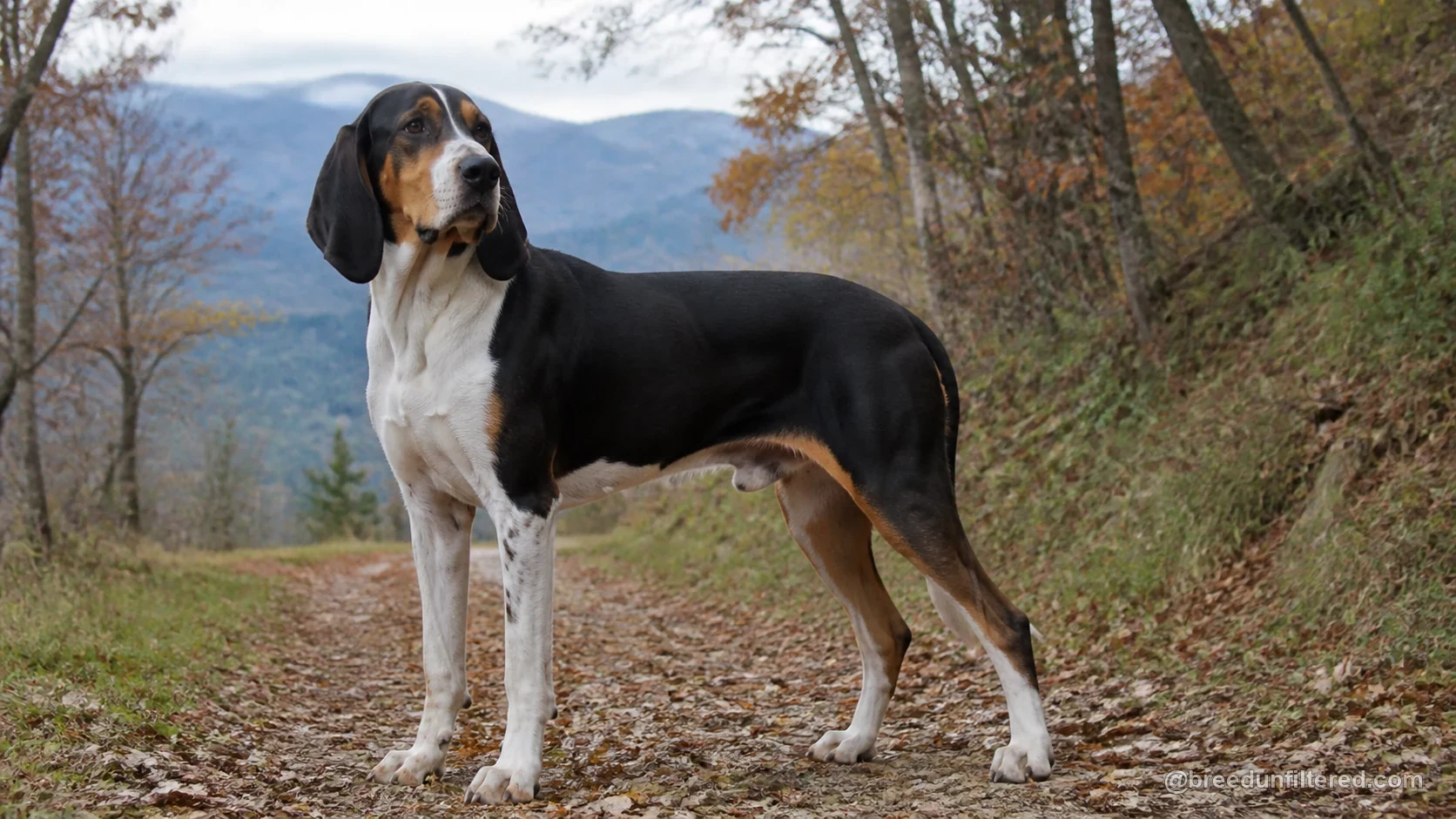
The Great Anglo-French Tricolour Hound is a majestic scenthound developed for hunting in packs, combining the endurance of French hounds with the speed of English foxhounds. Its tricolour coat—black, white, and tan—is as striking as its melodious voice, which carries across fields and forests. This breed is not a typical companion; it thrives in an environment that respects its heritage and provides ample opportunity to use its nose and legs.
Prospective owners should understand that this is a dog bred for work, not for a sedentary lifestyle. While affectionate with its family, it possesses an independent streak and a strong prey drive. With the right guidance, it can be a loyal and engaging partner for those who appreciate its unique qualities. This article offers an evidence-conscious overview of the breed's characteristics, care needs, and the responsibilities that come with owning such a specialised hound.
Origin and Purpose
The Great Anglo-French Tricolour Hound, as its name suggests, originated from crosses between French hounds and English foxhounds, aiming to create a fast, resilient pack hound. Recognised by the Fédération Cynologique Internationale (FCI) in Group 6, it is one of three Anglo-French hounds, each distinguished by coat colour. This breed was developed primarily for hunting deer and wild boar, working in packs and following scent trails with determination.
Its purpose has shaped its physique and temperament: a powerful, well-balanced dog with a deep chest for lung capacity and strong legs for endurance. The breed's voice is a prized asset, used to communicate with the pack and hunters. Today, while still used for hunting in its native France, it also appears in some homes as a companion, though its instincts remain strong. Understanding this heritage is crucial for anyone considering the breed.
Temperament and Variation
The Great Anglo-French Tricolour Hound is typically described as sociable, even-tempered, and devoted to its human pack. It is a pack-oriented dog, often getting along well with other dogs, which is a trait honed by generations of working in groups. However, individual temperaments can vary, and early socialisation is key to nurturing a well-rounded adult. This breed is not known for aggression, but it can be reserved with strangers, making it a moderate watchdog.
While the breed standard describes a general character, each dog is an individual. Some may be more independent, others more clingy. The hunting instinct is strong, and this can manifest as a tendency to follow scents, sometimes ignoring calls. Prospective owners should be prepared for a dog that may be more interested in the world's smells than in pleasing its owner. This is not a breed for those seeking a biddable, eager-to-please companion.
Exercise and Mental Work
As a scenthound, the Great Anglo-French Tricolour Hound requires substantial physical exercise to stay content and healthy. A daily long walk or run is a minimum, but this breed truly thrives when given opportunities to use its nose in safe, enclosed areas. Activities like scent work, tracking, or even lure coursing can provide both physical and mental stimulation. Without adequate exercise, this dog may become restless and develop undesirable behaviours.
Mental work is as important as physical activity. This intelligent breed needs challenges that engage its brain, such as puzzle toys, nose games, or obedience training with positive reinforcement. Boredom can lead to howling, digging, or attempts to escape. Owners should be prepared to dedicate time each day to structured activities that satisfy the dog's instinctual needs. A tired hound is a happy hound, and this is especially true for this breed.
Training and Socialisation
Training a Great Anglo-French Tricolour Hound requires patience and consistency. This breed is intelligent but can be stubborn, and its independent nature means it may not always see the point of obedience. Positive reinforcement methods, using treats and praise, tend to work best. Harsh corrections can damage the trust between dog and owner. Early training should focus on basic commands and, crucially, a reliable recall, though even with training, recall may never be perfect due to the strong hunting instinct.
Socialisation from a young age is essential to help this hound become a well-adjusted adult. Exposing the puppy to various people, animals, and environments can reduce the likelihood of fearfulness or reactivity. Because the breed is pack-oriented, it generally gets along with other dogs, but small animals may trigger prey drive. Socialisation should be a positive experience, gradually introducing new stimuli. A well-socialised hound is more likely to be a calm and confident companion.
Family and Pets
The Great Anglo-French Tricolour Hound can be a loving family dog, especially in households that understand its needs. It is typically gentle with children, though its size and exuberance might inadvertently knock over small toddlers. Supervision is always recommended. This breed forms strong bonds with its family and may suffer from separation anxiety if left alone for long periods. It is not a dog that can be left in a yard all day; it needs to be part of family life.
Regarding other pets, this hound's prey drive is a significant consideration. Cats and small animals may be viewed as quarry, especially if not raised with them. Even with early socialisation, there is no guarantee that the instinct will not kick in. For this reason, it is often best suited to homes without small furry pets. With other dogs, it usually gets along well, as it is used to working in packs. However, introductions should be managed carefully.
Grooming and Health
Grooming the Great Anglo-French Tricolour Hound is relatively straightforward. Its short, dense coat requires brushing once or twice a week to remove loose hair and keep it looking sleek. During shedding seasons, more frequent brushing may be needed. This breed is an average shedder. Regular ear checks are important, as floppy ears can trap moisture and debris, potentially leading to infections. Nails should be trimmed regularly, and dental hygiene should not be overlooked.
As with many purebred dogs, there are some health conditions that may be more prevalent, though this breed is generally considered hardy. Potential issues include hip dysplasia, ear infections, and bloat (gastric dilatation-volvulus), which is a serious condition that requires immediate veterinary attention. Responsible breeders screen for hereditary conditions. Prospective owners should ask about health clearances and be prepared for potential veterinary costs. A healthy diet and regular exercise contribute to overall well-being.
Costs and Responsibility
Owning a Great Anglo-French Tricolour Hound is a significant financial and time commitment. Initial costs include the purchase price from a reputable breeder, which can be substantial, as well as supplies like a crate, bedding, and food. Ongoing expenses include high-quality dog food, routine veterinary care, vaccinations, and parasite prevention. Because this breed is large and active, food costs can be higher than average. Pet insurance is worth considering to help manage unexpected medical bills.
Beyond finances, this breed demands a considerable investment of time and energy. It is not suitable for a first-time owner or for those with a sedentary lifestyle. The dog needs daily exercise, mental stimulation, and companionship. Potential owners must be prepared for the challenges of a strong-willed hound, including possible howling and a tendency to follow scents. Responsible ownership also means ensuring the dog is securely contained, as this breed can be an escape artist. This is a rewarding but demanding companion for the right person.
Clear answers
FREQUENTLY ASKED QUESTIONS
Is the Great Anglo-French Tricolour Hound good with children?
Generally, this breed can be good with children, especially when raised with them. They are typically gentle and sociable, but due to their size and energy, they may accidentally knock over small children. Supervision is recommended, and children should be taught how to interact respectfully with dogs. Early socialisation and training are key to fostering a positive relationship.
How much exercise does a Great Anglo-French Tricolour Hound need?
This is a high-energy breed that requires substantial daily exercise. A long walk or run is a minimum, but they truly benefit from activities that engage their scenting abilities, such as tracking or nose work. Without adequate physical and mental stimulation, they may become bored and develop destructive behaviours. Owners should be prepared for an active lifestyle.
Does the Great Anglo-French Tricolour Hound get along with other dogs?
Yes, this breed is pack-oriented and generally gets along well with other dogs. They have been bred to work in packs, so they often enjoy canine companionship. However, introductions should be done gradually and under supervision. Their prey drive may be triggered by small animals, but with other dogs, they typically exhibit friendly and cooperative behaviour.
Is the Great Anglo-French Tricolour Hound easy to train?
Training can be challenging due to their independent and sometimes stubborn nature. They are intelligent but may not be eager to please. Positive reinforcement methods, such as treats and praise, work best. Consistency and patience are essential. Early socialisation and obedience training are crucial to manage their strong hunting instincts and ensure they become well-mannered companions.
What are the grooming requirements for this breed?
Grooming is relatively low-maintenance. Their short, dense coat requires brushing once or twice a week to remove loose hair. They shed moderately, with heavier shedding during seasonal changes. Regular ear cleaning is important to prevent infections, as their floppy ears can trap moisture. Nail trimming and dental care should also be part of the routine.
Sources and further reading
Scores describe typical breed tendencies from 1 to 10. They are not a quality ranking or a prediction for an individual dog.
Size and presence5/10
CompactVery large
Physical strength6/10
LightExceptional
Energy level9/10
LowRelentless
Exercise demand10/10
ModestVery demanding
Mental work needed8/10
ModerateDaily job
Trainability5/10
ChallengingExceptional
Everyday manageability1/10
SpecialistStraightforward
First-time owner fit3/10
Poor fitGood fit
Family-life fit7/10
LimitedExcellent
Dog sociability8/10
SelectiveVery social
Prey drive10/10
LowVery high
Guarding tendency4/10
MinimalSerious
Independence10/10
Handler-focusedSelf-directed
Grooming demand4/10
LightHeavy
Apartment fit4/10
Poor fitGood fit