Complete breed guide
French White And Orange Hound OWNERSHIP GUIDE
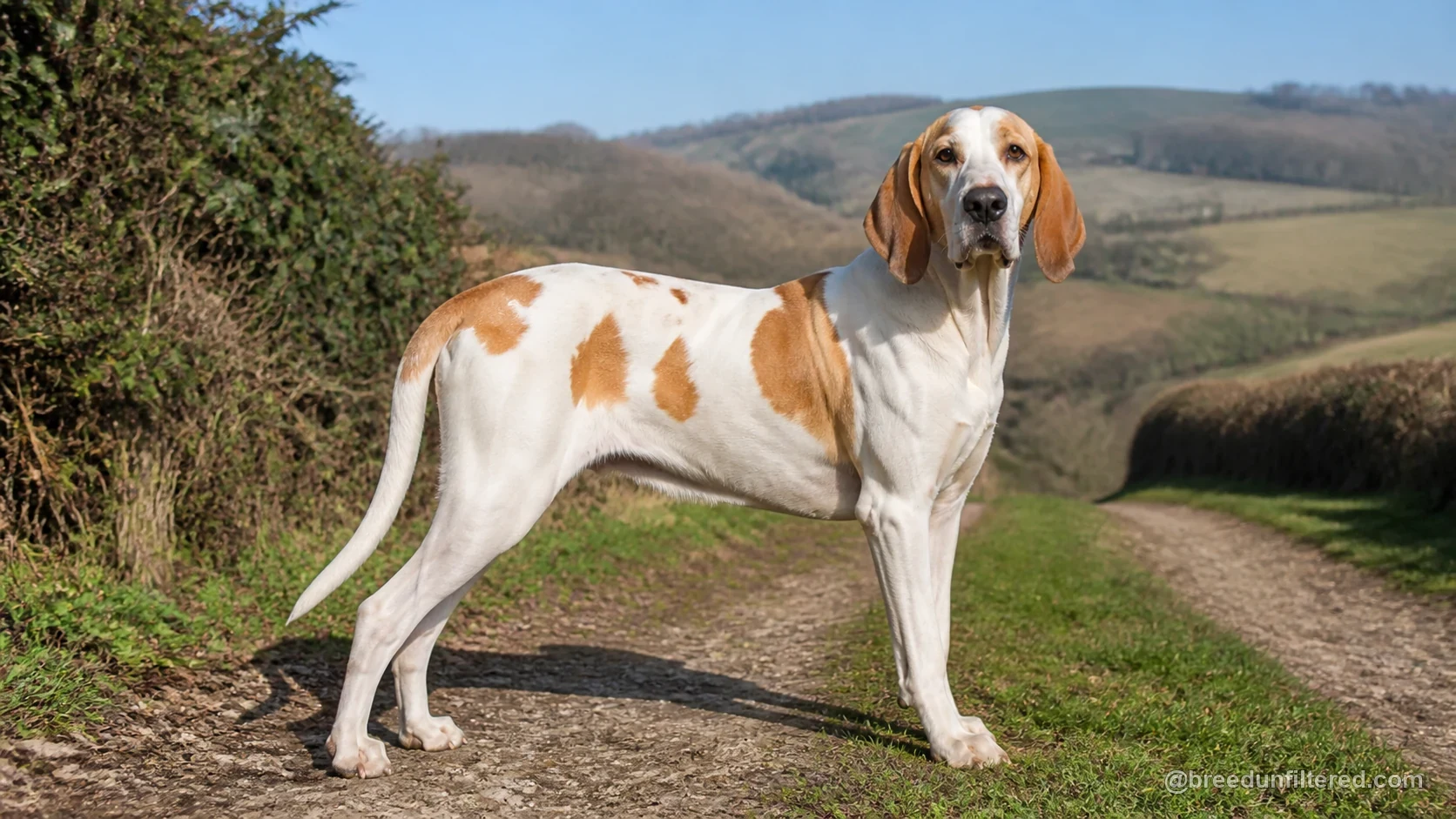
The French White and Orange Hound, known in French as the Français Blanc et Orange, is a scenthound of considerable elegance and purpose. Recognized definitively by the Fédération Cynologique Internationale (FCI) under standard number 316, this breed belongs to FCI Group 6, which encompasses scenthounds and related breeds. Its name reflects its distinctive coat pattern, a harmonious blend of white with orange patches, and its French heritage as a hunting dog developed for trailing game across varied terrain.
For prospective owners, understanding this breed goes beyond its striking appearance. These hounds are bred for endurance, a keen nose, and a cooperative spirit within a pack. They are not typical companion dogs; their instincts and energy levels are deeply rooted in their working history. This article provides an evidence-conscious overview of the breed's origin, temperament, care requirements, and practical considerations to help you decide if this rare hound is the right fit for your lifestyle.
Origin and Purpose
The French White and Orange Hound originates from France, where it was developed primarily for hunting. The FCI standard describes it as a large scenthound, used for hunting deer and other game in packs. Its ancestors likely include various French hounds, and the breed was refined to combine speed, endurance, and a powerful nose. The breed's name directly reflects its coat colors, which are white with orange markings, a trait that aids visibility during hunts.
Historically, these hounds were valued for their ability to work in a pack, following scent trails for hours while maintaining vocal communication with hunters. Their purpose has shaped their physical and behavioral traits: they are athletic, resilient, and have a strong instinct to track. Today, while some individuals may live as companions, their hunting heritage remains a central aspect of their identity, influencing their exercise needs and behavior around other animals.
Temperament and Variation
As with any breed, individual temperament varies, but the French White and Orange Hound is generally described as sociable, affectionate with their family, and good-natured. They are pack-oriented dogs, which often translates to a friendly disposition toward people and other dogs. However, their hunting instincts can be strong, and they may be reserved or indifferent toward strangers, though not typically aggressive. Early and ongoing socialization is important to help them become well-adjusted adults.
These hounds are known for their stamina and determination, traits that can manifest as stubbornness if not channeled properly. They are not typically guard dogs; their role is to hunt, not to protect property. Prospective owners should expect a dog that is eager to follow scents, sometimes to the point of ignoring commands. This independence, while a hallmark of scenthounds, requires patient management and a secure environment to prevent wandering.
Exercise and Mental Work
The French White and Orange Hound is a high-energy breed with substantial exercise needs. Bred for long hunts, they require daily opportunities to run and explore. A securely fenced area is essential, as their instinct to track can lead them to roam if given the chance. Regular vigorous exercise, such as long walks, jogs, or off-lead runs in safe areas, is necessary to maintain their physical and mental well-being. Without adequate activity, they may become restless or develop behavioral issues.
Mental stimulation is equally important. Scent work, tracking games, and puzzle toys can engage their powerful noses and problem-solving abilities. Activities that mimic hunting, such as nose work classes, can be particularly rewarding for this breed. Owners should be prepared to invest time in both physical and mental enrichment to keep their hound content and balanced. A tired hound is a happy hound, and meeting these needs is a significant commitment.
Training and Socialisation
Training a French White and Orange Hound requires patience, consistency, and positive reinforcement. These dogs are intelligent but can be independent and easily distracted by scents. Harsh training methods are counterproductive; instead, using treats, praise, and play as rewards works best. Early obedience training is crucial to establish basic commands and recall, though recall may never be completely reliable in the presence of an enticing scent, so a secure environment is vital.
Socialisation should begin in puppyhood and continue throughout life. Exposing the dog to various people, animals, and environments helps reduce shyness or fearfulness. Because they are pack hounds, they generally get along well with other dogs, but their prey drive may be triggered by small animals, including cats, unless raised with them. Structured introductions and ongoing management are necessary to ensure harmonious relationships with other pets.
Family and Pets
French White and Orange Hounds can make affectionate family companions, especially in active households. They are typically gentle and good with children, though their size and exuberance may inadvertently knock over small toddlers, so supervision is advised. They thrive on being part of family activities and may become unhappy if left alone for long periods. Their pack mentality means they often do best with another dog for company, but this is not a substitute for human interaction.
When it comes to other pets, caution is warranted. Their hunting instinct may lead them to chase or harm small animals such as rabbits, guinea pigs, or even cats, particularly if they have not been socialised with them from a young age. Even with socialisation, their prey drive can be strong, so it is safer to keep them separated from non-canine pets. Prospective owners should assess their household situation and be prepared to manage these instincts responsibly.
Grooming and Health
The French White and Orange Hound has a short, dense coat that is relatively low-maintenance. Weekly brushing with a soft bristle brush or hound glove will help remove loose hair and keep the coat healthy. They shed moderately, and more frequent brushing may be needed during seasonal changes. Regular ear checks are important, as floppy-eared breeds are prone to ear infections. Nail trimming, dental care, and occasional baths are also part of routine grooming.
As with many purebred dogs, the French White and Orange Hound may be predisposed to certain health conditions, though specific data for this rare breed is limited. Potential issues that affect similar hounds include hip dysplasia, ear infections, and bloat (gastric dilatation-volvulus). Responsible breeders screen for hereditary conditions, and prospective owners should ask about health clearances. Regular veterinary check-ups and a balanced diet are essential to maintain overall health.
Costs and Responsibility
Owning a French White and Orange Hound is a significant financial and time commitment. Initial costs include the purchase price, which can be high due to the breed's rarity, as well as supplies such as a crate, bedding, and food. Ongoing expenses include high-quality dog food, routine veterinary care, vaccinations, parasite prevention, and pet insurance. Emergency medical costs can be substantial, so planning ahead is wise.
Beyond finances, this breed demands a considerable investment of time and energy. They are not suited to a sedentary lifestyle or apartment living without extensive exercise. Prospective owners must be prepared for daily vigorous activity, mental stimulation, and ongoing training. Additionally, because they are rare, finding a reputable breeder may require research and patience. Adopting from a rescue is another option, though availability is limited. Responsible ownership means understanding and meeting the breed's needs for its entire lifespan, which can be 10-12 years or more.
Clear answers
FREQUENTLY ASKED QUESTIONS
Is the French White and Orange Hound a good family dog?
The French White and Orange Hound can be a good family dog in active households that can meet its exercise needs. They are generally sociable and affectionate with family members, including children, though supervision is recommended with very young kids due to their size and energy. They thrive on companionship and may not do well if left alone for long periods. Early socialisation and training are essential to ensure they are well-mannered around people and other pets.
How much exercise does a French White and Orange Hound need?
This breed has high exercise requirements due to its hunting heritage. They need at least one to two hours of vigorous activity daily, including opportunities to run in a securely fenced area. Mental stimulation is equally important, such as scent games or tracking activities. Without sufficient exercise and mental engagement, they may become restless, destructive, or develop behavioral issues. Prospective owners should be prepared for a significant time commitment.
Are French White and Orange Hounds good with other dogs?
Generally, yes. As pack hounds, they tend to get along well with other dogs and often enjoy canine companionship. They are typically sociable and can thrive in multi-dog households. However, introductions should be gradual and supervised, especially with unfamiliar dogs. Their prey drive may be triggered by small animals, so caution is needed with non-canine pets. Early socialisation helps them develop good social skills.
What are the grooming needs of a French White and Orange Hound?
Grooming is relatively low-maintenance. Their short coat requires weekly brushing to remove loose hair and distribute skin oils. They shed moderately, and more frequent brushing may be needed during shedding seasons. Regular ear cleaning is important to prevent infections, as their floppy ears can trap moisture. Nail trimming, dental care, and occasional baths complete the routine. Overall, grooming is not a major time commitment.
Are French White and Orange Hounds easy to train?
Training can be challenging due to their independent nature and strong scenting instincts. They are intelligent but may be stubborn and easily distracted. Positive reinforcement methods, such as treats and praise, work best. Consistency and patience are key. Early obedience training and socialisation are crucial. Recall may be unreliable when they are following a scent, so a secure environment is essential. Professional training classes can be beneficial.
Sources and further reading
Scores describe typical breed tendencies from 1 to 10. They are not a quality ranking or a prediction for an individual dog.
Size and presence5/10
CompactVery large
Physical strength6/10
LightExceptional
Energy level9/10
LowRelentless
Exercise demand10/10
ModestVery demanding
Mental work needed8/10
ModerateDaily job
Trainability5/10
ChallengingExceptional
Everyday manageability3/10
SpecialistStraightforward
First-time owner fit3/10
Poor fitGood fit
Family-life fit6/10
LimitedExcellent
Dog sociability8/10
SelectiveVery social
Prey drive9/10
LowVery high
Guarding tendency3/10
MinimalSerious
Independence8/10
Handler-focusedSelf-directed
Grooming demand4/10
LightHeavy
Apartment fit4/10
Poor fitGood fit