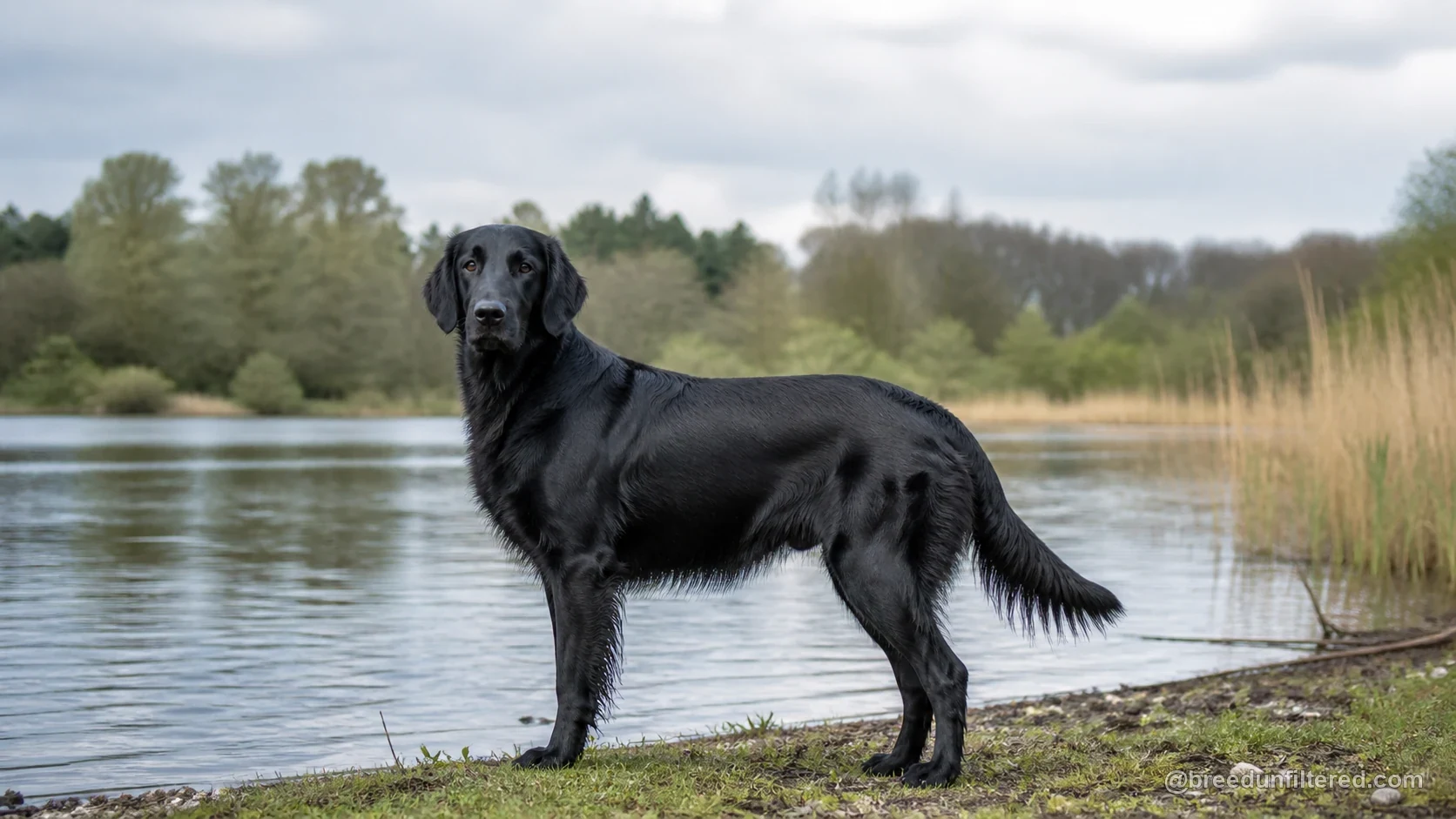
Complete breed guide
Flat Coated Retriever OWNERSHIP GUIDE
The Flat-Coated Retriever, often called the 'Peter Pan' of retrievers, is a breed that seems to stay perpetually young at heart. With its sleek, gleaming coat and ever-wagging tail, this dog exudes an infectious enthusiasm for life. Originally developed in the 19th century as a dual-purpose hunting companion, the Flat-Coat is a versatile gundog that excels both in the field and in the family home. Its hallmark is a happy, outgoing personality that endears it to those who appreciate a dog that is always ready for an adventure.
This breed is not for everyone, however. The Flat-Coated Retriever's exuberance and need for companionship require a dedicated owner who can provide ample exercise, mental stimulation, and consistent training. While they are known for their intelligence and trainability, their youthful antics can persist well into adulthood. Prospective owners should be prepared for a dog that thrives on human interaction and may not do well when left alone for long periods. Understanding the breed's characteristics is essential to ensuring a harmonious match between dog and family.
Origin and Purpose
The Flat-Coated Retriever originated in the United Kingdom in the mid-19th century, developed from a mix of retrievers, spaniels, and possibly setters. The goal was to create a dog that could retrieve game on both land and water, with a strong desire to please and a soft mouth. The breed was refined by gamekeepers and sportsmen who valued its versatility and endurance. By the early 20th century, the Flat-Coat was a popular shooting dog, but its numbers declined with the rise of the Labrador Retriever. Today, it remains a relatively rare breed, cherished by enthusiasts who appreciate its classic retriever abilities.
The breed's purpose as a working retriever is still evident in its physical and mental traits. Flat-Coats are built for endurance, with a moderately long, muscular body and a powerful, driving gait. Their coat is dense and water-resistant, providing protection in harsh conditions. They are natural swimmers and have a strong instinct to retrieve, often bringing back objects with great enthusiasm. This heritage means that they thrive when given a job to do, whether it's participating in hunt tests, agility, or simply playing fetch in the park.
Temperament and Variation
The Flat-Coated Retriever is renowned for its joyful, optimistic temperament. These dogs are typically outgoing, friendly, and eager to please, often greeting everyone with a wagging tail and a happy expression. They are known for their 'Peter Pan' syndrome, retaining a puppy-like playfulness well into their senior years. This exuberance can be both endearing and challenging, as they may not always know when to calm down. Individual variation exists, but the breed standard emphasizes a confident, happy disposition, and any sign of aggression or shyness is considered a fault.
While they are generally good-natured, Flat-Coats can be sensitive and may not respond well to harsh training methods. They thrive on positive reinforcement and gentle guidance. Their intelligence and desire to please make them highly trainable, but they can also be independent thinkers at times. This breed is not typically a guard dog; they are more likely to greet a stranger with enthusiasm than suspicion. However, they will alert their family to unusual noises, making them adequate watchdogs. Overall, the Flat-Coat is a social butterfly that needs to be part of the family activities.
Exercise and Mental Work
Flat-Coated Retrievers are high-energy dogs that require substantial daily exercise to keep them physically and mentally satisfied. A simple walk around the block is not enough; they need opportunities to run, play, and use their natural retrieving instincts. Activities such as fetch, swimming, and off-leash running in a safe area are ideal. They also excel in dog sports like agility, obedience, and rally, which provide both physical exertion and mental challenges. Without adequate exercise, they may become bored and develop destructive behaviors.
Mental stimulation is equally important for this intelligent breed. Puzzle toys, scent games, and training sessions that teach new commands can help keep their minds sharp. They are quick learners and enjoy tasks that involve problem-solving. Engaging their natural retrieving drive with games like 'find it' or hide-and-seek can be particularly rewarding. Owners should be prepared to dedicate time each day to both physical and mental activities to ensure a well-balanced, contented dog.
Training and Socialisation
Training a Flat-Coated Retriever is generally a rewarding experience due to their intelligence and eagerness to please. They respond best to positive reinforcement techniques, such as treats, praise, and play. Harsh corrections can be counterproductive, as they may become wary or shut down. Consistency and patience are key. Early training should focus on basic obedience, impulse control, and a reliable recall, as their enthusiasm can sometimes override their listening skills. They are also known for their 'soft mouth,' which makes them excellent at retrieving delicate objects.
Socialisation is crucial from a young age to ensure they grow into well-mannered adults. Exposing them to a variety of people, animals, environments, and situations helps build their confidence and prevents fearfulness. Flat-Coats are generally friendly with other dogs and people, but proper socialisation reinforces these traits. Puppy classes and regular outings to dog-friendly places can be beneficial. Given their high energy, it's important to teach them polite greetings and not to jump up on people, a common issue with this exuberant breed.
Family and Other Pets
Flat-Coated Retrievers are known for their affectionate and playful nature, making them excellent companions for active families. They are typically good with children, often forming strong bonds and participating in games with enthusiasm. However, their exuberance can be overwhelming for very young children, so supervision is recommended. They are generally tolerant and patient, but like any dog, they should be taught boundaries. Their high energy means they are best suited to families that can provide ample exercise and playtime.
When it comes to other pets, Flat-Coats usually get along well with other dogs, especially if raised together. Their retriever heritage means they have a moderate prey drive, but with proper socialisation, they can coexist with cats and other small animals. They may chase small creatures outdoors, so a secure yard is important. Their friendly disposition extends to visitors, making them poor guard dogs but wonderful hosts. Overall, they thrive in a household where they are considered a member of the family and included in daily activities.
Grooming and Health
The Flat-Coated Retriever has a medium-length, dense coat that is relatively easy to groom. Weekly brushing is usually sufficient to remove loose hair and keep the coat in good condition, though more frequent brushing may be needed during seasonal shedding. They are moderate shedders. Their coat is water-resistant, so they may need a towel dry after swimming. Regular ear checks are important, as their floppy ears can trap moisture and debris, leading to infections. Nail trimming and dental care should be part of a routine grooming schedule.
Like many purebred dogs, Flat-Coated Retrievers are prone to certain health conditions. Responsible breeders screen for hip and elbow dysplasia, eye disorders, and some types of cancer, which is a significant concern in the breed. They have a relatively short lifespan compared to other retrievers, often around 8 to 10 years. Prospective owners should be prepared for potential health issues and consider pet insurance. Regular veterinary check-ups and a healthy diet can help maintain overall well-being. It's essential to choose a reputable breeder who prioritizes health testing.
Costs and Responsibility
Owning a Flat-Coated Retriever involves significant financial and time commitments. The initial cost of a puppy from a reputable breeder can be substantial, often ranging from $1,500 to $3,000 or more, depending on location and pedigree. Ongoing expenses include high-quality food, routine veterinary care, vaccinations, and preventative medications. Grooming supplies and professional grooming services, if used, add to the cost. Additionally, this breed's high energy means they may require more in terms of toys, equipment, and potentially professional training classes.
Beyond finances, prospective owners must consider the time and energy required to meet the breed's needs. Flat-Coats are not suited to a sedentary lifestyle or being left alone for long hours. They need daily exercise, mental stimulation, and companionship. This breed is best for individuals or families who are active and can dedicate time to training and activities. Adopting a rescue or adult dog is another option, but it's important to understand the dog's history and needs. Responsible ownership also involves ensuring the dog is well-socialized and a positive representative of the breed.
Clear answers
FREQUENTLY ASKED QUESTIONS
Are Flat-Coated Retrievers good with children?
Flat-Coated Retrievers are generally good with children, as they are playful, affectionate, and patient. However, their exuberance can be overwhelming for very young children, so supervision is recommended. They thrive in active families where they can participate in games and activities. Early socialisation and training can help them learn appropriate behavior around kids.
How much exercise does a Flat-Coated Retriever need?
Flat-Coated Retrievers are high-energy dogs that need substantial daily exercise, typically at least an hour or more of vigorous activity. This should include opportunities to run, play fetch, and swim. They also benefit from mental stimulation through training and puzzle toys. Without enough exercise, they may become bored and develop destructive behaviors.
Are Flat-Coated Retrievers easy to train?
Yes, Flat-Coated Retrievers are generally easy to train due to their intelligence and eagerness to please. They respond best to positive reinforcement methods, such as treats and praise. Consistency and patience are important, as they can be easily distracted by their enthusiasm. Early socialisation and obedience training are recommended to channel their energy appropriately.
Do Flat-Coated Retrievers shed a lot?
Flat-Coated Retrievers are moderate shedders. They have a dense, medium-length coat that requires weekly brushing to remove loose hair and prevent matting. Shedding may increase during seasonal changes. Regular grooming helps keep their coat healthy and reduces the amount of hair around the home.
What health issues are common in Flat-Coated Retrievers?
Flat-Coated Retrievers are prone to certain health conditions, including hip and elbow dysplasia, eye disorders, and various types of cancer, which is a significant concern. They also have a relatively short lifespan of around 8 to 10 years. Responsible breeders perform health screenings to reduce the risk. Regular veterinary check-ups are essential.
Sources and further reading
Scores describe typical breed tendencies from 1 to 10. They are not a quality ranking or a prediction for an individual dog.
Size and presence6/10
CompactVery large
Physical strength7/10
LightExceptional
Energy level9/10
LowRelentless
Exercise demand10/10
ModestVery demanding
Mental work needed8/10
ModerateDaily job
Trainability9/10
ChallengingExceptional
Everyday manageability6/10
SpecialistStraightforward
First-time owner fit6/10
Poor fitGood fit
Family-life fit9/10
LimitedExcellent
Dog sociability8/10
SelectiveVery social
Prey drive7/10
LowVery high
Guarding tendency3/10
MinimalSerious
Independence4/10
Handler-focusedSelf-directed
Grooming demand9/10
LightHeavy
Apartment fit5/10
Poor fitGood fit