Complete breed guide
Billy OWNERSHIP GUIDE
The Billy is a rare French scenthound, developed in the 19th century by Gaston Hublot du Rivault in the Poitou region. It was created by crossing the now-extinct Montaimboeuf, Céris, and Larye hounds, aiming to combine the best traits of these breeds into a fast, agile, and keen-nosed hunter. The breed was named after the kennel's location, the Château de Billy, and was recognized by the FCI in 1984. Today, the Billy remains a specialized hunting dog, prized for its ability to hunt deer and wild boar in packs, but it also makes a devoted companion for those who can meet its needs.
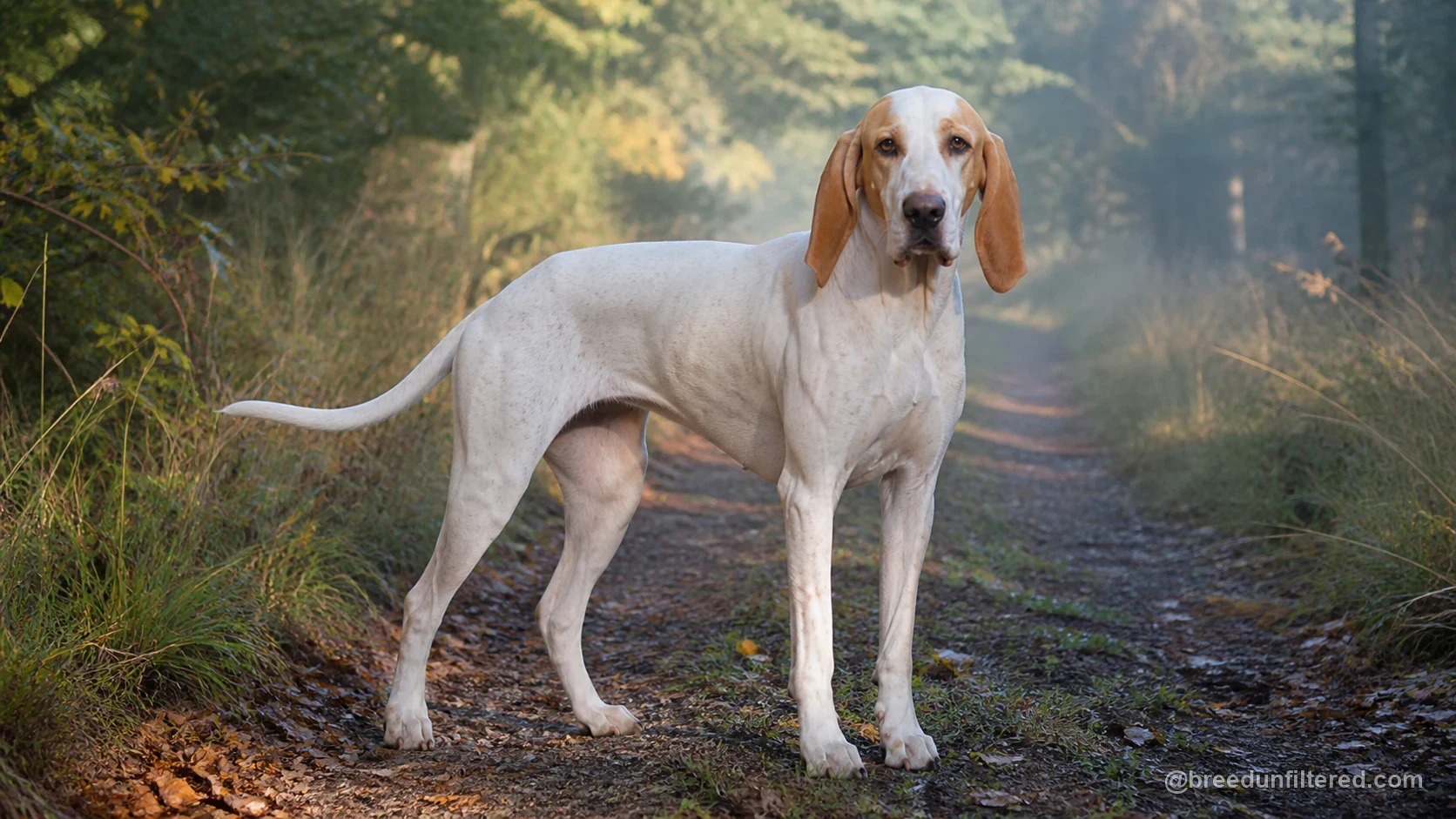
As a large, athletic hound, the Billy is built for endurance and speed, with a short, white coat that may have orange or lemon patches. Its expression is gentle and intelligent, reflecting a temperament that is both affectionate and independent. While not a common family pet, the Billy can adapt to a home environment if given ample exercise and mental stimulation. Prospective owners should understand that this is a working hound with strong instincts, requiring a lifestyle that accommodates its need for activity and purpose.
Origin and Purpose
The Billy was developed in the mid-1800s by Gaston Hublot du Rivault, a French nobleman who sought to create a superior hunting hound. He crossed the Montaimboeuf, a now-extinct breed known for its speed, with the Céris and Larye hounds, which contributed their keen scenting ability and pack drive. The result was a dog that could hunt large game, such as deer and wild boar, with both speed and stamina. The breed was named after the Château de Billy, where the kennels were located, and it quickly gained a reputation among French hunters.
Despite its early success, the Billy nearly disappeared after World War II, as many kennels were destroyed. Dedicated breeders worked to revive the breed, and it was officially recognized by the FCI in 1984. Today, the Billy remains a rare breed, primarily found in France, where it is still used for hunting. Its purpose as a pack hound has shaped its temperament and behavior, making it a dog that thrives on companionship and activity, whether in the field or in a family setting.
Temperament and Variation
The Billy is known for its gentle and affectionate nature, especially with its family. It is a sociable dog that enjoys being part of a group, reflecting its pack-oriented heritage. However, it also possesses an independent streak, typical of hounds, which can manifest as stubbornness if not properly managed. While individual temperaments vary, the breed generally is not aggressive, but it may be reserved with strangers. Early socialization is important to ensure a well-rounded adult dog.
As a hunting breed, the Billy has a strong prey drive and may chase small animals, so caution is needed around non-canine pets. It is also a vocal breed, using its voice to communicate, which can be a consideration for neighbors. Despite its hunting instincts, the Billy can be a loving companion, forming strong bonds with its owners. It is not a one-person dog, but rather a dog that enjoys the company of the whole family, including children, when raised with them.
Exercise and Mental Work
The Billy is a high-energy breed that requires substantial daily exercise to stay physically and mentally healthy. As a hunting hound, it is accustomed to covering long distances over varied terrain, so a simple walk around the block is insufficient. Owners should be prepared to provide at least an hour or two of vigorous activity each day, such as running, hiking, or cycling, in a safe, enclosed area. Without adequate exercise, the Billy may become restless and develop destructive behaviors.
Mental stimulation is equally important for this intelligent breed. Scent games, tracking exercises, and puzzle toys can help satisfy its natural instincts and prevent boredom. The Billy thrives when it has a job to do, so activities like nose work or participation in dog sports can be highly rewarding. However, because of its independent nature, training sessions should be engaging and varied to hold its interest. A tired Billy is a content Billy, and meeting its exercise and mental needs is essential for a harmonious home life.
Training and Socialisation
Training a Billy requires patience and consistency, as this breed is intelligent but can be independent and somewhat stubborn. Positive reinforcement methods, such as treats and praise, work best, while harsh corrections may cause the dog to become resistant. Early training should focus on basic obedience and recall, which is crucial for a hound with a strong prey drive. Because the Billy is a pack dog, it responds well to leadership that is firm yet fair, and it is important to establish boundaries from a young age.
Socialisation is equally vital, starting in puppyhood. Exposing the Billy to a variety of people, animals, and environments helps it develop into a confident and well-mannered adult. While the breed is generally good with other dogs, especially when raised together, its hunting instincts may make it unreliable with small pets. Regular, positive interactions with other dogs and people can mitigate potential issues. A well-socialised Billy is more adaptable and less likely to exhibit fear or aggression in new situations.
Family and Pets
The Billy can make a loving family dog for active households that understand its needs. It is generally good with children, especially when raised with them, and its gentle nature makes it a patient playmate. However, due to its size and energy, supervision is recommended around very young children to prevent accidental knocking over. The breed thrives on being part of family activities and does not do well when left alone for long periods, as it may become anxious or destructive.
When it comes to other pets, the Billy's compatibility varies. It typically gets along well with other dogs, particularly if introduced properly, and may enjoy the company of a canine companion. However, its strong prey drive means that cats, rabbits, and other small animals may be at risk, especially if not raised together. Prospective owners with small pets should exercise caution and consider the individual dog's temperament. Overall, the Billy is best suited to a home with a secure, fenced yard and an active lifestyle.
Grooming and Health
The Billy has a short, dense coat that is relatively low-maintenance. Weekly brushing with a soft bristle brush or hound glove will help remove loose hair and keep the coat healthy. The breed sheds moderately, and more frequent brushing may be needed during seasonal changes. Regular ear checks are important, as floppy-eared dogs are prone to ear infections, and nails should be trimmed as needed. Overall, grooming demands are minimal, making the Billy an easy dog to care for in this regard.
As a relatively rare breed, the Billy benefits from the genetic diversity of its mixed ancestry, but it may still be prone to certain health issues common in hounds, such as hip dysplasia and ear infections. Responsible breeders screen for these conditions, and prospective owners should ask about health clearances. The breed's lifespan is typically 12 to 14 years, and maintaining a healthy weight and regular veterinary care can contribute to longevity. While no breed is free from health concerns, the Billy is generally considered a robust and hardy dog.
Costs and Responsibility
Owning a Billy is a significant commitment, both financially and in terms of time. The initial cost of a puppy from a reputable breeder can be high, reflecting the breed's rarity and the breeder's investment in health testing and care. Ongoing expenses include high-quality food, routine veterinary care, grooming supplies, and training classes. Additionally, because the Billy is a high-energy dog, owners should budget for activities and equipment, such as secure fencing and interactive toys, to keep it stimulated.
Beyond financial costs, responsible ownership involves providing ample exercise, mental stimulation, and companionship. The Billy is not a dog for a sedentary lifestyle or for those who are away from home frequently. It requires an owner who understands its hunting instincts and is willing to invest time in training and socialisation. Potential owners should also consider the breed's vocal nature and space requirements. With the right environment and dedication, the Billy can be a rewarding and loyal companion, but it is not a breed to be taken on lightly.
Clear answers
FREQUENTLY ASKED QUESTIONS
Is the Billy a good family dog?
The Billy can be a good family dog for active households that can meet its exercise and companionship needs. It is generally gentle and affectionate with children, especially when raised with them. However, its size and energy require supervision with young kids, and it may not be suitable for families with small pets due to its prey drive. Early socialisation and training are essential.
How much exercise does a Billy need?
The Billy is a high-energy hound that needs substantial daily exercise, typically at least one to two hours of vigorous activity. This can include running, hiking, or playing in a securely fenced area. Without enough exercise, it may become bored and destructive. Mental stimulation, such as scent games, is also important to keep it content.
Does the Billy get along with other dogs?
Generally, the Billy gets along well with other dogs, especially when socialised from a young age. As a pack hound, it often enjoys the company of canine companions. However, introductions should be gradual, and supervision is recommended, particularly with unfamiliar dogs. Its prey drive may make it unreliable with small animals like cats or rabbits.
What are the grooming requirements for a Billy?
The Billy has a short, dense coat that requires minimal grooming. Weekly brushing helps remove loose hair and keep the coat in good condition. Regular ear checks are important to prevent infections, and nails should be trimmed as needed. The breed sheds moderately, so more frequent brushing may be necessary during shedding seasons.
Is the Billy easy to train?
The Billy is intelligent but can be independent and stubborn, making training a challenge for novice owners. Positive reinforcement methods work best, and consistency is key. Early socialisation and obedience training are crucial, especially for recall, given its strong prey drive. With patience and engaging sessions, the Billy can learn well.
Sources and further reading
Scores describe typical breed tendencies from 1 to 10. They are not a quality ranking or a prediction for an individual dog.
Size and presence5/10
CompactVery large
Physical strength6/10
LightExceptional
Energy level9/10
LowRelentless
Exercise demand10/10
ModestVery demanding
Mental work needed8/10
ModerateDaily job
Trainability5/10
ChallengingExceptional
Everyday manageability2/10
SpecialistStraightforward
First-time owner fit3/10
Poor fitGood fit
Family-life fit7/10
LimitedExcellent
Dog sociability9/10
SelectiveVery social
Prey drive10/10
LowVery high
Guarding tendency3/10
MinimalSerious
Independence8/10
Handler-focusedSelf-directed
Grooming demand2/10
LightHeavy
Apartment fit4/10
Poor fitGood fit