Complete breed guide
Dobermann OWNERSHIP GUIDE
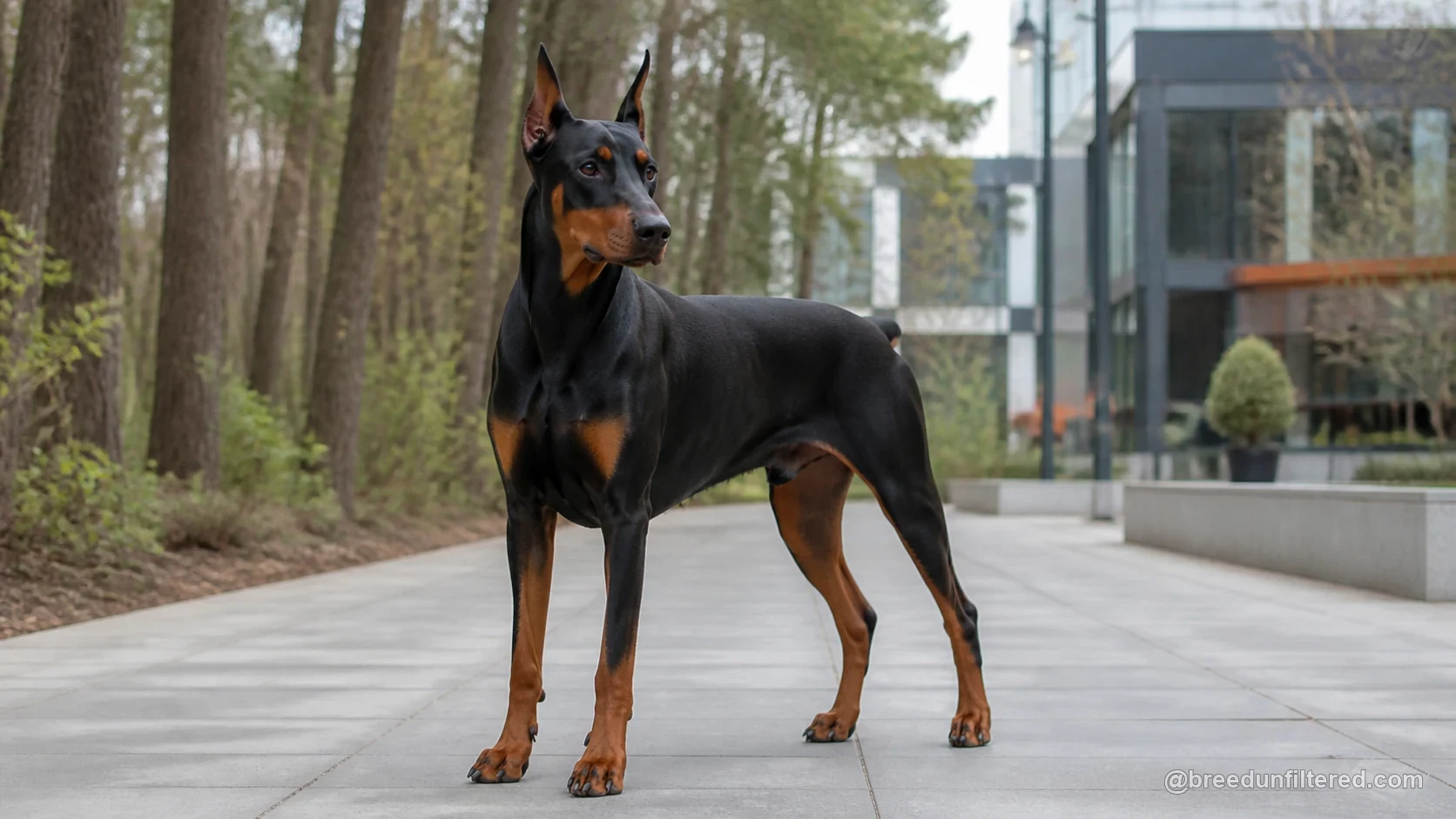
The Dobermann, often spelled Doberman Pinscher in North America, is a breed that commands attention with its sleek, powerful silhouette and alert expression. Developed in Germany in the late 19th century by Karl Friedrich Louis Dobermann, this breed was originally intended as a personal protector and guard dog. Today, Dobermanns are valued worldwide for their loyalty, intelligence, and versatility, excelling in roles as diverse as family companions, service dogs, and competitive athletes. However, their strong guarding instincts and high energy levels mean they are not a breed to be chosen lightly.
Prospective owners should understand that the Dobermann is a working dog at heart, requiring a significant commitment to exercise, mental stimulation, and consistent training. They are known for forming deep bonds with their families and can be incredibly affectionate, yet they are also naturally wary of strangers and may exhibit protective behaviors. This guide aims to provide a balanced, evidence-conscious overview of the breed, covering its origins, temperament, care requirements, and the responsibilities that come with ownership, to help you decide if a Dobermann is the right fit for your lifestyle.
Origin and Purpose
The Dobermann breed was developed in Apolda, Thuringia, Germany, during the 1880s by Karl Friedrich Louis Dobermann, a tax collector and dog catcher. He sought to create a medium-sized guard dog that was intelligent, fearless, and loyal, capable of protecting him during his rounds. The exact mix of breeds used is not documented, but it is believed to include the Rottweiler, German Pinscher, Greyhound, and possibly the Weimaraner or Manchester Terrier. The result was a dog that combined strength, speed, and endurance with a keen protective instinct.
Initially known as the Thuringian Pinscher, the breed was later named Dobermann in honor of its creator. After Dobermann's death, other breeders refined the breed, focusing on temperament and working ability. The Dobermann was officially recognized by the FCI in 1955 and is classified in Group 2 (Pinscher and Schnauzer - Molossoid and Swiss Mountain and Cattledogs). Today, the Dobermann is used in police and military work, search and rescue, and as a loyal companion, but its original purpose as a personal protection dog remains a defining characteristic.
Temperament and Variation
The Dobermann is often described as alert, fearless, and loyal. They are known for their intelligence and eagerness to please, which makes them highly trainable. However, they also possess a strong guarding instinct and can be reserved with strangers. Early and ongoing socialization is crucial to help them distinguish between normal situations and genuine threats. Individual temperament can vary widely based on genetics, training, and environment, so it is essential to meet the parents of a puppy and observe their behavior.
There are also variations within the breed, including differences in size and coat color. The FCI standard recognizes four colors: black and rust, brown and rust, blue and rust, and fawn (Isabella) and rust. Some lines may be bred for show, while others are bred for working ability, which can influence energy levels and drive. Prospective owners should research breeders carefully and choose one who prioritizes health and temperament, as these factors significantly impact the dog's behavior and suitability as a family pet.
Exercise and Mental Work
Dobermanns are high-energy dogs that require regular, vigorous exercise to maintain their physical and mental well-being. Daily walks, runs, or play sessions in a securely fenced area are essential. They also excel in canine sports such as agility, obedience, and tracking, which provide both physical exertion and mental stimulation. Without adequate exercise, Dobermanns may become restless and develop destructive behaviors, such as chewing or digging.
Mental work is equally important for this intelligent breed. Puzzle toys, scent games, and training sessions that challenge their minds can help prevent boredom. Dobermanns thrive when they have a job to do, whether it's learning new commands or participating in activities that tap into their natural abilities. Owners should be prepared to dedicate time each day to both physical and mental enrichment to keep their Dobermann happy and balanced.
Training and Socialisation
Training a Dobermann requires consistency, patience, and positive reinforcement methods. They are highly intelligent and respond well to reward-based training, but they can also be sensitive to harsh corrections. Early obedience training is essential to establish boundaries and build a strong bond. Dobermanns are eager to please, which makes them a joy to train for experienced owners, but they can also test boundaries if they sense inconsistency.
Socialisation should begin early and continue throughout the dog's life. Exposing a Dobermann puppy to a variety of people, animals, environments, and situations helps them develop into confident, well-adjusted adults. This is particularly important given their natural wariness of strangers. Puppy classes and controlled introductions to other dogs can be beneficial. However, it is important to remember that even well-socialised Dobermanns may retain protective instincts, so supervision around unfamiliar people and animals is always recommended.
Family and Pets
Dobermanns can make excellent family companions for households that can meet their needs. They are known for their loyalty and often form strong bonds with all family members, including children. However, their size and energy can be overwhelming for very young children, so supervision is necessary. They are generally gentle and protective of their family, but they may not tolerate rough handling. Teaching children how to interact respectfully with dogs is crucial.
When it comes to other pets, Dobermanns can coexist with cats and other dogs if raised together from a young age. However, their prey drive can be strong, and they may chase small animals. Early socialisation and training can help mitigate this, but it is not guaranteed. Prospective owners with existing pets should consider the individual dog's temperament and history. As with any breed, introductions should be gradual and supervised.
Grooming and Health
The Dobermann has a short, smooth coat that is relatively low-maintenance. Weekly brushing with a rubber curry brush or hound glove will help remove loose hair and keep the coat shiny. They shed moderately year-round, and more during seasonal changes. Bathing should be done as needed, using a mild dog shampoo to avoid drying out their skin. Regular nail trimming, ear cleaning, and dental care are also important parts of their grooming routine.
Like many purebred dogs, Dobermanns are prone to certain health conditions. These may include dilated cardiomyopathy (a heart condition), von Willebrand's disease (a bleeding disorder), hip dysplasia, and hypothyroidism. Responsible breeders screen their breeding stock for these conditions. Regular veterinary check-ups and a healthy diet can help manage potential issues, but owners should be prepared for the possibility of health problems and associated costs. It is essential to obtain a puppy from a breeder who conducts health testing and provides documentation.
Costs and Responsibility
Owning a Dobermann is a significant financial and time commitment. The initial cost of a puppy from a reputable breeder can be substantial, often ranging from $1,500 to $3,000 or more, depending on location and bloodline. Additionally, there are ongoing expenses for high-quality food, routine veterinary care, vaccinations, flea and tick prevention, and grooming supplies. Emergency medical care can be costly, so pet insurance is worth considering.
Beyond finances, Dobermann ownership requires a substantial investment of time and energy. They need daily exercise, mental stimulation, training, and socialisation. They are not a breed that can be left alone for long periods without developing behavioral issues. Prospective owners should honestly assess their lifestyle and ability to meet these demands. A Dobermann is a loyal and rewarding companion for those who are prepared, but they are not suitable for everyone.
Clear answers
FREQUENTLY ASKED QUESTIONS
Are Dobermanns good family dogs?
Dobermanns can be excellent family dogs when properly trained and socialised. They are loyal and protective of their families, and they often get along well with children if raised with them. However, their size and energy can be a challenge for very young kids, and supervision is always recommended. They thrive in homes where they are included in daily activities and given plenty of attention.
How much exercise does a Dobermann need?
Dobermanns are high-energy dogs that require at least one to two hours of vigorous exercise daily. This can include brisk walks, runs, or play sessions in a fenced yard. They also benefit from mental stimulation such as puzzle toys, training sessions, and canine sports. Without adequate exercise, they may become bored and develop destructive behaviors.
Are Dobermanns aggressive?
Dobermanns are not inherently aggressive, but they have strong protective instincts and can be wary of strangers. With proper socialisation and training, they can learn to distinguish between normal situations and actual threats. Aggression is not a breed trait, but any dog can become aggressive if poorly bred, mistreated, or inadequately socialised. Responsible ownership is key.
Do Dobermanns have health problems?
Like many purebred dogs, Dobermanns are prone to certain health conditions, including dilated cardiomyopathy, von Willebrand's disease, hip dysplasia, and hypothyroidism. Responsible breeders screen for these issues, but they can still occur. Regular veterinary care and a healthy lifestyle can help manage potential problems, but owners should be prepared for possible health expenses.
Are Dobermanns easy to train?
Dobermanns are highly intelligent and eager to please, which makes them generally easy to train for experienced owners. They respond well to positive reinforcement methods and enjoy learning new tasks. However, they can be strong-willed and may test boundaries, so consistent and patient training is essential. Early socialisation and obedience classes are highly recommended.
Sources and further reading
Scores describe typical breed tendencies from 1 to 10. They are not a quality ranking or a prediction for an individual dog.
Size and presence8/10
CompactVery large
Physical strength9/10
LightExceptional
Energy level7/10
LowRelentless
Exercise demand8/10
ModestVery demanding
Mental work needed7/10
ModerateDaily job
Trainability6/10
ChallengingExceptional
Everyday manageability1/10
SpecialistStraightforward
First-time owner fit2/10
Poor fitGood fit
Family-life fit6/10
LimitedExcellent
Dog sociability4/10
SelectiveVery social
Prey drive6/10
LowVery high
Guarding tendency10/10
MinimalSerious
Independence10/10
Handler-focusedSelf-directed
Grooming demand5/10
LightHeavy
Apartment fit3/10
Poor fitGood fit