Complete breed guide
Cavalier King Charles Spaniel OWNERSHIP GUIDE
The Cavalier King Charles Spaniel is a small, affectionate toy breed that has charmed owners for centuries. Known for its silky coat, expressive eyes, and gentle demeanor, this breed often appears in lists of popular companion dogs. However, prospective owners should look beyond the appealing appearance and consider the breed's specific needs, including regular grooming, moderate exercise, and a strong desire for human companionship.
This article provides a balanced overview of the Cavalier King Charles Spaniel, drawing on official breed standards and recognized sources. It covers the breed's origin and purpose, typical temperament, exercise and mental stimulation requirements, training and socialization, family compatibility, grooming and health considerations, and the financial and time commitments involved. The goal is to help you decide whether this breed aligns with your lifestyle and expectations.
Origin and Purpose
The Cavalier King Charles Spaniel traces its roots to the toy spaniels depicted in European paintings from the 16th to 18th centuries, often associated with royalty and nobility. The breed's name honors King Charles II of England, who was famously devoted to these small spaniels. However, the modern Cavalier as we know it was developed in the early 20th century when breeders sought to recreate the longer-nosed, flatter-headed spaniels of the old paintings, distinct from the shorter-faced King Charles Spaniel.
The breed was recognized by the Kennel Club in the United Kingdom in 1945 and later by the Fédération Cynologique Internationale (FCI) under standard number 136, classified in Group 9 (Companion and Toy Dogs). Originally bred as lap warmers and companions for the aristocracy, the Cavalier's purpose has remained largely unchanged: to provide affectionate companionship. Today, it is a popular family pet and occasional therapy dog, valued for its gentle and sociable nature.
Temperament and Variation
Cavaliers are generally described as gentle, affectionate, and eager to please. They typically enjoy being close to their owners and often seek physical contact, making them excellent lap dogs. While individual temperaments vary, the breed standard emphasizes a happy, friendly, and fearless expression. They are usually social with strangers and other animals, which can make them poor guard dogs but wonderful companions for households that value a welcoming demeanor.
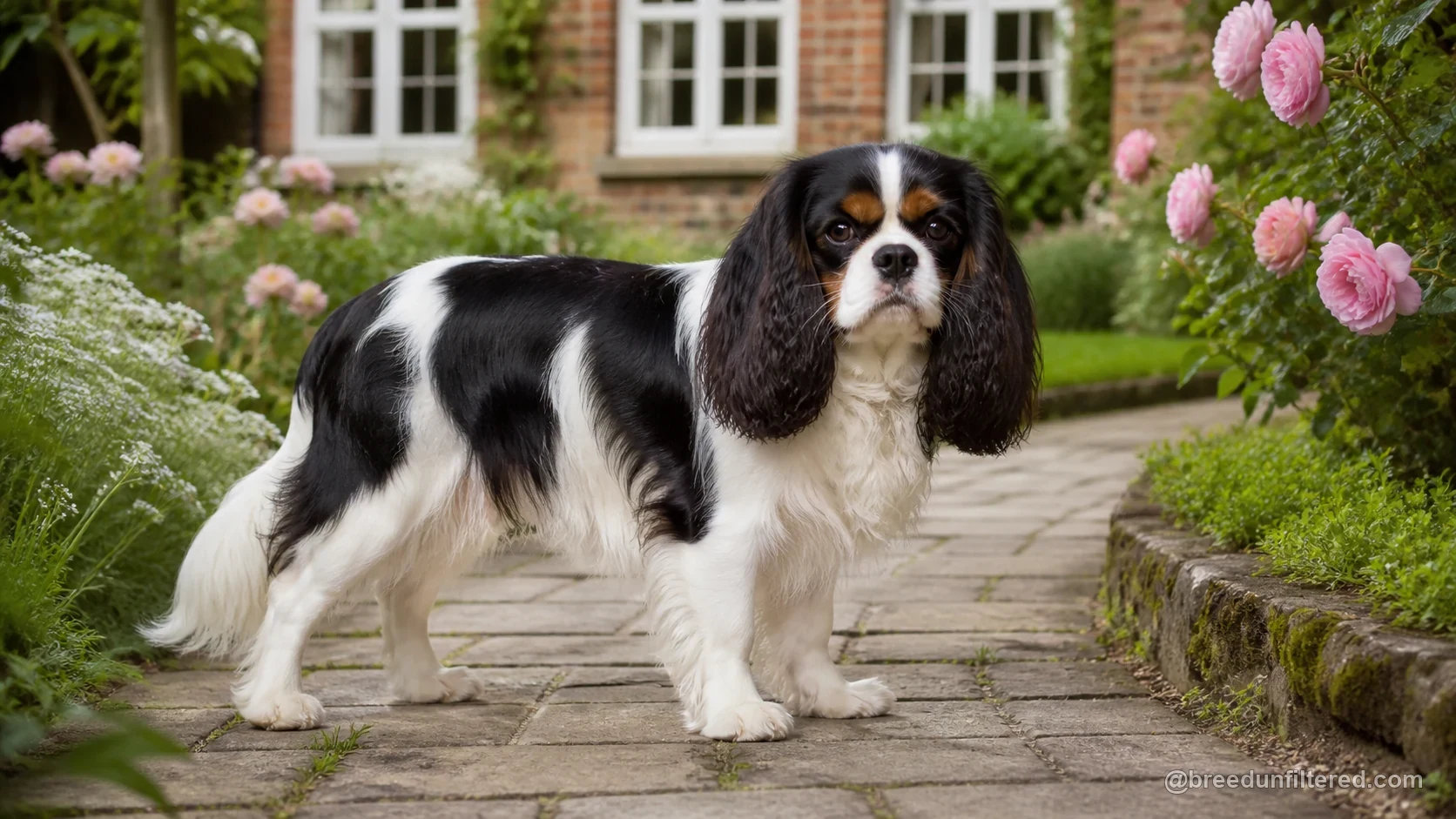
There are four recognized coat colors in the breed: Blenheim (chestnut and white), tricolor (black, white, and tan), ruby (solid rich red), and black and tan. These color variations do not significantly affect temperament, but they may influence coat care and visibility. Prospective owners should remember that each dog is an individual, and early socialization and training play a crucial role in shaping behavior, regardless of the breed's general tendencies.
Exercise and Mental Work
Cavaliers are moderately active dogs. They enjoy daily walks and play sessions but do not require the high-intensity exercise of many sporting breeds. A typical adult Cavalier may be content with a couple of 20-30 minute walks per day, plus some indoor play. However, they are also adaptable and can enjoy longer outings if conditioned gradually. Because they are prone to weight gain, regular exercise is important to maintain a healthy body condition.
Mental stimulation is equally important. Cavaliers are intelligent and respond well to positive reinforcement training, puzzle toys, and interactive games. Without adequate mental engagement, they may become bored and develop undesirable behaviors such as excessive barking or chewing. Activities like nose work, obedience, or agility can provide both mental and physical challenges, strengthening the bond between dog and owner.
Training and Socialisation
Cavaliers are generally eager to please and respond well to gentle, consistent training methods. Harsh corrections are unnecessary and can damage their sensitive nature. Early socialization is crucial to help them become well-adjusted adults. Exposing them to a variety of people, environments, and other animals during puppyhood can reduce the likelihood of shyness or fearfulness later in life.
Basic obedience training is recommended for all dogs, and Cavaliers often excel in activities like rally or therapy work. They are typically not stubborn, but they can be easily distracted by scents or other dogs, so training sessions should be kept short and rewarding. House training may require patience, as with any small breed, but consistent scheduling and positive reinforcement usually yield good results.
Family and Other Pets
Cavaliers are often excellent family dogs, known for their gentle and patient demeanor with children. They are generally tolerant and enjoy being part of family activities. However, because of their small size and delicate bones, they are best suited to households where children are taught to handle them with care. Supervision during interactions with very young children is always advisable to prevent accidental injury.
They typically get along well with other dogs and cats, especially if raised together. Their friendly nature extends to strangers, so they are not effective watchdogs. As with any breed, individual temperament varies, and proper introductions are important when bringing a new pet into the home. Cavaliers thrive on companionship and may not do well if left alone for long periods, as they can develop separation anxiety.
Grooming and Health
The Cavalier's silky, medium-length coat requires regular grooming to prevent mats and tangles. Brushing several times a week is recommended, with more frequent attention during shedding seasons. Their ears, which are long and feathered, should be checked and cleaned regularly to avoid infections. Nail trimming, teeth brushing, and occasional baths are also part of routine care.
Health-wise, Cavaliers are prone to certain inherited conditions, most notably mitral valve disease (a heart condition) and syringomyelia (a neurological disorder). Reputable breeders screen their breeding stock for these and other issues, but prospective owners should be aware of the potential for veterinary expenses. Regular check-ups and a healthy lifestyle can help manage some risks, but no dog is guaranteed to be free of health problems.
Costs and Responsibility
Owning a Cavalier involves significant financial and time commitments. Initial costs include the purchase price from a responsible breeder, which can vary widely, as well as supplies such as a crate, bedding, food, and grooming tools. Ongoing expenses include high-quality food, routine veterinary care, vaccinations, parasite prevention, and pet insurance. Emergency medical care can be costly, especially for breed-specific conditions.
Beyond finances, Cavaliers require daily companionship, exercise, and grooming. They are not a breed that can be left alone for long hours without potential behavioral issues. Prospective owners should assess their lifestyle, living situation, and ability to provide consistent care. Adopting from a rescue or shelter is also a viable option, giving a home to a dog in need while potentially reducing some initial costs.
Clear answers
FREQUENTLY ASKED QUESTIONS
Are Cavalier King Charles Spaniels good with children?
Cavaliers are generally gentle and patient, making them good companions for children who are taught to interact respectfully. However, due to their small size, they can be easily injured by rough handling. Supervision is recommended, especially with younger children, to ensure both the dog and child are safe and comfortable.
How much exercise does a Cavalier need?
Cavaliers are moderately active and typically enjoy a couple of 20-30 minute walks per day, plus playtime. They can adapt to more or less activity, but regular exercise is important to prevent obesity and maintain overall health. Mental stimulation through games and training is also essential to keep them happy.
Do Cavaliers shed a lot?
Yes, Cavaliers are moderate to heavy shedders, especially during seasonal changes. Their silky coat requires regular brushing, ideally several times a week, to manage loose hair and prevent mats. Frequent grooming can help reduce shedding around the home, but it will not eliminate it entirely.
What health issues are common in Cavaliers?
Cavaliers are prone to certain inherited conditions, including mitral valve disease and syringomyelia. Responsible breeders screen for these issues, but they can still occur. Regular veterinary check-ups and a healthy lifestyle can help manage some risks, but prospective owners should be prepared for potential medical expenses.
Are Cavaliers easy to train?
Cavaliers are generally eager to please and respond well to positive reinforcement training. They are intelligent but can be easily distracted, so short, engaging sessions work best. Early socialization and consistent, gentle training are key to raising a well-mannered Cavalier.
Sources and further reading
Scores describe typical breed tendencies from 1 to 10. They are not a quality ranking or a prediction for an individual dog.
Size and presence1/10
CompactVery large
Physical strength2/10
LightExceptional
Energy level5/10
LowRelentless
Exercise demand4/10
ModestVery demanding
Mental work needed6/10
ModerateDaily job
Trainability7/10
ChallengingExceptional
Everyday manageability7/10
SpecialistStraightforward
First-time owner fit7/10
Poor fitGood fit
Family-life fit8/10
LimitedExcellent
Dog sociability7/10
SelectiveVery social
Prey drive4/10
LowVery high
Guarding tendency3/10
MinimalSerious
Independence5/10
Handler-focusedSelf-directed
Grooming demand7/10
LightHeavy
Apartment fit9/10
Poor fitGood fit