Complete breed guide
Japanese Chin OWNERSHIP GUIDE
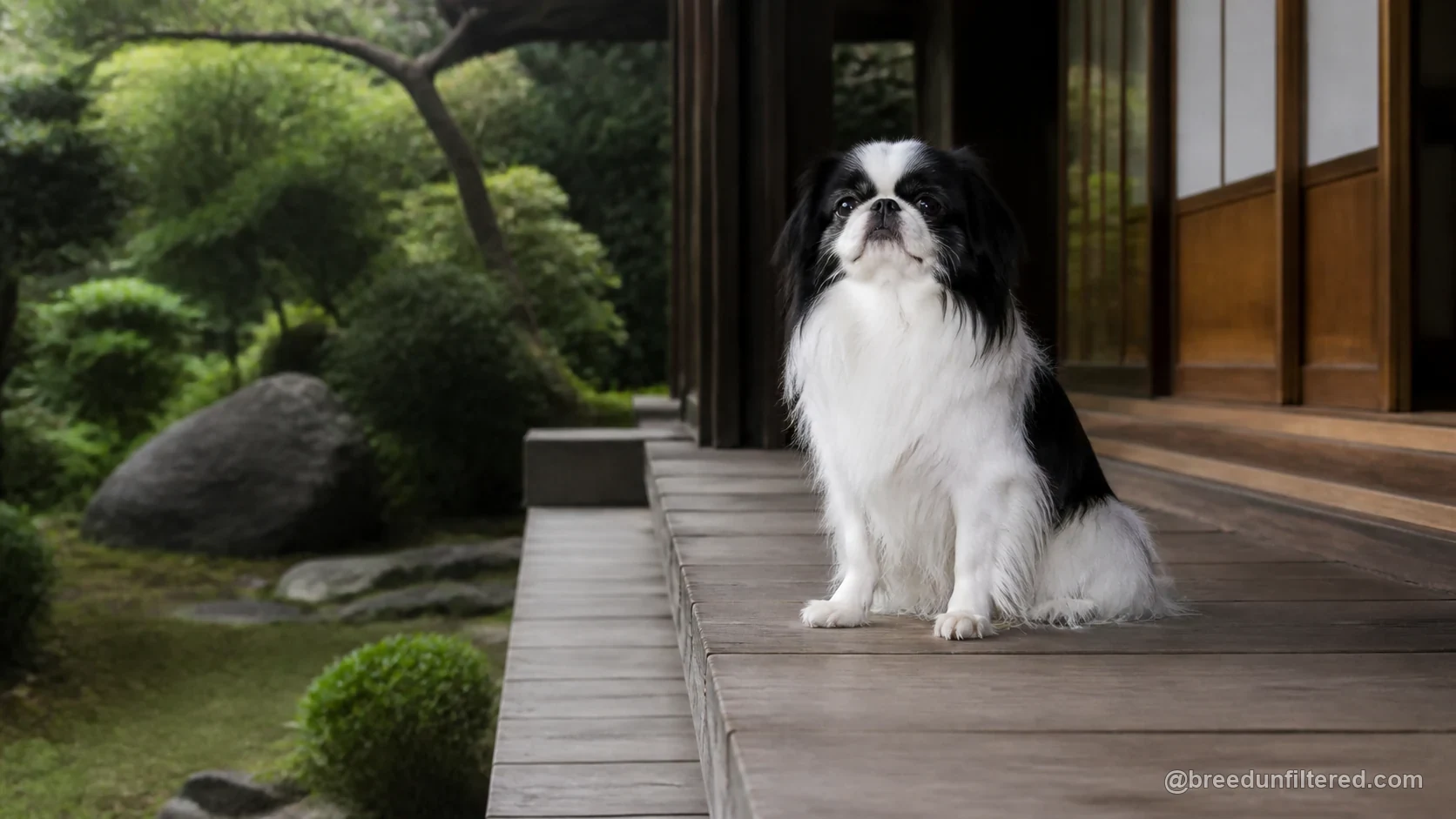
The Japanese Chin, a toy breed with a regal bearing and a cat-like demeanor, has been a companion to nobility for centuries. Known for their expressive eyes and a silky, flowing coat, these dogs are often described as 'spaniel-like' in appearance but possess a distinctly independent and charming personality. Originating from East Asia, the breed's exact ancestry is debated, but it is clear that they were treasured by Japanese royalty and later gained popularity in the West. Today, the Japanese Chin is recognized by major kennel clubs, including the FCI, which classifies it under Group 9 (Companion and Toy Dogs) with standard number 206.
Prospective owners should understand that the Japanese Chin is not a high-energy athlete but rather a gentle, observant companion. They thrive on human company and are known for their ability to form deep bonds with their families. While they are adaptable to various living situations, including apartments, they do have specific needs regarding grooming, socialization, and health monitoring. This article aims to provide a balanced overview of the breed, covering its history, temperament, care requirements, and potential challenges, to help you decide if a Japanese Chin is the right addition to your home.
Origin and Purpose
The Japanese Chin's history is steeped in legend and royal favor. Believed to have originated in China or Korea, they were likely brought to Japan as gifts to the imperial court over a thousand years ago. In Japan, they were bred as companions for the nobility and were often kept in temples and palaces. Their name 'Chin' may derive from the Chinese word for 'dog' or from the Japanese word for 'precious.' The breed was carefully guarded, and it was not until the 19th century that they were introduced to the Western world, where they quickly became popular among aristocrats.
The breed's primary purpose has always been companionship. Unlike many other toy breeds, the Japanese Chin was never used for hunting or vermin control. Instead, they were valued for their beauty, their quiet and affectionate nature, and their ability to provide comfort and entertainment. This history has shaped the breed into a devoted and somewhat reserved dog that is happiest when close to its human family. Understanding this background helps explain why Japanese Chins are often described as 'cat-like' in their independence and their tendency to choose one favorite person.
Temperament and Variation
Japanese Chins are known for their gentle, affectionate, and somewhat aloof temperament. They are typically quiet dogs, not prone to excessive barking, and they often display a calm and dignified demeanor. They are intelligent and can be sensitive, responding best to a soft and patient approach. While they are devoted to their families, they may be reserved with strangers, and early socialization is important to help them feel confident in new situations. Individual temperaments can vary, with some Chins being more outgoing and others more shy, but the breed standard emphasizes a cheerful and lively disposition.
There is some variation within the breed in terms of energy levels and sociability. Some Japanese Chins are more playful and energetic, while others are content to be lapdogs. They are generally good with children if raised with them, but their small size and delicate build mean that interactions with very young children should be supervised. They also tend to get along well with other dogs and even cats, especially if they are introduced properly. However, they can be possessive of their owners and may not appreciate rough handling. Understanding these tendencies can help prospective owners prepare for a well-adjusted companion.
Exercise and Mental Work
The Japanese Chin has moderate exercise needs. They enjoy short walks and play sessions but are not demanding in terms of physical activity. A daily walk of about 20-30 minutes, along with some indoor play, is generally sufficient to keep them healthy and happy. They are well-suited to apartment living and do not require a large yard. However, they should not be considered completely sedentary; they benefit from regular, gentle exercise to maintain a healthy weight and prevent boredom. Because of their brachycephalic (flat-faced) nature, they can be sensitive to heat and humidity, so exercise should be moderated in warm weather.
Mental stimulation is equally important for this intelligent breed. Japanese Chins enjoy puzzle toys, training sessions that involve treats, and games that challenge their minds. They are quick learners but can be stubborn, so training should be positive and reward-based. Without adequate mental engagement, they may become bored and develop undesirable behaviors such as excessive licking or chewing. Incorporating short training sessions into their daily routine not only provides mental work but also strengthens the bond between the dog and its owner. Remember that each dog is an individual, and their exercise and mental needs may vary.
Training and Socialisation
Training a Japanese Chin requires patience and a gentle hand. They respond well to positive reinforcement techniques such as treats, praise, and play. Harsh methods or loud voices can cause them to shut down or become fearful. They are intelligent and can learn basic obedience commands, but they may have a stubborn streak. Consistency and short, engaging sessions are key. House training can sometimes be challenging, and crate training is often recommended. Early socialization is crucial to help them become well-adjusted adults. Exposing them to various people, sights, sounds, and other animals in a positive way can prevent shyness or fearfulness.
Socialization should begin early and continue throughout their lives. Puppy classes are a great way to start, but even adult dogs can benefit from gradual exposure to new experiences. Japanese Chins are generally good with other dogs if they are properly socialized, but they may be wary of larger, boisterous dogs. They also have a moderate prey drive, so caution is needed around small animals like rodents or birds. With consistent, kind training and early socialization, a Japanese Chin can become a well-mannered and confident companion. Remember that every dog is an individual, and training should be tailored to their specific personality.
Family and Other Pets
Japanese Chins make wonderful companions for families, but they are best suited to households with older children who understand how to handle a small, delicate dog. They are affectionate and enjoy being involved in family activities, but they are not typically boisterous or demanding. They can be sensitive to loud noises and chaotic environments, so a calm household is ideal. They form strong bonds with their owners and may suffer from separation anxiety if left alone for long periods. They are often described as 'velcro dogs' because they like to be near their people.
When it comes to other pets, Japanese Chins generally get along well with other dogs and cats, especially if they are raised together. They have a moderate prey drive, so they may chase small animals, but with proper socialization, they can coexist peacefully. They are not typically aggressive, but they may be possessive of their food or toys. Introducing a Japanese Chin to a home with existing pets should be done gradually and under supervision. Their gentle nature makes them a good choice for multi-pet households, but early and ongoing socialization is essential to ensure harmony.
Grooming and Health
The Japanese Chin has a long, silky coat that requires regular grooming to keep it in good condition. Brushing several times a week is necessary to prevent mats and tangles, and more frequent grooming may be needed during shedding seasons. They are moderate shedders. Bathing should be done as needed, using a gentle dog shampoo. Their flat faces require regular cleaning of the facial folds to prevent skin infections. Their eyes are large and prone to injury, so they should be checked regularly. Dental care is also important, as small breeds are prone to dental issues.
Like all breeds, Japanese Chins are prone to certain health conditions, though not all individuals will be affected. Common concerns include patellar luxation, heart problems such as mitral valve disease, and eye issues like cataracts and progressive retinal atrophy. They are also sensitive to heat due to their brachycephalic anatomy. Prospective owners should seek a reputable breeder who screens for these conditions and provides health clearances. Regular veterinary check-ups and a healthy diet are essential. While the breed has a relatively long lifespan of 10-12 years, being aware of potential health issues can help owners provide the best care.
Costs and Responsibility
Owning a Japanese Chin involves financial and time commitments. The initial cost of purchasing a puppy from a reputable breeder can be significant, often ranging from $1,000 to $3,000 or more, depending on location and pedigree. Ongoing expenses include high-quality dog food, routine veterinary care, grooming supplies, and pet insurance. Grooming can be done at home, but professional grooming may be needed periodically. Additionally, owners should budget for unexpected medical expenses, as the breed may be prone to certain health issues. It is wise to set aside funds for emergencies.
Beyond finances, owning a Japanese Chin requires a significant time commitment. They are social dogs that need daily interaction and should not be left alone for extended periods. They thrive on companionship and may develop behavioral issues if neglected. Prospective owners should also consider their living situation; while they adapt well to apartments, they need a safe environment free from hazards. Responsible ownership includes providing proper training, socialization, and healthcare. It also means being prepared for the emotional and physical needs of a dog that will be a loyal companion for many years. Adopting from a rescue is also an option, giving a home to a Chin in need.
Clear answers
FREQUENTLY ASKED QUESTIONS
Are Japanese Chins good with children?
Japanese Chins can be good with children, especially older, respectful kids who understand how to handle a small dog. They are gentle and affectionate, but their delicate build means they can be easily injured by rough play. Supervision is essential when they are around toddlers or young children. Early socialization and training can help them feel comfortable around kids, but they may prefer quieter environments.
How much exercise does a Japanese Chin need?
Japanese Chins have moderate exercise needs. A daily walk of about 20-30 minutes, along with some indoor play, is typically sufficient. They are not high-energy dogs and are well-suited to apartment living. However, they should not be overly sedentary, and mental stimulation is also important. Because of their flat faces, avoid strenuous exercise in hot weather.
Are Japanese Chins easy to train?
Japanese Chins are intelligent but can be stubborn, so training requires patience and positive reinforcement. They respond well to treats and praise, but harsh methods can be counterproductive. House training can be challenging, and crate training is often recommended. Early socialization and consistent, gentle training will help them become well-behaved companions.
Do Japanese Chins shed a lot?
Japanese Chins are moderate shedders. They have a long, silky coat that requires regular brushing several times a week to prevent mats and tangles. Shedding may increase seasonally. Regular grooming not only keeps their coat healthy but also reduces loose hair around the home. They are not considered hypoallergenic.
What health issues are common in Japanese Chins?
Japanese Chins may be prone to certain health conditions, including patellar luxation, heart problems like mitral valve disease, and eye issues such as cataracts. They are also sensitive to heat due to their brachycephalic anatomy. Not all dogs will develop these issues, but responsible breeders screen for them. Regular veterinary check-ups are important.
Sources and further reading
Scores describe typical breed tendencies from 1 to 10. They are not a quality ranking or a prediction for an individual dog.
Size and presence3/10
CompactVery large
Physical strength3/10
LightExceptional
Energy level6/10
LowRelentless
Exercise demand5/10
ModestVery demanding
Mental work needed6/10
ModerateDaily job
Trainability5/10
ChallengingExceptional
Everyday manageability5/10
SpecialistStraightforward
First-time owner fit7/10
Poor fitGood fit
Family-life fit8/10
LimitedExcellent
Dog sociability8/10
SelectiveVery social
Prey drive4/10
LowVery high
Guarding tendency3/10
MinimalSerious
Independence7/10
Handler-focusedSelf-directed
Grooming demand9/10
LightHeavy
Apartment fit8/10
Poor fitGood fit