Complete breed guide
Bosnian Broken-Haired Hound - Called Barak OWNERSHIP GUIDE
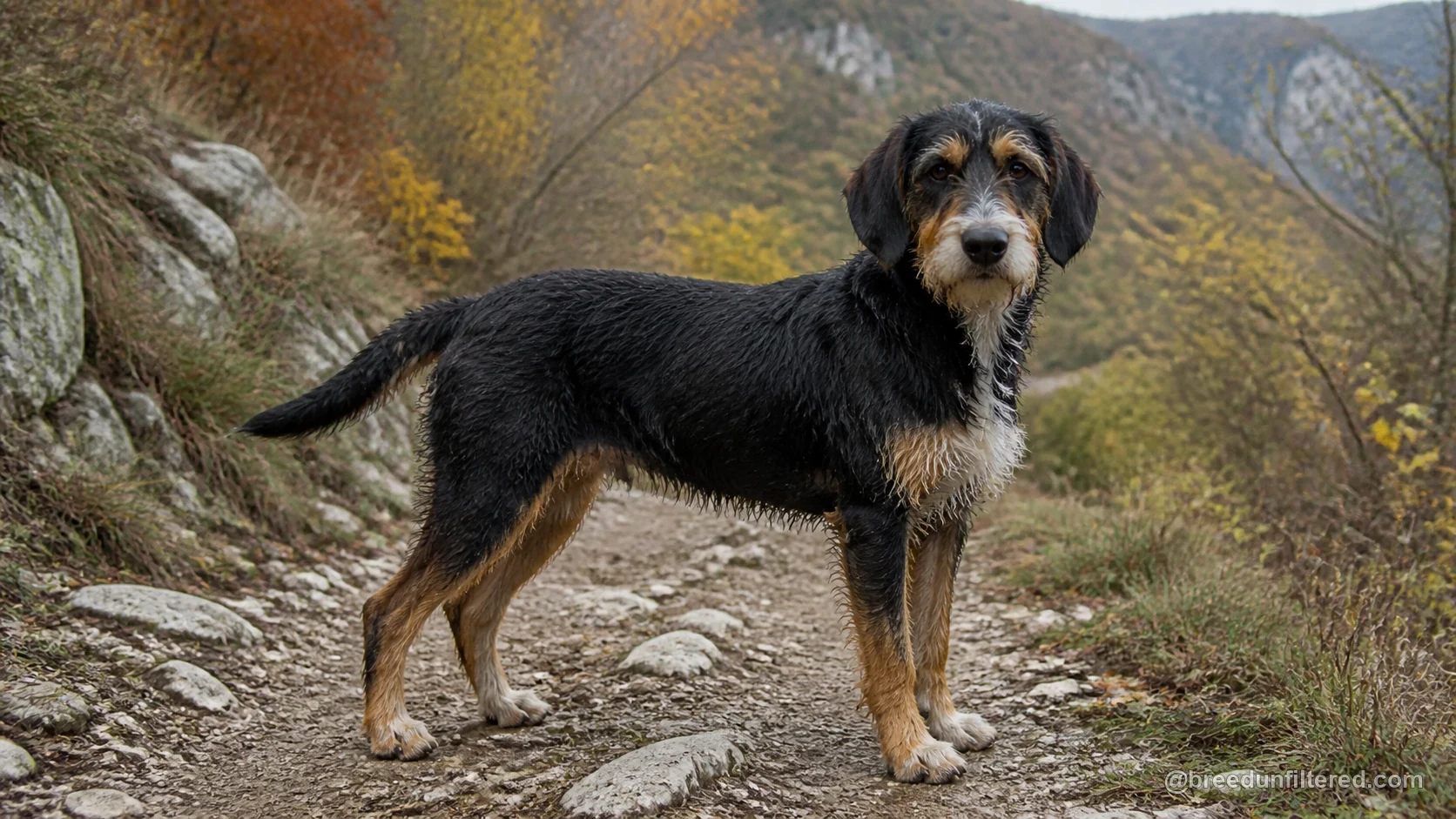
The Bosnian Broken-Haired Hound, often called the Barak, is a scenthound from the rugged mountains of Bosnia and Herzegovina. Developed to trail game over challenging terrain, this breed is known for its endurance, determination, and distinctive harsh coat. For prospective owners, understanding the Barak's working heritage is essential, as it shapes its needs and temperament.
This article provides an evidence-conscious overview of the breed, drawing on the official FCI standard and general scenthound knowledge. It covers the breed's origin, temperament, exercise and training requirements, family compatibility, grooming, health considerations, and the responsibilities of ownership. The goal is to help you decide if a Barak fits your lifestyle, while acknowledging that individual dogs vary.
Origin and Purpose
The Bosnian Broken-Haired Hound originates from the Balkan region, specifically Bosnia and Herzegovina, where it has been used for centuries as a hunting dog. The FCI standard describes it as a medium-sized, robust hound built for endurance and agility in mountainous, often rocky terrain. Its name 'Barak' is thought to derive from a local term for the harsh, broken coat that protects it from brambles and weather.
The breed's primary purpose is to hunt hare, fox, and wild boar, working alone or in packs. It is prized for its excellent nose, persistent tracking ability, and loud, musical voice when on a trail. While still primarily a working dog, the Barak has gained some recognition as a companion, but its instincts remain strong. Prospective owners should appreciate that this is a breed with a deep-rooted hunting drive.
Temperament and Variation
The Barak is generally described as even-tempered, loyal, and devoted to its family. It is typically calm at home but can be energetic and determined when working or exercising. As a scenthound, it is often independent and may be more interested in following a scent than in pleasing its owner. This independence can be a challenge for first-time owners.
Individual temperament varies widely based on genetics, socialisation, and training. Some Baraks may be more sociable with strangers, while others are reserved. The FCI standard notes that the breed is not aggressive, but it can be wary. Early and consistent socialisation is crucial to help a Barak become a well-adjusted companion. It is not a breed that thrives on being left alone for long periods.
Exercise and Mental Work
The Barak is a high-energy breed with substantial exercise needs. It was bred to cover large distances in difficult terrain, so it requires daily vigorous activity, such as long walks, jogs, or off-lead runs in a safe, enclosed area. Without adequate exercise, a Barak may become restless or develop behavioural issues. However, the exact amount varies by age, health, and individual.
Mental stimulation is equally important. Scent games, tracking exercises, and puzzle toys can help satisfy the Barak's natural instincts. Activities like nose work or barn hunt can be excellent outlets. Owners should be prepared to provide both physical and mental challenges to keep this intelligent hound content. A bored Barak may use its nose to find trouble.
Training and Socialisation
Training a Barak requires patience, consistency, and positive reinforcement. This breed is intelligent but can be stubborn and easily distracted by scents. Short, engaging sessions with rewards like treats or play are more effective than harsh methods. Early obedience training is essential to establish a reliable recall, as the Barak's hunting instinct can override its desire to please.
Socialisation from puppyhood is vital. Expose the Barak to various people, animals, environments, and sounds to build a confident, well-mannered adult. While it can be friendly with other dogs, its prey drive may be triggered by small animals. A Barak may never be trustworthy off-lead in unenclosed areas, so a secure fence and a long line are practical tools.
Family and Pets
The Barak can be a loving family dog, especially in homes with active owners who understand its needs. It is typically good with children, especially when raised with them, but interactions should always be supervised, as with any breed. Its size and energy could inadvertently knock over small children, so teaching both dog and child appropriate behaviour is important.
With other pets, the Barak's hunting background means it may view small animals like cats, rabbits, or rodents as prey. It generally gets along with other dogs, particularly if socialised early, but introductions should be gradual. A Barak is not an ideal choice for a household with small pets unless the owner is experienced and willing to manage the risk.
Grooming and Health
The Barak's broken coat is harsh and dense, providing protection from the elements. Grooming needs are moderate: weekly brushing to remove loose hair and prevent matting, with more frequent attention during seasonal sheds. Bathing is only necessary when dirty, as over-bathing can strip natural oils. Regular ear checks are important, as floppy ears can trap moisture and debris.
As a breed, the Barak is generally hardy, but like all dogs, it can be prone to certain health conditions. Hip dysplasia and ear infections are possibilities, though there is no widespread data on prevalence. Responsible breeders screen for common issues. Prospective owners should ask about health testing and provide regular veterinary care, a balanced diet, and appropriate exercise to support overall well-being.
Costs and Responsibility
Owning a Barak involves significant financial and time commitments. Initial costs include purchase price, which varies by breeder and location, plus supplies like a crate, leash, and bedding. Ongoing expenses include high-quality food, routine veterinary care, vaccinations, parasite prevention, and potential emergency or specialty care. Pet insurance can help manage unexpected costs.
Beyond money, a Barak demands a substantial investment of time for exercise, training, and companionship. This is not a breed for a sedentary lifestyle or for owners who are away from home for long hours. Prospective owners should honestly assess their ability to meet these needs. Adopting from a rescue or breed-specific group is also an option, though availability may be limited.
Clear answers
FREQUENTLY ASKED QUESTIONS
Is the Bosnian Broken-Haired Hound a good family dog?
The Barak can be a good family dog for active households that understand its needs. It is typically loyal and gentle with family members, including children, especially when raised with them. However, its high energy and strong prey drive require supervision around small pets and young kids. Early socialisation and training are essential to ensure a well-adjusted companion.
How much exercise does a Barak need daily?
The Barak is a high-energy scenthound that needs substantial daily exercise, typically at least 1-2 hours of vigorous activity. This can include long walks, jogs, or off-lead runs in a secure area. Mental stimulation through scent games or tracking is also crucial. Without enough exercise, a Barak may become restless or develop destructive behaviours.
Is the Barak easy to train?
Training a Barak can be challenging due to its independent nature and strong hunting instincts. It is intelligent but may be easily distracted by scents. Positive reinforcement methods, such as treats and praise, work best. Consistency and patience are key. Early obedience training and reliable recall are essential, as the Barak may not always come when called if it is on a trail.
Does the Barak get along with other pets?
The Barak generally gets along with other dogs, especially if socialised from a young age. However, its prey drive can be strong, so it may not be safe with small animals like cats, rabbits, or rodents. Introductions should be gradual and supervised. Owners with small pets should consider whether they can manage the risk, as the Barak's hunting instinct may be difficult to override.
What are the grooming requirements for a Barak?
The Barak has a harsh, broken coat that requires moderate grooming. Weekly brushing is usually sufficient to remove loose hair and prevent matting, with more frequent brushing during seasonal sheds. Bathing should be done only when necessary. Regular ear checks are important because the floppy ears can trap moisture, leading to infections. Nail trimming and dental care are also part of routine maintenance.
Sources and further reading
15-point breed scorecard
BOSNIAN BROKEN-HAIRED HOUND - CALLED BARAK AT A GLANCE
Compare this breedScores describe typical breed tendencies from 1 to 10. They are not a quality ranking or a prediction for an individual dog.
Size and presence5/10
CompactVery large
Physical strength6/10
LightExceptional
Energy level9/10
LowRelentless
Exercise demand10/10
ModestVery demanding
Mental work needed8/10
ModerateDaily job
Trainability5/10
ChallengingExceptional
Everyday manageability2/10
SpecialistStraightforward
First-time owner fit3/10
Poor fitGood fit
Family-life fit6/10
LimitedExcellent
Dog sociability8/10
SelectiveVery social
Prey drive10/10
LowVery high
Guarding tendency3/10
MinimalSerious
Independence8/10
Handler-focusedSelf-directed
Grooming demand4/10
LightHeavy
Apartment fit4/10
Poor fitGood fit