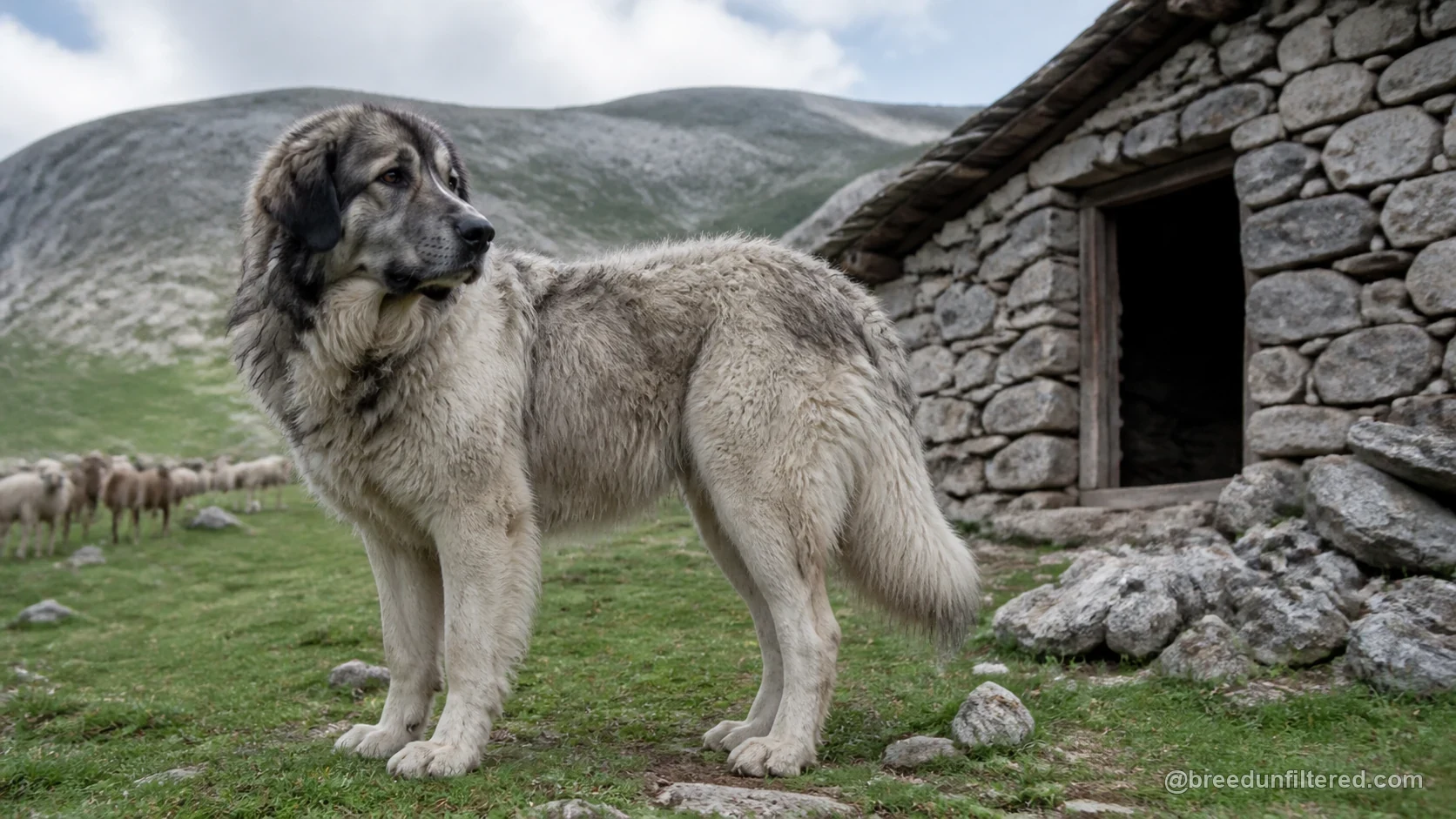
Complete breed guide
Bosnian And Herzegovinian - Croatian Shepherd Dog OWNERSHIP GUIDE
The Bosnian and Herzegovinian-Croatian Shepherd Dog, also known as the Tornjak, is a large and powerful livestock guardian breed with deep roots in the mountainous regions of Bosnia and Herzegovina and Croatia. Recognized definitively by the Fédération Cynologique Internationale (FCI) under standard number 355, this breed has been shaped for centuries to protect flocks from predators and thieves. Its name, 'Tornjak,' is derived from a local term for a sheepfold, reflecting its historical role as a guardian of the fold.
Today, the Tornjak remains a working dog at heart, prized for its calm demeanor, loyalty, and protective instincts. While not as widely known as some other guardian breeds, it has gained a devoted following among those who appreciate its intelligence and steady temperament. This article provides a comprehensive overview for prospective owners, covering the breed's origin, temperament, exercise needs, training, health, and the responsibilities involved in caring for such a dedicated guardian.
Origin and Purpose
The Tornjak's history is intertwined with the pastoral traditions of the Dinaric Alps, where shepherds relied on robust dogs to guard their flocks against wolves, bears, and human threats. The breed's development was a practical response to the harsh environment and the constant need for reliable protection. For centuries, these dogs were selected for their size, courage, and ability to work independently, often without direct human supervision for long periods.
The modern breed standard was established relatively recently, with the FCI granting definitive recognition in 2007. This recognition helped to preserve the breed's unique characteristics and promote responsible breeding. Today, the Tornjak is still used for its original purpose in its homeland, but it also finds roles as a companion and guardian of property. Understanding its heritage is essential for any prospective owner, as it explains the breed's strong guarding instincts and its need for a job to do.
Temperament and Variation
The Tornjak is known for its calm, steady, and confident temperament. It is typically not aggressive without cause, but it is highly alert and protective of its family and territory. This breed forms strong bonds with its human family and is often described as gentle and patient with children, especially when raised with them. However, its guarding nature means it can be wary of strangers, making early and ongoing socialisation crucial.
As with any breed, individual temperament varies. Some Tornjaks may be more outgoing, while others are more reserved. The breed's working lines may exhibit stronger guarding instincts, while those from companion lines might be slightly more adaptable to a relaxed lifestyle. Prospective owners should meet the parents of a puppy whenever possible to gauge temperament, and they should be prepared for a dog that is independent and thoughtful, not overly eager to please but deeply loyal.
Exercise and Mental Work
Despite its large size, the Tornjak is not a high-energy dog in the way that many herding breeds are. It is more inclined to patrol and observe than to run endlessly. Daily walks and access to a securely fenced yard are usually sufficient to meet its physical needs. However, because it was bred to guard, it benefits from having a defined area to watch over. Apartment living is not ideal, as the breed needs space to roam and a sense of purpose.
Mental stimulation is equally important. The Tornjak is intelligent and can become bored if under-challenged, which may lead to undesirable behaviors like excessive barking or digging. Puzzle toys, scent work, and training sessions that engage its mind are excellent ways to keep it content. Activities that mimic its guarding role, such as patrolling a property or participating in livestock guarding trials, can provide both physical and mental fulfillment.
Training and Socialisation
Training a Tornjak requires patience, consistency, and a respectful approach. This breed is not known for eager obedience; it is an independent thinker that may question commands. Positive reinforcement methods, using treats and praise, work best. Harsh training techniques are counterproductive and can damage the trust between dog and owner. Early socialisation is vital to help the Tornjak distinguish between normal situations and genuine threats.
Because of its guarding instincts, the Tornjak should be exposed to a variety of people, animals, and environments from a young age. This helps prevent overprotectiveness and fear-based aggression. Obedience training should be ongoing, with a focus on recall and impulse control. Owners who are experienced with guardian breeds will find the Tornjak a rewarding partner, but novices may struggle with its strong will and need for firm, gentle leadership.
Family and Other Pets
The Tornjak can be an excellent family dog for those who understand its needs. It is typically gentle and protective with children, especially when raised with them from puppyhood. However, its large size means it can accidentally knock over small children, so supervision is recommended. The breed's guarding instinct extends to all family members, and it will often position itself to keep an eye on the household.
With other pets, the Tornjak's behavior depends on its socialisation and individual temperament. It generally gets along well with other dogs, especially if introduced properly. However, its prey drive may be triggered by small animals like cats or rabbits, particularly if it has not been raised with them. Early and consistent socialisation can help mitigate this, but owners should always be cautious and supervise interactions.
Grooming and Health
The Tornjak has a thick double coat that sheds seasonally. Regular brushing, at least two to three times a week, is necessary to manage loose hair and prevent matting, especially during shedding periods. Bathing should be done as needed, and routine care such as nail trimming, ear cleaning, and dental hygiene should not be overlooked. The breed is generally hardy, but like all large dogs, it can be prone to certain health issues.
While specific health data for the Tornjak is limited, it is wise to be aware of common conditions in large breeds, such as hip and elbow dysplasia, bloat, and certain heart issues. Responsible breeders screen their breeding stock for these conditions. Prospective owners should ask for health clearances and be prepared for the financial commitment of veterinary care. A healthy diet and regular exercise are key to maintaining the Tornjak's well-being.
Costs and Responsibility
Owning a Tornjak is a significant financial and time commitment. The initial cost of a puppy from a reputable breeder can be substantial, and ongoing expenses include high-quality food, routine veterinary care, grooming supplies, and insurance. Because of its size, the Tornjak may require a larger vehicle and more space at home. Additionally, its guarding nature means that a secure fence is essential to prevent it from wandering.
Beyond finances, prospective owners must be prepared for the responsibility of a working guardian. This breed needs a job to feel fulfilled, and without proper mental and physical outlets, it may become destructive or overly protective. It is not a dog that can be left alone for long hours. Owners should have the time to dedicate to training, socialisation, and companionship. For those who can meet these needs, the Tornjak is a loyal and devoted companion.
Clear answers
FREQUENTLY ASKED QUESTIONS
Is the Tornjak a good family dog?
The Tornjak can be a good family dog for experienced owners who understand its guarding instincts. It is typically gentle and protective with children, especially when raised with them. However, its large size and strong protective nature require careful supervision and early socialisation to ensure it behaves appropriately around guests and other pets.
How much exercise does a Tornjak need?
The Tornjak is not a high-energy breed but does need daily exercise to stay healthy and content. A long walk or a chance to patrol a securely fenced yard is usually sufficient. Mental stimulation is equally important, as this intelligent dog can become bored and develop behavioral issues if not challenged.
Is the Tornjak easy to train?
Training a Tornjak can be challenging due to its independent nature. It is not as eager to please as some other breeds, so training requires patience and consistency. Positive reinforcement methods work best, and early socialisation is crucial to prevent overprotectiveness. Experienced dog owners may find it rewarding, but novices might struggle.
Does the Tornjak get along with other pets?
With proper socialisation, the Tornjak can get along with other dogs and even cats, especially if raised with them. However, its prey drive may be strong, so caution is needed with small animals. Early and ongoing exposure to different pets can help, but supervision is always recommended.
What are the grooming requirements for a Tornjak?
The Tornjak has a thick double coat that sheds seasonally. Regular brushing, at least two to three times a week, is necessary to manage loose hair and prevent matting. During shedding periods, daily brushing may be needed. Routine care such as nail trimming, ear cleaning, and dental hygiene is also important.
Sources and further reading
15-point breed scorecard
BOSNIAN AND HERZEGOVINIAN - CROATIAN SHEPHERD DOG AT A GLANCE
Compare this breedScores describe typical breed tendencies from 1 to 10. They are not a quality ranking or a prediction for an individual dog.
Size and presence10/10
CompactVery large
Physical strength10/10
LightExceptional
Energy level7/10
LowRelentless
Exercise demand7/10
ModestVery demanding
Mental work needed7/10
ModerateDaily job
Trainability6/10
ChallengingExceptional
Everyday manageability1/10
SpecialistStraightforward
First-time owner fit2/10
Poor fitGood fit
Family-life fit7/10
LimitedExcellent
Dog sociability4/10
SelectiveVery social
Prey drive6/10
LowVery high
Guarding tendency10/10
MinimalSerious
Independence10/10
Handler-focusedSelf-directed
Grooming demand7/10
LightHeavy
Apartment fit2/10
Poor fitGood fit