Complete breed guide
Borzoi - Russian Hunting Sighthound OWNERSHIP GUIDE
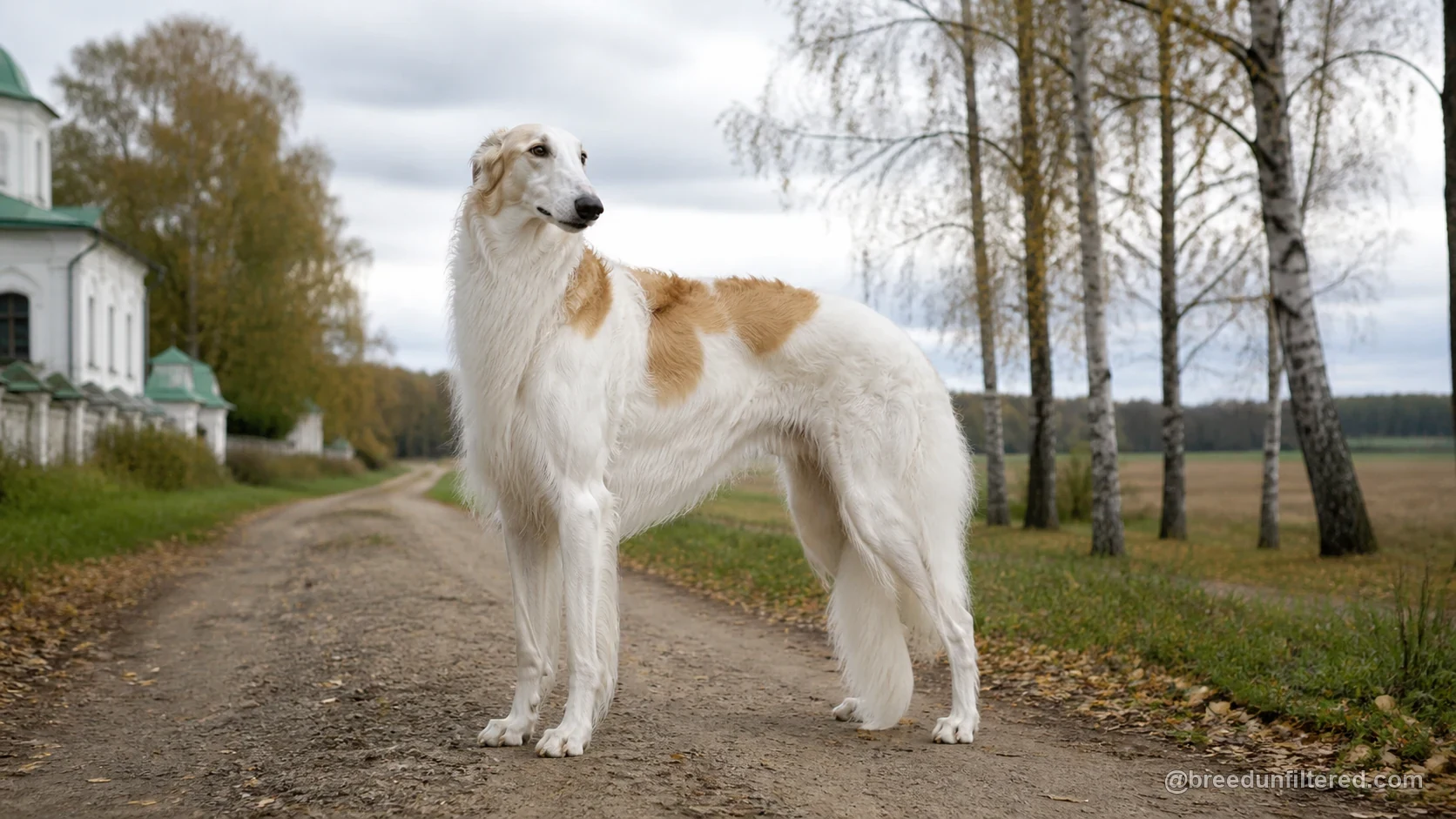
The Borzoi, also known as the Russian Hunting Sighthound, is a breed of elegance and paradox. With a silhouette that suggests aristocratic grace, this dog was developed not for lap-like luxury but for the demanding pursuit of wolves on the vast Russian steppes. The breed's name derives from the Russian word 'borzii', meaning 'swift', and its history is intertwined with the nobility of pre-revolutionary Russia, where it was prized for speed, courage, and a unique hunting style.
Today, the Borzoi is a companion that carries its heritage in every sinew. It is a sighthound, meaning it relies on sight rather than scent to chase prey, and it retains a strong instinct to pursue anything that moves. Yet, in the home, it often reveals a calm, even gentle, demeanor, earning it the nickname of the 'biggest sighthound' in terms of height. This duality—of a powerful hunter and a serene house dog—makes the Borzoi a fascinating but not universally suitable breed. Prospective owners must appreciate both its athletic needs and its quiet, sometimes aloof, personality.
Origin and Purpose
The Borzoi's roots lie in medieval Russia, where the breed was developed by crossing long-coated sighthounds with heavier, more robust dogs to create a hunter capable of tackling wolves. The result was a dog with the speed to outrun a wolf and the strength to hold it until hunters arrived. This purpose shaped the breed's physical and mental characteristics: a deep chest for lung capacity, a narrow frame for aerodynamics, and a strong prey drive that remains a defining trait.
The breed was carefully preserved by Russian aristocrats, who maintained large kennels and kept detailed records. After the Russian Revolution, the breed's numbers dwindled, but dedicated enthusiasts exported dogs to other countries, ensuring its survival. Today, the Borzoi is recognized by the Fédération Cynologique Internationale (FCI) in Group 10, which includes sighthounds, and its official standard, number 193, describes a dog of 'aristocratic appearance' with a 'sweet and gentle' expression. This heritage as a hunter of large game is not just historical; it influences the breed's behavior and care needs even in a modern home.
Temperament and Variation
The Borzoi is often described as a 'gentle giant' with a calm and quiet disposition indoors. Many owners note that the breed is not overly demonstrative, but rather forms deep bonds with its family, often choosing one person as a particular favorite. This reserved nature can be mistaken for aloofness, but it is a hallmark of the breed. Borzoi are not typically aggressive, but they can be sensitive and may not respond well to harsh training methods.
There is variation among individuals, of course. Some Borzoi are more outgoing and playful, while others are more independent and cat-like. The breed's temperament is also influenced by its upbringing and socialization. A well-socialized Borzoi is generally trustworthy with people, but it may retain a strong instinct to chase small animals, including cats, unless carefully introduced. This variation means that prospective owners should meet several Borzoi and talk to breeders to find a puppy whose personality aligns with their lifestyle.
Exercise and Mental Work
Despite its reputation as a couch potato indoors, the Borzoi is an athletic dog that requires regular, vigorous exercise to stay healthy and happy. A daily walk is not enough; the breed benefits from opportunities to run in a safe, enclosed area. Because of its strong prey drive, off-leash exercise is only safe in a securely fenced space or in sports like lure coursing, where the dog can chase a mechanical lure. Without adequate exercise, a Borzoi may become restless or develop destructive behaviors.
Mental stimulation is equally important. Borzoi are intelligent but independent thinkers, and they may not be as eager to please as some other breeds. Puzzle toys, nose work, and training sessions that use positive reinforcement can engage their minds. Activities that tap into their natural abilities, such as lure coursing or even simple games of fetch, can provide both physical and mental satisfaction. However, it is crucial to avoid over-exercising a young Borzoi, as their bones are still developing; a responsible breeder or veterinarian can offer guidance on age-appropriate activity.
Training and Socialisation
Training a Borzoi requires patience and a gentle, consistent approach. The breed is not known for its biddability; it was bred to make independent decisions in the field, so it may not respond to forceful or repetitive methods. Positive reinforcement, using treats and praise, is generally most effective. Early socialisation is essential to help a Borzoi become a well-adjusted adult. Exposing the puppy to a variety of people, places, and other animals in a controlled manner can reduce shyness or fearfulness.
Because of their size and strength, basic obedience training is a must. A Borzoi that pulls on the leash can be a handful, so teaching loose-leash walking is important. Recall is also critical, but even a well-trained Borzoi may ignore a command if it is chasing something. Therefore, a secure environment is non-negotiable. Training should be seen as an ongoing process, not a one-time event, and it can be a rewarding way to bond with this intelligent breed.
Family and Other Pets
Borzoi can make wonderful family dogs for households with older children who understand how to interact respectfully with a large dog. They are generally gentle and not prone to aggression, but their size means they can accidentally knock over a small child. As with any breed, supervision is key. Borzoi are not typically guard dogs; they may bark to alert, but they are more likely to greet a stranger with curiosity than suspicion.
When it comes to other pets, the picture is more complex. The Borzoi's prey drive can be triggered by small animals, including cats, rabbits, and even small dogs. Some Borzoi can live peacefully with cats if they are raised together, but this is not guaranteed. It is essential to assess each dog individually and to manage introductions carefully. For those considering a Borzoi, it is wise to consult with breeders who can match a puppy to a household with existing pets.
Grooming and Health
The Borzoi's coat is long and silky, with feathering on the ears, tail, and legs. It requires regular brushing, at least two to three times a week, to prevent mats and tangles. During shedding seasons, daily brushing may be necessary. Bathing should be done as needed, and attention should be paid to the ears, nails, and teeth. While grooming is not excessively demanding, it is a commitment that should not be overlooked.
Health-wise, Borzoi are generally a hardy breed, but they are prone to certain conditions. Like many large breeds, they can be susceptible to bloat (gastric dilatation-volvulus), a life-threatening emergency. They also have a higher risk of certain heart conditions, such as dilated cardiomyopathy, and may be sensitive to anesthesia. Responsible breeders screen for these issues, and prospective owners should ask about health testing. Regular veterinary check-ups and a balanced diet are essential to maintaining a Borzoi's well-being.
Costs and Responsibility
Owning a Borzoi is a significant financial and time commitment. The initial cost of a puppy from a reputable breeder can be high, often ranging from $1,500 to $3,000 or more, depending on location and pedigree. Ongoing expenses include high-quality food, routine veterinary care, grooming supplies, and pet insurance. Because Borzoi are large dogs, they may require more food and larger doses of medication, which can increase costs.
Beyond money, a Borzoi demands a substantial investment of time and energy. They need daily exercise, mental stimulation, and social interaction. They are not a breed that can be left alone for long hours without potential behavioral issues. Prospective owners should also consider their living situation; a Borzoi can adapt to apartment living if given enough exercise, but a securely fenced yard is a definite advantage. Ultimately, the decision to bring a Borzoi into one's life should be made with careful research and a long-term perspective, as these dogs can live 10 to 12 years or more.
Clear answers
FREQUENTLY ASKED QUESTIONS
Are Borzoi good with children?
Borzoi can be good with children, especially older kids who understand how to behave around a large dog. They are generally gentle and not aggressive, but their size can be a hazard to toddlers. Supervision is essential, and early socialization helps. Each dog is an individual, so it's important to assess temperament and teach children how to interact respectfully.
Do Borzoi need a lot of exercise?
Yes, Borzoi are athletic sighthounds that require regular, vigorous exercise. They enjoy running in a safe, enclosed area, and they benefit from activities like lure coursing. However, they are also known for being calm indoors. A daily walk is not sufficient; they need opportunities to stretch their legs and burn off energy to stay healthy and content.
Can Borzoi live with cats?
Some Borzoi can live peacefully with cats if they are raised together, but their strong prey drive may make them see cats as prey. It is not guaranteed, and introductions must be managed carefully. Prospective owners with cats should consult with breeders who can help match a puppy with a lower prey drive, but there is always a risk.
Are Borzoi easy to train?
Borzoi are intelligent but independent, and they are not known for being eager to please. Training requires patience and positive reinforcement. They can be stubborn and may ignore commands if they are distracted by something they want to chase. Early socialization and consistent, gentle training are key to a well-behaved Borzoi.
What health issues are common in Borzoi?
Borzoi are prone to bloat, a life-threatening stomach condition, and certain heart issues like dilated cardiomyopathy. They may also be sensitive to anesthesia. Responsible breeders screen for these conditions, and owners should be aware of the signs of bloat and seek immediate veterinary care if suspected. Regular check-ups are important.
Sources and further reading
Scores describe typical breed tendencies from 1 to 10. They are not a quality ranking or a prediction for an individual dog.
Size and presence6/10
CompactVery large
Physical strength7/10
LightExceptional
Energy level9/10
LowRelentless
Exercise demand9/10
ModestVery demanding
Mental work needed6/10
ModerateDaily job
Trainability6/10
ChallengingExceptional
Everyday manageability3/10
SpecialistStraightforward
First-time owner fit4/10
Poor fitGood fit
Family-life fit6/10
LimitedExcellent
Dog sociability7/10
SelectiveVery social
Prey drive10/10
LowVery high
Guarding tendency2/10
MinimalSerious
Independence8/10
Handler-focusedSelf-directed
Grooming demand5/10
LightHeavy
Apartment fit5/10
Poor fitGood fit