The honest version
WHAT THIS DOG NEEDS
Exceptionally responsive and intense. Great potential does not remove the need for daily mental work.
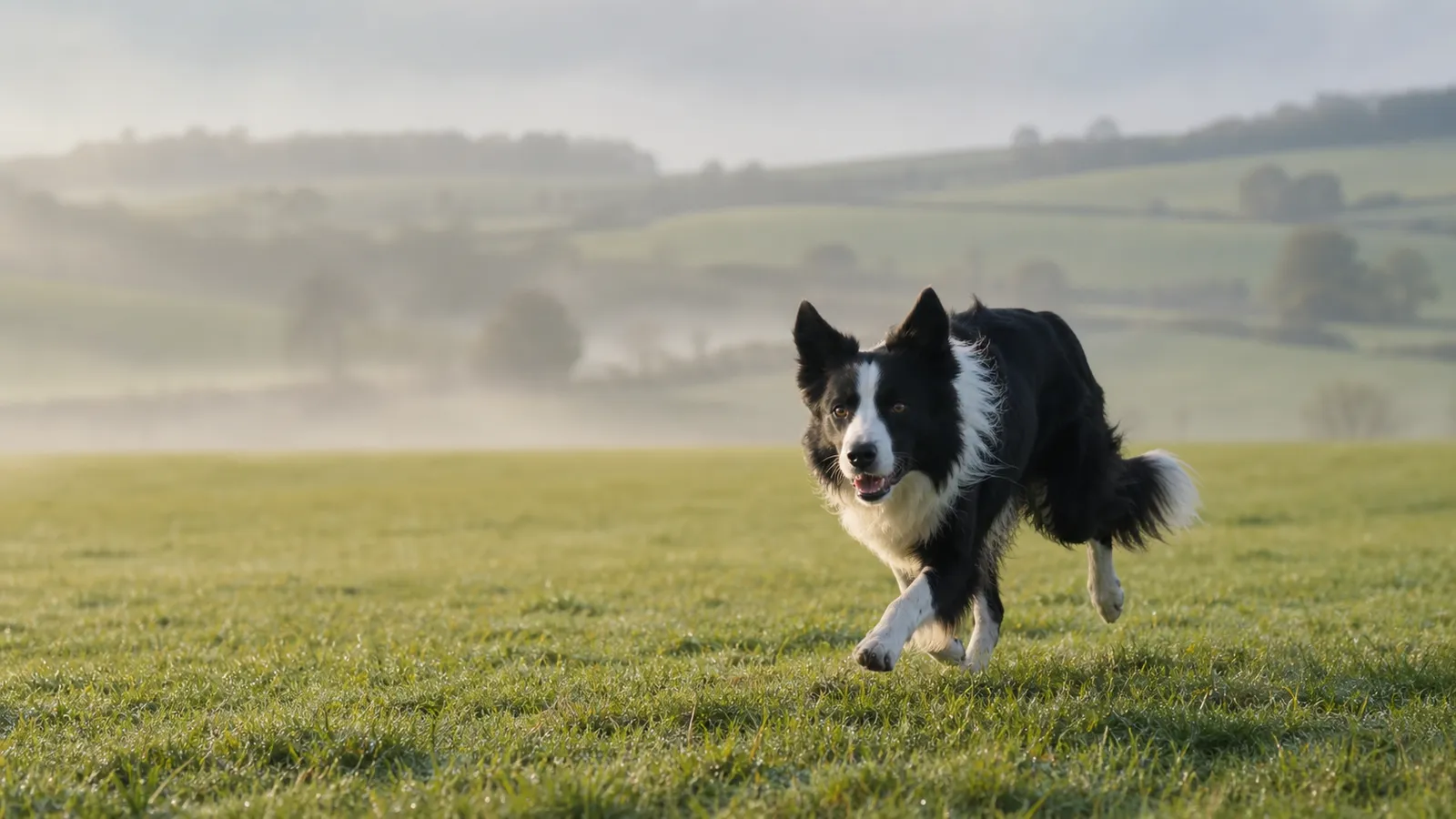
The honest version
Exceptionally responsive and intense. Great potential does not remove the need for daily mental work.
Watch the episode
Complete breed guide
Border Collies are highly responsive herding dogs developed to control livestock in partnership with a handler. Their speed, observation, persistence, and sensitivity can be impressive, but intelligence does not make them self-training or suitable for every active home. Without appropriate outlets and deliberate rest skills, a dog may direct intense attention toward vehicles, runners, children, shadows, or household movement.
Prospective owners should look beyond sport videos and lists of clever breeds. Daily life depends on the individual dog's working intensity, resilience, social comfort, health, age, and previous learning. This guide offers planning principles for an international audience, while local livestock laws, exercise access, climate, veterinary services, housing, and breeder or rescue practices must also inform a decision.
The Border Collie developed around the border regions of Britain as a practical sheepdog selected primarily for working ability. Effective dogs needed to gather and move stock across varied terrain, respond to cues at distance, balance pressure on livestock, and persist through complex tasks. The characteristic crouch, intense observation, rapid changes of direction, and sensitivity to movement all make sense in this working context.
Working, sport, show, and companion-bred populations can emphasize different qualities, and appearance varies in coat, color, ear set, size, and build. A pedigree or striking color does not reveal whether a dog can settle in a suburban home. Ask what the parents do, how they respond to novelty and frustration, whether they live calmly indoors, and which behavioral traits the breeder intentionally selected.
Many Border Collies are attentive, fast learners who notice tiny changes in posture, routine, and environment. This sensitivity can support precise teamwork, yet it may also appear as sound concern, vigilance, motion fixation, or difficulty recovering from excitement. Some are affectionate with everyone, some reserve close contact for familiar people, and some need generous personal space. Social confidence and working drive are separate traits.
Do not assume unwanted behavior means the dog needs endless exercise or a harder training correction. Sleep deficit, pain, fear, unclear routines, and repeated exposure to overwhelming situations can all reduce coping. Sudden changes require veterinary attention. Repetitive light chasing, spinning, severe motion fixation, persistent anxiety, or aggression should be addressed early with a veterinarian and a qualified behavior professional rather than encouraged as evidence of herding instinct.
A healthy adult usually needs meaningful daily movement and opportunities to use the brain, but more speed is not always better. Combine decompression walks, sniffing, safe free movement, skill training, and chosen activities such as herding with a competent instructor, scent work, tracking, obedience, or thoughtfully managed dog sports. Repetitive high-speed chasing and sharp turns can increase arousal and physical load without meeting the need for varied work.
Build fitness gradually, especially in puppies and newly adopted adults, and adapt for heat, terrain, recovery, and medical advice. Mental work should include problem solving and clear completion, not constant stimulation. Search tasks, directional cues, object discrimination, and practical household jobs can be useful. Equally important are predictable downtime, uninterrupted sleep, and reinforcement for lying quietly while people move, work, cook, or welcome visitors.
Reward-based training should prioritize recall, loose-lead walking, disengaging from movement, settling, cooperative handling, and comfort with short periods alone. Border Collies often detect handler tension and environmental patterns quickly, so consistent cues and clean reinforcement matter. Use distance, barriers, a long line, and carefully selected routes to prevent chasing vehicles, bicycles, wildlife, or livestock while reliable responses are built.
Socialisation is guided exposure with choice, not forcing a puppy into crowded events or continuous dog play. Include calm observation of traffic, children, animals, household equipment, handling, travel, and different surfaces at a manageable intensity. Avoid allowing stalking or circling of children and pets as entertainment. If the dog cannot eat, orient to the handler, or recover afterward, increase distance and consult an experienced reward-based trainer.
Border Collies can thrive in families that enjoy training, respect sensitivity, and provide structure without keeping the dog continuously busy. Fast movement, shouting, and unpredictable play may trigger chasing or controlling behavior toward children. Adults must supervise, separate when needed, and teach children to leave beds, food, and resting dogs alone. A child should not be responsible for meeting this breed's daily needs.
Compatibility with dogs, cats, and small animals varies. Some live gently with familiar pets, while others stare, stalk, block movement, chase, or find energetic play difficult to stop. Introduce behind barriers, reward disengagement, provide separate resources, and protect every animal's ability to rest. Livestock work requires knowledgeable supervision: an untrained dog can stress or injure stock, and stock can seriously injure a dog.
Both rough and smooth coats shed and need regular brushing, with extra attention to feathering, friction areas, and debris after outdoor work. Check feet, pads, nails, ears, teeth, skin, and the whole body for small injuries that an intensely focused dog may not immediately reveal. Bathing is occasional unless dirt or a medical plan requires more. Routine shaving is not necessary for normal coat care.
Breed health planning can include hips, eyes, hearing, epilepsy history, and DNA tests for conditions present in relevant lines. Test availability and recommendations change, and a long commercial panel is not automatically meaningful. Verify results for both parents through appropriate registries and ask about relatives, working longevity, and unexplained collapse or neurologic signs. Seek veterinary care for lameness, disorientation, seizures, weakness, sensory changes, or altered exercise tolerance rather than assigning a diagnosis online.
Budget for acquisition or adoption, food, preventive veterinary care, insurance or emergency savings, training instruction, secure fencing, long lines and harnesses, transport, grooming tools, boarding, and activity fees. Sport participation can add equipment, venue, travel, and rehabilitation costs. A physically talented dog can still sustain injuries, and behavior support may require repeated professional sessions rather than a single class.
Choose a breeder who can explain the purpose of the pairing, demonstrates relevant health screening, discusses temperament honestly, raises puppies carefully, matches homes, and provides lifetime return support. A responsible rescue should describe observed behavior in realistic settings and help match intensity to household capacity. Ownership requires legal control around stock and traffic, daily engagement, protected rest, identification, contingency care, and willingness to adapt activity as the dog ages.
Clear answers
Some can be, particularly stable adults whose needs and behavior are already known, but the learning curve may be steep. A first-time owner needs time for daily training, careful management around movement, and coaching from someone who understands the breed without promoting constant arousal. Choosing the calmest suitable individual is more important than proving that an inexperienced owner can handle the most intense puppy.
There is no responsible universal number. Healthy adults generally need substantial varied activity and mental work, while puppies, seniors, and dogs with medical limitations need adjusted plans. Quality matters: sniffing, problem solving, skill practice, and calm exploration may be more useful than another hour of frantic ball chasing. Monitor sleep and recovery, and seek veterinary guidance when conditioning or health is uncertain.
No. Appropriate herding can be deeply satisfying for some individuals, but many live well with other structured outlets and adequate rest. Casual access to livestock is not enrichment and can be dangerous or stressful. Owners without stock can explore scent work, tracking, obedience, search games, or suitable sports while teaching calm behavior around everyday movement. Match activities to the individual rather than the breed label.
It is possible for the right dog and highly committed household. The plan must include reliable outdoor access, varied exercise, mental work, quiet sleep, separation skills, and management of corridor, lift, and window triggers. An apartment beside constant traffic may be harder for a motion-sensitive dog than a larger quiet home. A garden alone would not meet the breed's social and training needs.
Ask what the parents were selected to do, how intense they are, how they settle indoors, and how they respond to people, dogs, noise, frustration, and novelty. Request independently verifiable health results relevant to those lines, including current eye, hip, hearing, and DNA recommendations where applicable. Discuss epilepsy, collapse, longevity, previous litters, puppy raising, matching, contracts, and lifetime return support.
Scores describe typical breed tendencies from 1 to 10. They are not a quality ranking or a prediction for an individual dog.