Complete breed guide
Blue Gascony Griffon OWNERSHIP GUIDE
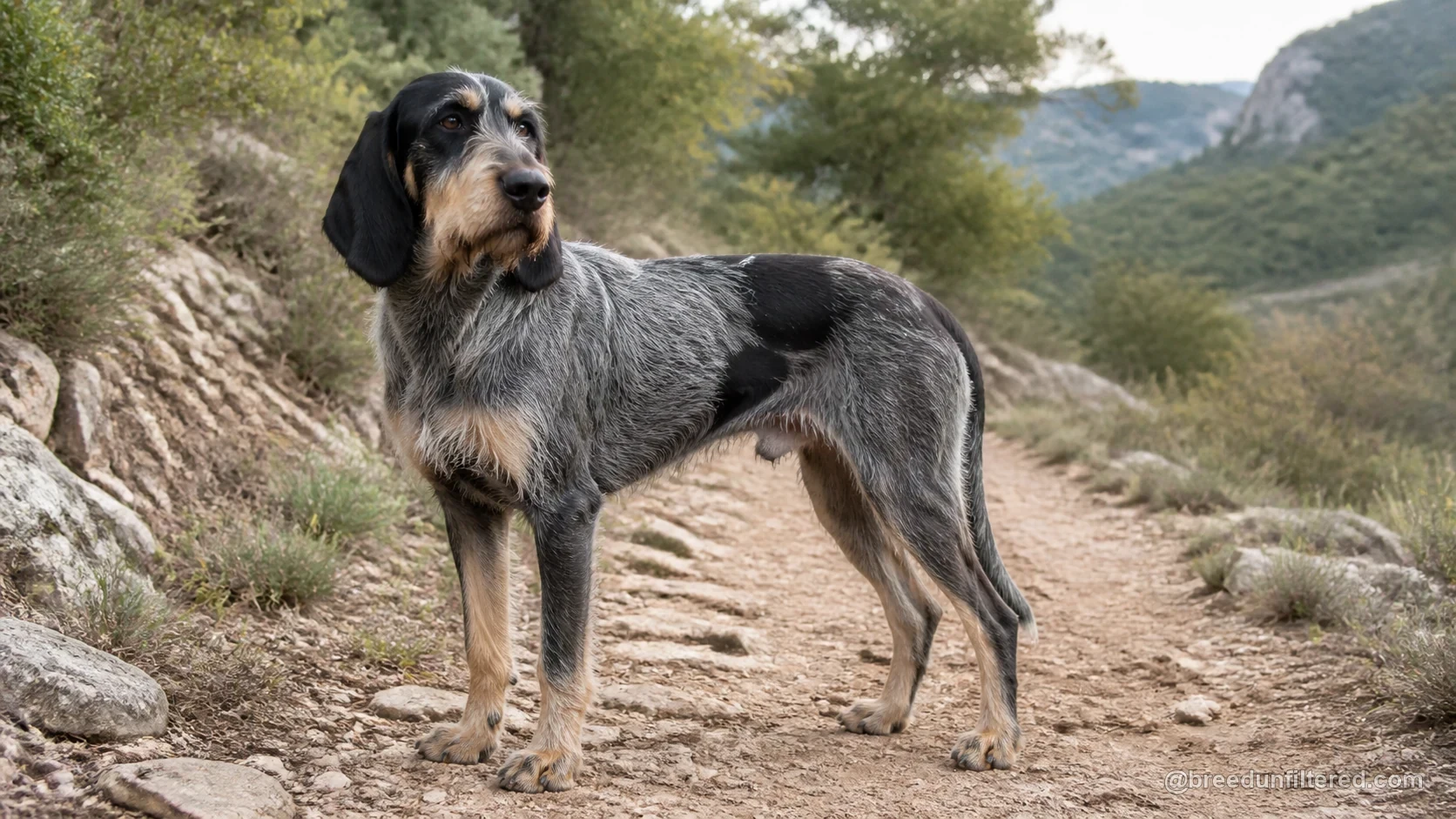
The Blue Gascony Griffon is a rustic French hound with a striking blue-ticked coat and a voice that carries across the countryside. Bred for hunting in packs, this breed combines stamina, determination, and a sociable nature. Prospective owners should understand that this is a working dog at heart, with instincts and energy levels shaped by centuries of selective breeding for the chase.
While the Blue Gascony Griffon can be a devoted companion, it is not a typical lapdog. Its needs are specific: ample exercise, mental challenges, and consistent training. This article provides an evidence-conscious overview of the breed's characteristics, helping you assess whether this hound fits your lifestyle. We avoid universal claims and encourage you to meet individual dogs and consult breed experts.
Origin and Purpose
The Blue Gascony Griffon originates from the Gascony region of southwestern France, where it was developed as a pack hound for hunting large and small game. Its name reflects its blue-ticked coat and its wiry, rough coat characteristic of griffons. The breed is recognized by the Fédération Cynologique Internationale (FCI) under standard number 32, in Group 6 (Scent Hounds and Related Breeds).
Historically, these hounds were valued for their keen nose, endurance, and ability to work in varied terrain. They were used to hunt boar, deer, and other game, often in packs. This heritage influences their temperament and behavior today: they are typically sociable with other dogs, have a strong prey drive, and may be vocal. Understanding this purpose is key to appreciating the breed's needs.
Temperament and Variation
The Blue Gascony Griffon is generally described as affectionate and loyal to its family, but it also possesses an independent streak common among hounds. Individual temperaments vary widely, influenced by genetics, socialization, and training. While some may be more laid-back, others may be more energetic or stubborn. It is essential to meet the parents or observe the dog's behavior to gauge its personality.
As a pack hound, this breed typically gets along well with other dogs, but its prey drive can be strong, making it potentially unsafe around small animals like cats or rabbits unless raised with them. They are not typically guard dogs; they may alert bark but are more likely to greet strangers with curiosity than aggression. Early and ongoing socialization is crucial to shape a well-rounded adult.
Exercise and Mental Work
The Blue Gascony Griffon is a high-energy breed that requires substantial daily exercise to stay physically and mentally healthy. Long walks, jogs, or off-lead runs in a securely fenced area are beneficial. However, because of their strong hunting instincts, they should not be trusted off-lead in unsecured areas unless trained to have reliable recall. Activities like scent work or tracking can provide excellent mental stimulation.
Mental work is as important as physical exercise. Puzzle toys, nose games, and training sessions that challenge their problem-solving abilities can help prevent boredom and destructive behaviors. Without adequate outlets, these hounds may become restless or develop undesirable habits. Prospective owners should be prepared to dedicate time each day to both physical and mental engagement.
Training and Socialisation
Training a Blue Gascony Griffon requires patience and consistency. They are intelligent but can be independent and somewhat stubborn, so positive reinforcement methods work best. Harsh corrections are counterproductive and may damage trust. Short, varied sessions with high-value rewards can maintain their interest. Early socialization with people, dogs, and various environments is vital to develop a confident, well-mannered adult.
Because they are scent hounds, they may become distracted by interesting smells, making recall training a priority. Enrolling in obedience classes or working with a professional trainer experienced with hounds can be beneficial. It is also important to teach them to walk politely on a leash, as their nose can lead them into trouble. Consistent, patient training will help channel their instincts appropriately.
Family and Other Pets
The Blue Gascony Griffon can make a loving family companion for active households. They are generally good with children, especially when raised with them, but their boisterous nature may be too much for very young kids. Supervision is recommended to ensure safe interactions. They thrive on being part of the family and may suffer from separation anxiety if left alone for long periods.
Regarding other pets, this breed's pack heritage means they usually get along with other dogs. However, their prey drive can be triggered by small animals, including cats, rabbits, and rodents. Early introduction and training can help, but there is no guarantee. Prospective owners with small pets should proceed with caution and consult breed experts for guidance.
Grooming and Health
The Blue Gascony Griffon has a rough, wiry coat that is relatively low-maintenance. Weekly brushing helps remove loose hair and prevent matting. They may shed seasonally, and occasional hand-stripping or trimming may be needed to maintain coat texture. Regular ear checks are important, as floppy ears can trap moisture and debris, leading to infections.
As with many purebred dogs, the Blue Gascony Griffon may be predisposed to certain health conditions, though the breed is generally robust. Potential issues include hip dysplasia, ear infections, and bloat (gastric dilatation-volvulus). Responsible breeders screen for hereditary conditions. Prospective owners should ask about health clearances and maintain regular veterinary care to support overall well-being.
Costs and Responsibility
Owning a Blue Gascony Griffon involves significant financial and time commitments. Initial costs include purchase price from a reputable breeder, which can vary, plus supplies like crates, beds, and leashes. Ongoing expenses include high-quality food, routine veterinary care, vaccinations, and preventive medications. Emergency medical costs can be substantial, so pet insurance is worth considering.
Beyond finances, this breed requires a dedicated owner who can provide ample exercise, mental stimulation, and companionship. They are not suited to a sedentary lifestyle or long periods alone. Prospective owners should assess their living situation, schedule, and ability to meet the breed's needs. Adopting from a rescue or breed-specific organization is also an option, giving a home to a dog in need.
Clear answers
FREQUENTLY ASKED QUESTIONS
Is the Blue Gascony Griffon a good family dog?
The Blue Gascony Griffon can be a good family dog for active households that understand its needs. They are generally affectionate and loyal, and often get along well with children when properly socialized. However, their high energy and strong prey drive require supervision around small pets and young kids. They thrive in homes where they can participate in activities and receive plenty of attention.
How much exercise does a Blue Gascony Griffon need?
The Blue Gascony Griffon is a high-energy breed that needs substantial daily exercise. This typically includes long walks, runs, or off-lead time in a secure area. They also benefit from mental stimulation like scent games or tracking. Without adequate exercise, they may become restless or develop behavioral issues. Prospective owners should be prepared to dedicate at least one to two hours daily to physical activity.
Are Blue Gascony Griffons easy to train?
Training a Blue Gascony Griffon can be challenging due to their independent and sometimes stubborn nature. They are intelligent but may be easily distracted by scents. Positive reinforcement methods, patience, and consistency are essential. Early socialization and obedience training are crucial. Working with a professional trainer experienced with hounds can be very helpful in achieving reliable recall and good manners.
Do Blue Gascony Griffons get along with other dogs?
Generally, Blue Gascony Griffons are sociable with other dogs, thanks to their pack-hunting heritage. They often enjoy the company of other canines and can do well in multi-dog households. However, individual temperaments vary, and proper introductions are important. Their prey drive may make them unsafe around small animals like cats or rabbits, so caution is advised.
What are the grooming requirements for a Blue Gascony Griffon?
The Blue Gascony Griffon has a rough, wiry coat that requires minimal grooming. Weekly brushing helps remove loose hair and prevent matting. They may shed seasonally, and occasional hand-stripping or trimming can maintain coat texture. Regular ear cleaning is important to prevent infections, as their floppy ears can trap moisture. Nail trimming and dental care are also part of routine maintenance.
Sources and further reading
Scores describe typical breed tendencies from 1 to 10. They are not a quality ranking or a prediction for an individual dog.
Size and presence5/10
CompactVery large
Physical strength6/10
LightExceptional
Energy level9/10
LowRelentless
Exercise demand10/10
ModestVery demanding
Mental work needed8/10
ModerateDaily job
Trainability5/10
ChallengingExceptional
Everyday manageability2/10
SpecialistStraightforward
First-time owner fit3/10
Poor fitGood fit
Family-life fit6/10
LimitedExcellent
Dog sociability9/10
SelectiveVery social
Prey drive10/10
LowVery high
Guarding tendency3/10
MinimalSerious
Independence8/10
Handler-focusedSelf-directed
Grooming demand2/10
LightHeavy
Apartment fit4/10
Poor fitGood fit