Complete breed guide
Ariegeois OWNERSHIP GUIDE
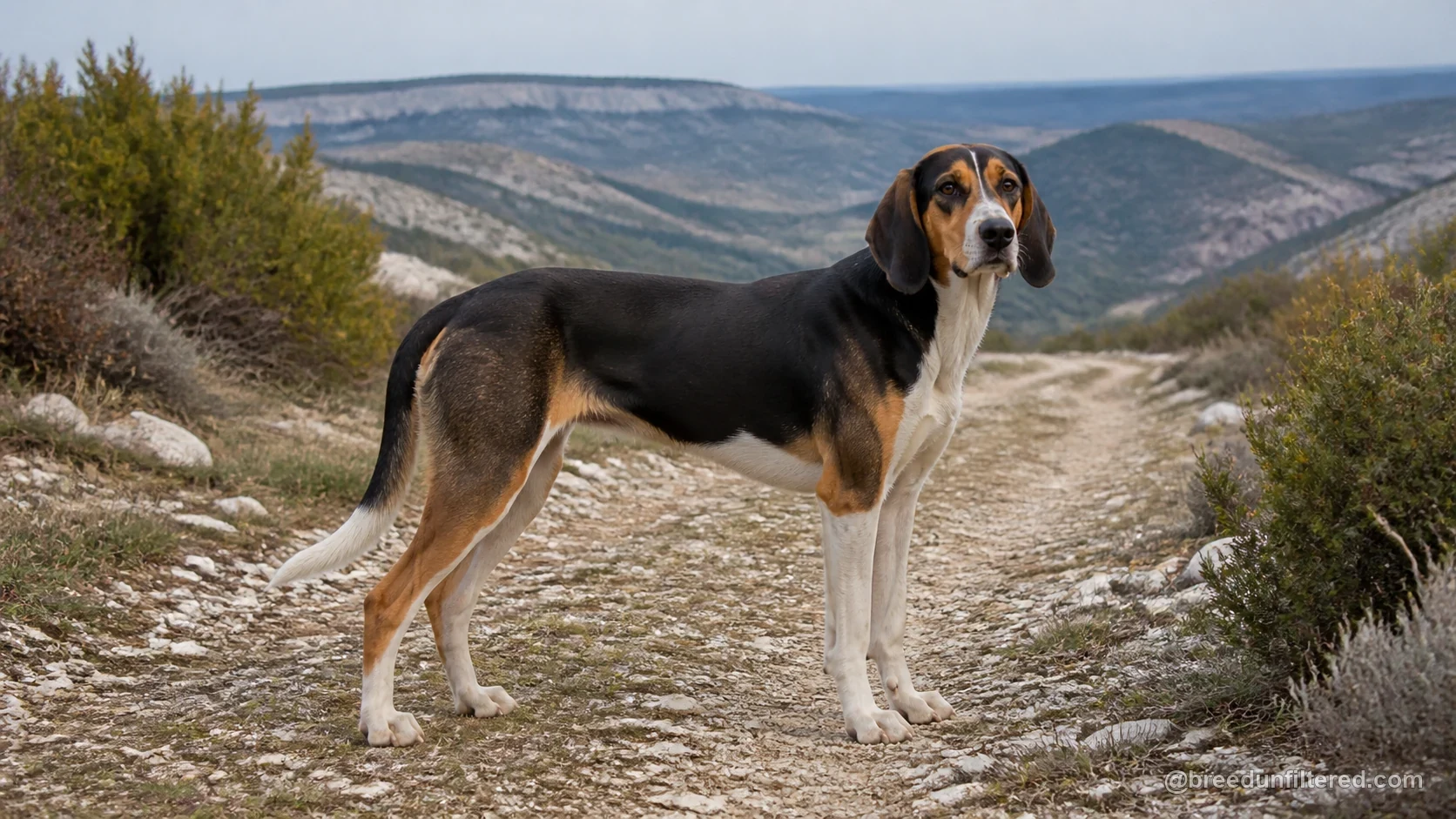
The Ariegeois is a French scent hound that originated in the Ariège region of the Pyrenees, developed for hunting hare and other small game in rugged terrain. This medium-sized dog is known for its elegant build, distinctive black and white coat with tan markings, and a melodious voice that carries across valleys. While primarily a working hound, the Ariegeois has gained appreciation as a companion for active families who can meet its exercise and mental stimulation needs.
Prospective owners should understand that the Ariegeois is not a typical lapdog. It is a pack-oriented hound with a strong prey drive and a keen nose, which means it thrives in environments where it can use its instincts. This breed is generally gentle and sociable, but its independent nature can pose challenges for first-time dog owners. With proper training, socialization, and a commitment to daily activity, the Ariegeois can be a loyal and affectionate partner for those who appreciate its heritage.
Origin and Purpose
The Ariegeois was developed in the early 20th century in the Ariège department of southern France, near the Pyrenees. It is believed to be a cross between the Grand Bleu de Gascogne and the Briquet, with possible influences from other local hounds. The breed was created to hunt hare, and its stamina and agility allow it to navigate steep, rocky terrain with ease. The Ariegeois is recognized by the Fédération Cynologique Internationale (FCI) in Group 6, which includes scent hounds and related breeds.
Today, the Ariegeois remains primarily a hunting dog, but it also participates in dog sports such as tracking and lure coursing. Its ability to work independently while cooperating with a pack makes it a versatile hound. Understanding this purpose is crucial for owners, as the breed's instincts are deeply ingrained. Without an outlet for these behaviors, an Ariegeois may become restless or develop undesirable habits. Prospective owners should be prepared to channel the dog's energy into activities that mimic its natural hunting role.
Temperament and Variation
The Ariegeois is generally described as gentle, sociable, and even-tempered. It is known to be good with children and other dogs, especially when raised together. However, like many hounds, it can be somewhat reserved with strangers, though not aggressive. Individual temperament varies based on genetics, socialization, and environment. Some Ariegeois may be more outgoing, while others are more cautious. It is essential to meet the parents or observe the puppy's behavior to gauge its personality.
This breed is not typically a guard dog; it is more likely to announce visitors with a bark than to act protectively. Its friendly nature makes it a poor choice for guarding, but an excellent companion for those who want a sociable pet. The Ariegeois is also known for its vocalizations, which include baying and howling, especially when on a scent. This trait can be charming to some but may be problematic in close-knit communities. Prospective owners should consider their tolerance for noise and their living situation.
Exercise and Mental Work
The Ariegeois is a high-energy breed that requires substantial daily exercise to remain healthy and content. A minimum of one to two hours of vigorous activity is often recommended, but this can vary based on the individual dog's age and fitness. Activities such as running, hiking, and off-leash play in a securely fenced area are ideal. Because the breed is a scent hound, it will follow its nose, so a reliable recall is essential for off-leash safety. Without adequate exercise, an Ariegeois may become hyperactive or destructive.
Mental stimulation is equally important. Scent games, puzzle toys, and tracking exercises can help satisfy the dog's instinctual need to use its nose. Training sessions that incorporate positive reinforcement and variety can keep the dog engaged. Boredom can lead to excessive barking or digging, so owners should be proactive in providing both physical and mental challenges. The Ariegeois is not a couch potato; it thrives in an active household that can offer regular opportunities for exploration and play.
Training and Socialisation
Training an Ariegeois requires patience and consistency. This breed is intelligent but independent, which can make it appear stubborn. Positive reinforcement methods, such as treats and praise, work best, as harsh corrections can damage trust. Early socialization is crucial to help the dog become well-adjusted. Exposing the puppy to various people, animals, and environments can reduce the likelihood of fearfulness or reactivity. Puppy classes and controlled interactions with other dogs are beneficial.
Because the Ariegeois is a pack hound, it generally gets along well with other dogs, but its prey drive may be triggered by small animals. Training a reliable recall is a priority, as the dog's instinct to chase can override its obedience. Owners should also teach loose-leash walking, as the breed's strong nose can lead to pulling. Consistency and short, engaging training sessions are more effective than long, repetitive drills. For novice owners, enlisting the help of a professional trainer can be a wise investment.
Family and Pets
The Ariegeois can make a wonderful family dog for those who understand its needs. It is typically gentle with children, though its boisterous nature may inadvertently knock over toddlers. Supervision is recommended during play to ensure safety for both the dog and the child. The breed is generally tolerant and patient, but like any dog, it should be treated with respect. Teaching children how to interact with dogs is essential to prevent misunderstandings.
When it comes to other pets, the Ariegeois's compatibility depends on early socialization and the individual dog's prey drive. It may coexist peacefully with cats if raised with them, but it may view smaller animals such as rabbits or guinea pigs as prey. The breed's pack mentality means it usually enjoys the company of other dogs, making it a good candidate for multi-dog households. However, introductions should be gradual and supervised. Prospective owners with small pets should carefully consider the risks.
Grooming and Health
The Ariegeois has a short, dense coat that is relatively low-maintenance. Weekly brushing with a soft bristle brush or hound glove can help remove loose hair and keep the coat healthy. The breed sheds moderately year-round, with heavier shedding during seasonal changes. Bathing is only necessary when the dog is dirty, as frequent bathing can strip natural oils. Regular ear checks are important, as floppy ears can trap moisture and debris, leading to infections. Nail trimming and dental care should be part of the routine.
As a generally healthy breed, the Ariegeois has a lifespan of around 10 to 13 years. However, like all dogs, it may be prone to certain conditions, including hip dysplasia and ear infections. Responsible breeders screen for hereditary issues, but there is limited data on breed-specific health problems. Owners should maintain regular veterinary check-ups and a balanced diet to support overall health. It is also advisable to be aware of the dog's activity level and adjust food intake to prevent obesity, which can exacerbate joint issues.
Costs and Responsibility
Owning an Ariegeois involves financial and time commitments. The initial cost of a puppy from a reputable breeder can vary, but it is often in the range of several hundred to over a thousand euros. Additional expenses include food, veterinary care, grooming supplies, and training classes. Emergency medical costs can be significant, so pet insurance is worth considering. Prospective owners should budget for the dog's entire lifespan, which can be over a decade, and be prepared for unexpected expenses.
Beyond finances, the Ariegeois requires a significant time investment. Its exercise and mental stimulation needs demand a dedicated owner who can provide daily activity and engagement. This breed is not suited for a sedentary lifestyle or for those who are away from home for long periods. Potential owners should also consider their living environment; a securely fenced yard is ideal, as the dog's hunting instincts may lead it to wander. Responsible ownership includes proper training, socialization, and a lifelong commitment to the dog's well-being.
Clear answers
FREQUENTLY ASKED QUESTIONS
Is the Ariegeois a good family dog?
The Ariegeois can be a good family dog for active households. It is generally gentle with children and sociable with other dogs, but its high energy and prey drive require supervision and proper training. Families should be prepared to provide ample exercise and mental stimulation to keep the dog happy and well-behaved.
How much exercise does an Ariegeois need?
The Ariegeois is a high-energy breed that needs at least one to two hours of vigorous exercise daily. This can include running, hiking, or off-leash play in a secure area. Without sufficient activity, the dog may become restless or develop behavioral issues. Mental stimulation, such as scent games, is also important.
Does the Ariegeois get along with other pets?
The Ariegeois generally gets along well with other dogs due to its pack-oriented nature. However, its prey drive may be triggered by small animals like cats or rabbits, especially if not socialized early. With proper introductions and training, some Ariegeois can live peacefully with cats, but caution is advised.
Is the Ariegeois easy to train?
The Ariegeois is intelligent but independent, which can make training challenging for novice owners. Positive reinforcement methods work best, and consistency is key. Early socialization and obedience training are essential. Professional help may be beneficial for first-time dog owners to ensure a well-mannered companion.
What are the grooming requirements for an Ariegeois?
The Ariegeois has a short coat that requires minimal grooming. Weekly brushing is sufficient to remove loose hair, and bathing is only needed when dirty. Regular ear cleaning is important to prevent infections, along with routine nail trimming and dental care. Overall, grooming is low-maintenance.
Sources and further reading
Scores describe typical breed tendencies from 1 to 10. They are not a quality ranking or a prediction for an individual dog.
Size and presence5/10
CompactVery large
Physical strength5/10
LightExceptional
Energy level9/10
LowRelentless
Exercise demand10/10
ModestVery demanding
Mental work needed8/10
ModerateDaily job
Trainability5/10
ChallengingExceptional
Everyday manageability2/10
SpecialistStraightforward
First-time owner fit3/10
Poor fitGood fit
Family-life fit7/10
LimitedExcellent
Dog sociability9/10
SelectiveVery social
Prey drive10/10
LowVery high
Guarding tendency3/10
MinimalSerious
Independence8/10
Handler-focusedSelf-directed
Grooming demand2/10
LightHeavy
Apartment fit4/10
Poor fitGood fit