Complete breed guide
Andalusian Terrier, Sherry Terrier OWNERSHIP GUIDE
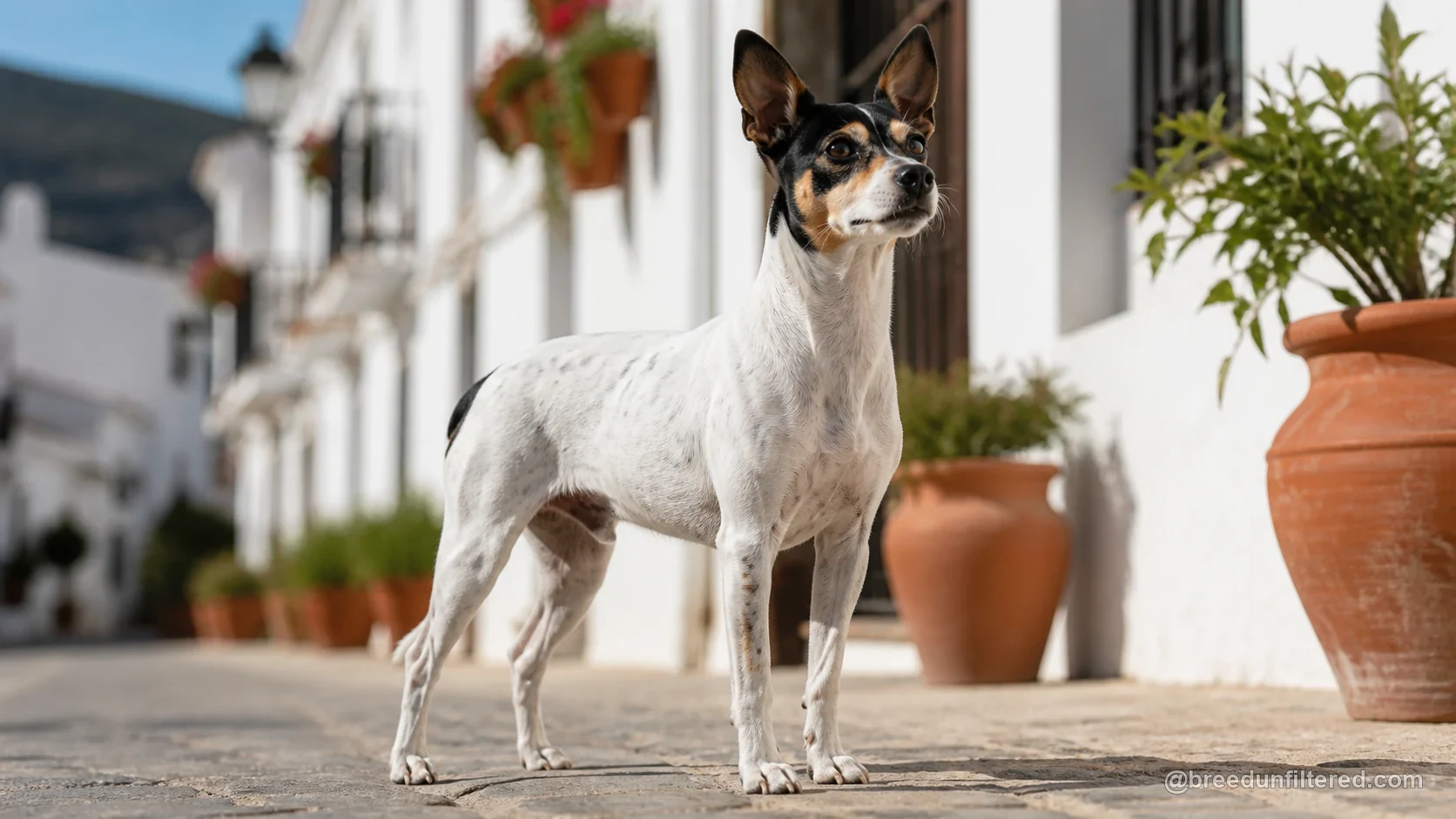
The Andalusian Terrier, also known as the Sherry Terrier, is a small but spirited breed from the sherry-producing region of Andalusia in southern Spain. Recognized provisionally by the FCI under the name Ratonero Bodeguero Andaluz, this dog has a long history as a skilled ratter in vineyards and bodegas. Its name literally translates to 'Andalusian wine cellar rat catcher,' reflecting its original purpose of keeping wine cellars and farms free of vermin. Today, the breed is gaining attention beyond Spain, admired for its intelligence, agility, and affectionate nature.
Despite its terrier classification, the Andalusian Terrier is not a typical terrier in every sense. It is a compact, athletic dog with a distinctive black-and-white coat, often with tan markings. While it retains a strong prey drive and a lively disposition, it is also known for its adaptability and eagerness to please. This article provides a balanced overview for prospective owners, covering the breed's origins, temperament, exercise needs, training, family compatibility, grooming, health, and the responsibilities of ownership. As with any breed, individual dogs vary, and careful research and preparation are essential.
Origin and Purpose
The Andalusian Terrier hails from the region around Jerez de la Frontera in Andalusia, Spain, an area famous for its sherry production. For centuries, these dogs have been employed in vineyards, bodegas, and farmyards to control rats and mice. Their name 'Ratonero Bodeguero' translates to 'wine cellar rat catcher,' a testament to their working heritage. The breed is believed to have descended from crosses between local Spanish dogs and terriers brought by British merchants and traders who visited the sherry ports, resulting in a dog with a keen hunting instinct and a compact, agile build.
The breed's historical role as a ratter has shaped its physical and behavioral traits. It is a hardy, resilient dog capable of working independently in challenging environments. Although still used for vermin control in some rural areas, the Andalusian Terrier is increasingly kept as a companion animal. The breed was provisionally recognized by the FCI in 2022, and its standard emphasizes a balanced, functional dog that retains its working abilities. Understanding this background helps prospective owners appreciate the breed's energy, intelligence, and need for purposeful activity.
Temperament and Variation
The Andalusian Terrier is typically described as lively, alert, and affectionate. It forms strong bonds with its family and often displays a playful, sometimes clownish demeanor. Like many terriers, it can be confident and determined, with a notable prey drive. However, individual temperaments vary widely, influenced by genetics, socialization, and training. Some dogs may be more reserved with strangers, while others are outgoing. The breed is generally intelligent and responsive, but it also has an independent streak that can present training challenges.
There is also variation within the breed in terms of size, coat, and color. The FCI standard specifies a height at the withers of 35 to 43 cm and a weight of 7 to 11 kg, but individuals may fall outside these ranges. The coat is short and smooth, typically white with black patches, and sometimes tan markings. Some dogs may have a longer coat or different color patterns, though these are not preferred in the show ring. Prospective owners should meet several dogs and talk to breeders to get a sense of the range of temperaments and appearances.
Exercise and Mental Work
The Andalusian Terrier is an energetic breed that requires regular physical activity to stay healthy and content. Daily walks, play sessions, and opportunities to run in a securely fenced area are important. As a former ratter, it enjoys activities that engage its natural instincts, such as scent games, digging, and chasing. However, it is not a high-endurance athlete; moderate exercise is usually sufficient. The key is consistency and variety to prevent boredom, which can lead to destructive behaviors.
Mental stimulation is equally crucial for this intelligent breed. Puzzle toys, obedience training, and interactive games can help satisfy its need for mental challenges. Activities like agility, barn hunt, or nose work can be excellent outlets for its energy and prey drive. Without adequate mental and physical engagement, the Andalusian Terrier may become restless and develop undesirable habits. Prospective owners should be prepared to dedicate time each day to both exercise and mental enrichment.
Training and Socialisation
Training an Andalusian Terrier requires patience, consistency, and positive reinforcement methods. This breed is intelligent and learns quickly, but it can also be stubborn and easily distracted by scents or movement. Short, engaging training sessions work best, using treats, praise, and play as rewards. Harsh corrections are counterproductive and can damage the trust between dog and owner. Early socialization is essential to help the dog become a well-adjusted adult, exposing it to various people, animals, environments, and sounds in a positive manner.
Because of its terrier heritage, the Andalusian Terrier may have a tendency to chase small animals, so recall training is particularly important. Teaching a reliable 'come' command in a controlled environment is a priority. Socialization with other dogs should begin early, as some individuals may be assertive or territorial. With proper training and socialization, the breed can be a delightful companion, but it may not be the best choice for first-time owners who are not prepared for its spirited nature. Consistent leadership and a sense of humor go a long way.
Family and Other Pets
The Andalusian Terrier can make a wonderful family dog for households that understand its needs. It is generally affectionate with children, especially when raised with them, and enjoys being part of family activities. However, as with any dog, interactions with young children should be supervised, and children should be taught how to approach and handle the dog respectfully. The breed's small size and sturdy build make it suitable for play, but its high energy may be overwhelming for very young kids.
Regarding other pets, the Andalusian Terrier's prey drive can be a challenge. It may view small animals such as rabbits, hamsters, or birds as prey, and its chasing instinct can be strong. With early socialization, it can learn to live peacefully with cats and other dogs, but supervision is always recommended. The breed tends to be territorial and may not tolerate unfamiliar dogs of the same sex. Prospective owners with existing pets should carefully consider introductions and be prepared to manage potential conflicts.
Grooming and Health
Grooming an Andalusian Terrier is relatively low-maintenance. Its short, smooth coat requires weekly brushing to remove loose hair and keep it shiny. The breed sheds moderately, and more frequent brushing may be needed during seasonal sheds. Bathing is only necessary when the dog is dirty, using a mild dog shampoo. Routine care includes regular nail trimming, ear cleaning, and dental hygiene. These practices help prevent common issues and keep the dog comfortable.
As a generally healthy breed, the Andalusian Terrier has a life expectancy of around 12 to 15 years. However, like all dogs, it may be prone to certain conditions, including patellar luxation, eye disorders, and allergies. Responsible breeders screen for hereditary issues, and prospective owners should ask about health testing. Regular veterinary check-ups, a balanced diet, and appropriate exercise contribute to overall well-being. It is important to note that this article does not provide medical advice; any health concerns should be discussed with a veterinarian.
Costs and Responsibility
Owning an Andalusian Terrier involves financial and time commitments. Initial costs include the purchase price from a reputable breeder, which can vary widely, as well as supplies such as a crate, bed, food bowls, leash, and collar. Ongoing expenses include high-quality dog food, routine veterinary care, vaccinations, parasite prevention, and pet insurance. Emergency medical costs can be significant, so planning ahead is wise. Additionally, training classes or professional help may be needed, adding to the budget.
Beyond finances, responsible ownership means providing proper socialization, training, exercise, and attention throughout the dog's life. The Andalusian Terrier thrives in an environment where it is included in family activities and given a job to do. It may not be suited to a sedentary lifestyle or long periods alone. Prospective owners should assess their living situation, schedule, and experience level. Adopting from a rescue or shelter is also an option, as some dogs of this breed may be in need of homes. Ultimately, bringing any dog into your life is a long-term commitment that should not be taken lightly.
Clear answers
FREQUENTLY ASKED QUESTIONS
Are Andalusian Terriers good with children?
Andalusian Terriers can be good with children, especially when raised together and properly socialized. They are generally playful and affectionate, but their high energy and strong prey drive mean interactions should be supervised, particularly with younger kids. Teaching children how to respect the dog's space and handle it gently is essential. As with any breed, individual temperament varies, so early socialization and positive experiences are key.
How much exercise does an Andalusian Terrier need?
Andalusian Terriers are energetic and need daily exercise to stay happy and healthy. This typically includes at least one or two walks, plus playtime in a secure area. They also benefit from mental challenges like puzzle toys or training games. While they are not marathon runners, they enjoy activities that engage their instincts, such as fetch or scent work. Without enough exercise, they may become bored and develop destructive behaviors.
Are Andalusian Terriers easy to train?
Andalusian Terriers are intelligent and can learn quickly, but they also have an independent streak that can make training a test of patience. Positive reinforcement methods, such as treats and praise, work best. Consistency and short, engaging sessions are important. Early socialization and obedience training are crucial to manage their prey drive and ensure they become well-mannered companions. They may not be the easiest breed for first-time owners.
Do Andalusian Terriers get along with other pets?
Andalusian Terriers have a strong prey drive, so they may not be reliable with small animals like rabbits or birds. With early socialization, they can learn to coexist with cats and other dogs, but supervision is always necessary. They may be territorial and could have issues with unfamiliar dogs of the same sex. Careful introductions and ongoing management are essential for multi-pet households.
What health issues are common in Andalusian Terriers?
Andalusian Terriers are generally healthy, but like all breeds, they can be prone to certain conditions. These may include patellar luxation, eye problems, and allergies. Responsible breeders screen for hereditary issues, and prospective owners should ask about health testing. Regular veterinary check-ups, a balanced diet, and proper exercise help maintain overall health. This information is not a substitute for professional veterinary advice.
Sources and further reading
Scores describe typical breed tendencies from 1 to 10. They are not a quality ranking or a prediction for an individual dog.
Size and presence5/10
CompactVery large
Physical strength5/10
LightExceptional
Energy level6/10
LowRelentless
Exercise demand6/10
ModestVery demanding
Mental work needed7/10
ModerateDaily job
Trainability6/10
ChallengingExceptional
Everyday manageability4/10
SpecialistStraightforward
First-time owner fit5/10
Poor fitGood fit
Family-life fit7/10
LimitedExcellent
Dog sociability6/10
SelectiveVery social
Prey drive8/10
LowVery high
Guarding tendency5/10
MinimalSerious
Independence6/10
Handler-focusedSelf-directed
Grooming demand5/10
LightHeavy
Apartment fit5/10
Poor fitGood fit