Complete breed guide
Neapolitan Mastiff OWNERSHIP GUIDE
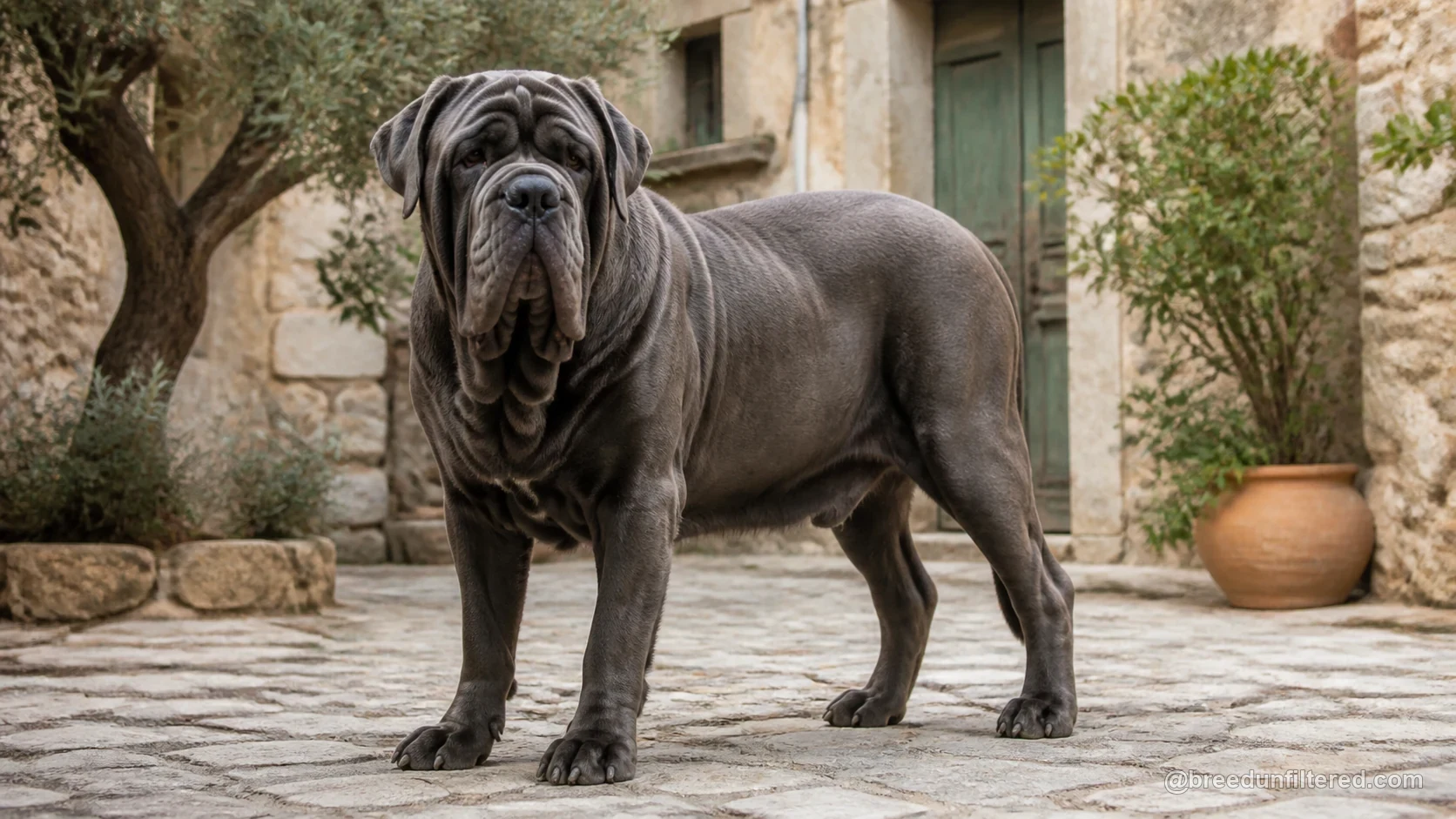
The Neapolitan Mastiff, known in its native Italy as the Mastino Napoletano, is a breed of ancient lineage and formidable presence. With its massive head, abundant wrinkles, and loose, heavy skin, it is a living monument to the mastiff type that once guarded Roman estates. This is not a dog for everyone; it is a breed that demands experienced handling, early socialisation, and a commitment to responsible ownership. Prospective owners must look beyond the striking appearance and understand the depth of care, training, and responsibility that comes with sharing a life with such a powerful guardian.
This article provides a balanced overview of the Neapolitan Mastiff, covering its origins, temperament, exercise needs, training requirements, and the practicalities of daily care. We aim to give you a realistic picture of what it means to live with this breed, acknowledging both its noble qualities and the challenges it can present. Whether you are considering adding a Neapolitan Mastiff to your family or simply wish to learn more, this guide offers evidence-conscious information to help you make an informed decision.
Origin and Purpose
The Neapolitan Mastiff's roots trace back to the molosser dogs of ancient Rome, where they were used as war dogs and guardians of property. The breed as we know it today was developed in the Campania region of southern Italy, particularly around Naples, from which it takes its name. The modern standard was established in the mid-20th century, with the first official standard published in 1949. The Fédération Cynologique Internationale (FCI) recognises the breed under the name Mastino Napoletano, standard number 197, within Group 2 (Pinscher and Schnauzer – Molossoid and Swiss Mountain and Cattledogs).
Historically, the Neapolitan Mastiff was prized for its guarding abilities, protecting homes, livestock, and property. Its imposing size, deep bark, and protective instincts made it an effective deterrent. Today, while it is primarily a companion and family guardian, it retains these protective instincts. Understanding this heritage is crucial for prospective owners, as it influences the breed's temperament and behaviour. The breed's purpose has always been to guard, and this should be respected and managed through proper training and socialisation.
Temperament and Variation
The Neapolitan Mastiff is typically described as loyal, affectionate, and devoted to its family. It is often calm and docile indoors, but can be wary of strangers and protective of its home. Individual temperament varies, influenced by genetics, socialisation, and training. Some individuals may be more outgoing, while others are more reserved. It is essential to meet the parents and observe the puppy's behaviour when possible, as early temperament can be indicative of adult tendencies.
This breed is not typically aggressive without reason, but its guarding instincts are strong. It may be suspicious of unfamiliar people and animals, and its size alone can be intimidating. Early and ongoing socialisation is vital to help the dog distinguish between normal situations and genuine threats. Owners should be prepared to manage the dog's environment to prevent fear-based reactions. The Neapolitan Mastiff is not a breed for first-time owners; it requires a confident, experienced handler who can provide consistent leadership.
Exercise and Mental Work
Despite its large size, the Neapolitan Mastiff is not a highly energetic breed. It generally requires moderate exercise to maintain physical health and mental well-being. Daily walks and some free play in a securely fenced area are typically sufficient. However, it is important to avoid excessive exercise, especially in puppies, to protect their developing joints. The breed is prone to overheating due to its heavy build and short muzzle, so exercise should be planned during cooler parts of the day.
Mental stimulation is equally important. This intelligent breed benefits from puzzle toys, scent work, and basic obedience training that challenges its mind. Without adequate mental engagement, a Neapolitan Mastiff may become bored and develop undesirable behaviours. Training sessions should be short, positive, and consistent. The breed's independent streak means that owners must be patient and creative in keeping the dog engaged. A well-exercised and mentally stimulated Neapolitan Mastiff is more likely to be a calm and content companion.
Training and Socialisation
Training a Neapolitan Mastiff requires a firm but gentle approach. This breed responds best to positive reinforcement methods, such as treats, praise, and play, rather than harsh corrections. Early socialisation is crucial: expose the puppy to a variety of people, places, sounds, and other animals in a controlled, positive manner. This helps to build a confident, well-adjusted adult dog that can discriminate between normal and threatening situations.
Obedience training should begin early and be consistent. The Neapolitan Mastiff is intelligent but can be stubborn, so patience and persistence are key. It is important to establish clear boundaries and rules from the start. This breed is not suited to a timid or inconsistent owner. Professional training classes, especially for puppies, can be beneficial. However, it is essential to choose a trainer who understands the breed's temperament and uses positive, force-free methods. A well-trained Neapolitan Mastiff is a reliable and trustworthy guardian.
Family and Other Pets
The Neapolitan Mastiff is known for its deep bond with its family, often being particularly gentle and patient with children it has been raised with. However, due to its size and strength, supervision is essential when the dog is around young children. The breed may not be suitable for families with very young children who could be accidentally knocked over. It is also important to teach children how to interact respectfully with the dog, avoiding rough play or disturbing it while eating or sleeping.
When it comes to other pets, the Neapolitan Mastiff can be challenging. It may not get along with other dogs of the same sex, and its prey drive can be high, making it unsafe around small animals such as cats, rabbits, or rodents. Early socialisation can help, but there is no guarantee. Prospective owners with existing pets should carefully consider the breed's tendencies and be prepared to manage introductions and ongoing interactions. A securely fenced yard is essential to prevent the dog from roaming or chasing.
Grooming and Health
The Neapolitan Mastiff has a short, dense coat that is relatively easy to groom. Weekly brushing with a rubber curry brush or hound glove will help remove loose hair and keep the coat healthy. The breed is a moderate shedder, and more frequent brushing may be needed during seasonal shedding periods. The wrinkles on the face and body require special attention: they should be cleaned regularly and kept dry to prevent skin infections. Owners should check and clean the skin folds gently, especially after the dog eats or drinks.
Like many large breeds, the Neapolitan Mastiff is prone to certain health conditions, including hip and elbow dysplasia, bloat (gastric dilatation-volvulus), and eye problems such as entropion and ectropion. It is important to obtain a puppy from a responsible breeder who screens their breeding stock for these conditions. Regular veterinary check-ups, a balanced diet, and appropriate exercise can help maintain overall health. The breed's lifespan is relatively short, typically around 7 to 9 years, so owners should be prepared for the emotional and financial responsibilities of caring for a senior dog.
Costs and Responsibility
Owning a Neapolitan Mastiff is a significant financial commitment. The initial cost of a puppy from a reputable breeder can be high, and ongoing expenses include high-quality food, routine veterinary care, vaccinations, and preventive medications. The breed's size means that food and medication costs are higher than average. Additionally, potential health issues may require expensive treatments or surgery. Prospective owners should have a budget for unexpected veterinary expenses and consider pet insurance.
Beyond finances, the Neapolitan Mastiff requires a substantial commitment of time and energy. It needs daily exercise, mental stimulation, and consistent training. Its guarding instincts mean that it must be properly managed in public and at home. This breed is not suitable for a sedentary lifestyle or a household that is frequently away. Responsible ownership also involves adhering to local laws and regulations, which may include leash laws, licensing, and liability insurance. Prospective owners should thoroughly research the breed and honestly assess their ability to meet its needs before making a commitment.
Clear answers
FREQUENTLY ASKED QUESTIONS
Is the Neapolitan Mastiff a good family dog?
The Neapolitan Mastiff can be a devoted and protective family companion, often forming strong bonds with its household. However, its large size and guarding instincts require careful management, especially around young children. Early socialisation and training are essential to ensure it behaves appropriately. Families with very young children should exercise caution, as the dog may accidentally knock them over. It is not a breed for first-time owners or those unable to provide consistent leadership.
How much exercise does a Neapolitan Mastiff need?
The Neapolitan Mastiff is a relatively low-energy breed, but it still requires daily exercise to stay healthy and content. A moderate walk of 30 to 45 minutes, along with some free play in a securely fenced area, is typically sufficient. It is important to avoid strenuous exercise, especially in hot weather, due to its heavy build and short muzzle. Mental stimulation, such as puzzle toys and training sessions, is also important to prevent boredom.
Are Neapolitan Mastiffs aggressive?
Neapolitan Mastiffs are not inherently aggressive, but they have strong guarding instincts and can be wary of strangers. With proper socialisation and training, they can learn to distinguish between normal and threatening situations. However, their protective nature means they may react defensively if they perceive a threat to their family or property. It is crucial for owners to provide early and ongoing socialisation and to manage the dog's environment to prevent fear-based aggression.
What are common health problems in Neapolitan Mastiffs?
Like many large breeds, Neapolitan Mastiffs are prone to certain health conditions, including hip and elbow dysplasia, bloat (gastric dilatation-volvulus), and eye problems such as entropion and ectropion. They may also be susceptible to skin infections in their wrinkles. Responsible breeders screen their breeding stock for these issues. Regular veterinary check-ups, a balanced diet, and appropriate exercise can help mitigate some risks, but owners should be prepared for potential health expenses.
Is the Neapolitan Mastiff suitable for apartment living?
The Neapolitan Mastiff is generally not well-suited to apartment living due to its large size and guarding instincts. It requires space to move comfortably and a securely fenced yard for exercise and play. In an apartment, the dog may become frustrated and develop behavioural issues. Additionally, its loud bark and imposing presence may not be appropriate for close-quarters living. A house with a yard is typically more suitable for this breed.
Sources and further reading
Scores describe typical breed tendencies from 1 to 10. They are not a quality ranking or a prediction for an individual dog.
Size and presence10/10
CompactVery large
Physical strength10/10
LightExceptional
Energy level4/10
LowRelentless
Exercise demand4/10
ModestVery demanding
Mental work needed7/10
ModerateDaily job
Trainability6/10
ChallengingExceptional
Everyday manageability3/10
SpecialistStraightforward
First-time owner fit3/10
Poor fitGood fit
Family-life fit6/10
LimitedExcellent
Dog sociability4/10
SelectiveVery social
Prey drive6/10
LowVery high
Guarding tendency8/10
MinimalSerious
Independence7/10
Handler-focusedSelf-directed
Grooming demand5/10
LightHeavy
Apartment fit1/10
Poor fitGood fit