The honest version
WHAT THIS DOG NEEDS
Intelligent and adaptable, but it still needs predictable structure, thoughtful breeding and mental work.
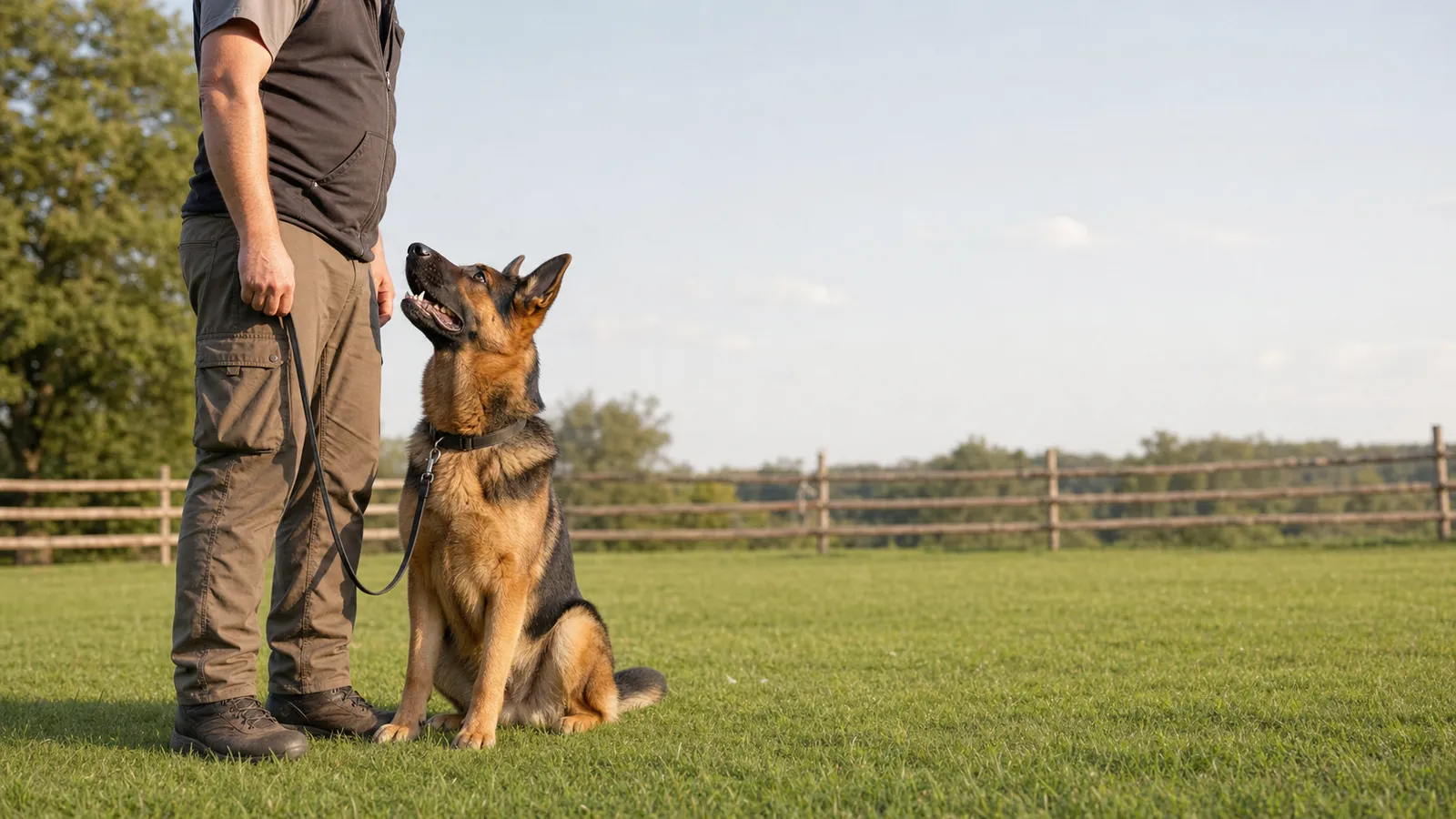
The honest version
Intelligent and adaptable, but it still needs predictable structure, thoughtful breeding and mental work.
Watch the episode
Complete breed guide
The German Shepherd Dog is famous for versatility, intelligence, and partnership with people. It has served as a herder, military and police dog, guide, search dog, sport competitor, and family companion. Fame can obscure the practical reality: this is generally a large, active, observant dog that needs thoughtful breeding, patient training, social support, and a household prepared for shedding, strength, and substantial lifelong costs. A good German Shepherd is not produced by the breed name alone, and no working reputation guarantees stable behaviour or health.
Prospective owners should look beyond dramatic outlines, colour, titles, and claims about imported lines. Different breeding populations may emphasise work, sport, conformation, or companionship, and individuals vary even within one litter. The best match comes from honest discussion about energy, sociability, resilience, health history, and the actual environment in which the dog will live. Meeting mature relatives or spending time with fostered adults can reveal more than choosing a puppy from photographs.
The modern German Shepherd was developed in Germany around the end of the nineteenth century from regional herding dogs. The founding aim was a capable utility dog, selected for working ability, sound movement, intelligence, and cooperation rather than a narrowly decorative type. As livestock work changed, the breed's adaptability supported new roles in public service and civilian life. That history helps explain common traits such as close attention to the handler, environmental vigilance, willingness to learn, and the physical capacity for sustained activity.
Today the label covers a broad international population. Working, sport, show, and companion-focused lines can differ in structure, energy, arousal, sociability, and training priorities, while each dog remains an individual. A family does not need to provide police-style work, and attempting advanced protection exercises without skilled supervision creates avoidable risk. Appropriate purpose may instead come from tracking, scent searches, herding, obedience, hiking, assistance work, or useful household routines. The activity should suit the dog's temperament and body, reward control, and include recovery rather than valuing intensity alone.
German Shepherds are often described as loyal, courageous, and confident, but those words are aspirations, not promises. Many are deeply attached to familiar people and reserved with strangers. Some are socially easy; others are sensitive to movement, novelty, handling, dogs, or visitors. Alert barking, following family members, chasing, and defensive responses can become concerns when genetics, pain, stress, or learning push them beyond what the household can manage. A dog that appears quiet may be relaxed, inhibited, unwell, or still adjusting, so interpretation requires context.
Evaluate behaviour across time and settings. Ask breeders about the stability, recovery, sociability, and everyday lives of parents and close relatives, including dogs that were not bred. Ask rescues about handling, confinement, travel, resource guarding, noise, unfamiliar people, and other animals, while recognising that a new home can change behaviour. Sudden irritability, reluctance to move, or altered tolerance warrants veterinary assessment because discomfort can affect behaviour. Persistent fear, reactivity, or aggression calls for qualified, humane behaviour support, without guarantees that any method will produce a particular personality.
A healthy adult German Shepherd usually thrives on daily activity that combines movement and thinking. The amount must be individualised for age, fitness, body condition, health, surfaces, and climate. Brisk walks, free sniffing in safe areas, tracking, controlled play, swimming where appropriate, and varied skill sessions can form a balanced week. Puppies and adolescents need particular care because repetitive jumping, forced distance running, sharp turns, and slippery floors may overload a developing body. A veterinarian can advise on growth, body condition, and activity after illness or injury.
More exercise is not always the solution to restlessness. Constant high-speed fetching or frantic play can create a highly conditioned dog that struggles to settle and may increase repetitive strain. Mental work can include finding hidden objects, following scent trails, learning body-awareness exercises, practising cooperative grooming, or waiting calmly while family life happens. Sleep and low-stimulation time are part of welfare, not signs of neglect. Teach relaxation in a comfortable place and increase challenge gradually, watching for stiffness, overheating, frustration, avoidance, or loss of responsiveness.
Training should prioritise behaviours that make a large dog safe and easy to handle: recall, loose-lead walking, waiting at thresholds, releasing objects, settling, accepting veterinary procedures, and wearing a basket muzzle after positive introduction. German Shepherds often notice tiny patterns and handler tension. Clear criteria, short sessions, suitable rewards, and prevention of unwanted rehearsal help them succeed. Physical punishment and intimidation can damage trust or intensify defensive behaviour, while inconsistent rules create confusion. Reward-based teaching can still include firm management through leads, gates, distance, and controlled access to valued activities.
Good socialisation is controlled exposure with safety and choice, not forced interaction. A puppy can learn to observe children, mobility aids, traffic, livestock, people in varied clothing, grooming tools, and calm dogs without greeting everyone. Protect the dog from overwhelming encounters and pair novelty with food, play, distance, or retreat. Development continues through adolescence, when confidence and impulse control may fluctuate. A qualified trainer should be transparent about methods and credentials, adapt to the individual, and refer complex fear, aggression, or compulsive behaviour to a veterinarian or suitably credentialed behaviour professional.
German Shepherds can be affectionate family dogs when their needs and temperament fit the household. Their size, speed, vocal alerts, and tendency to monitor activity require planning around children and visitors. Adults should supervise all dog-child contact and provide gates, separate rooms, and a protected resting area. Children should never climb on the dog, interrupt sleep or meals, or handle conflicts. The family also needs an agreed visitor routine so the dog is not repeatedly placed in a doorway while excited or worried. Neutral, calm management is more useful than expecting the dog to greet everyone.
Compatibility with cats and dogs varies. Some individuals live peacefully in multi-pet homes, while others chase small animals, guard resources, or become selective with dogs as they mature. Introductions should proceed through scent exchange, distance, barriers, parallel movement, and brief supervised access. Separate feeding and high-value items until patterns are well understood, and preserve escape routes for cats. Previous peaceful behaviour is useful evidence but not a lifelong guarantee. If tension appears, prevent further rehearsal and seek skilled assessment before trying repeated close encounters.
The breed's double coat sheds throughout the year and commonly releases much more undercoat seasonally. Brushing several times a week, increasing during heavy sheds, helps manage loose hair and allows regular checks of skin, feet, ears, and body condition. Nails need routine trimming or grinding, teeth need veterinarian-approved home care, and bathing should use dog-safe products when needed rather than stripping the coat unnecessarily. Long-coated individuals require more attention behind ears, around trousers, and anywhere mats form. Cooperative handling practice is especially valuable before an adult dog becomes strong.
German Shepherd health deserves careful research. Breed-club programmes commonly call for hip and elbow evaluation and may include temperament, cardiac, thyroid, eye, or genetic information depending on the scheme. Prospective owners should verify results in public databases and ask about digestive disease, allergies, epilepsy, cancer, degenerative conditions, mobility, longevity, and causes of death in the family. A DNA result usually addresses one variant or risk, not total health or future outcome. Maintain lean body condition, discuss preventive care and bloat awareness with a veterinarian, and investigate limping, weakness, recurrent digestive signs, or behavioural changes promptly rather than diagnosing from breed forums.
A large dog's routine expenses accumulate quickly. Budget for food, annual examinations, locally appropriate vaccination and parasite prevention, training, grooming tools, secure leads and harnesses, a strong travel restraint, licensing, boarding or pet care, insurance where available, and emergency treatment. Joint imaging, rehabilitation, chronic medication, specialist referrals, or dietary trials can be expensive. Housing and insurers may impose size or breed restrictions in some regions. Prospective owners should obtain local quotes and maintain an emergency plan rather than judging affordability from the acquisition price.
Choose a breeder or rescue that values health, sound temperament, honest matching, and lifetime responsibility. Ethical breeders show verifiable test results, explain weaknesses as readily as achievements, raise puppies with appropriate experiences, avoid producing more dogs than they can support, and accept returns when necessary. Responsible rescues disclose known history and uncertainty, use foster evidence when possible, and avoid pressure. Owners must provide identification, secure containment, humane transport, legal compliance, daily companionship, and care through old age. Postponing the decision or choosing an assessed adult can be the most responsible outcome when schedule, housing, or finances are uncertain.
Clear answers
It can be for a well-prepared person with time, secure housing, and access to good instruction, but size, shedding, health risk, vigilance, and adolescent behaviour create a demanding combination. An assessed adult or a less intense breed may be a better first match.
No single duration suits every dog. Most healthy adults benefit from substantial daily movement, sniffing, training, and calm recovery, adjusted for age, fitness, weather, and medical status. Puppies need gradual, varied activity rather than repetitive impact or forced distance.
Many do, but success depends on individual temperament, teaching, management, and active adult supervision. Their size and sensitivity to fast movement require barriers and clear routines. Children should not manage the dog, interrupt rest, or be left alone with any dog.
Owners remain responsible for daily practice, but skilled guidance is often a wise investment, especially during puppyhood and adolescence. Choose a qualified reward-based trainer who explains methods clearly and collaborates with veterinarians or behaviour specialists when fear, pain, or aggression is involved.
Ask for independently verifiable results that meet the relevant national breed-club recommendations, commonly including hips and elbows, plus family health and longevity information. A veterinary check or commercial DNA panel alone is not equivalent to a complete breeding-health programme.
Scores describe typical breed tendencies from 1 to 10. They are not a quality ranking or a prediction for an individual dog.