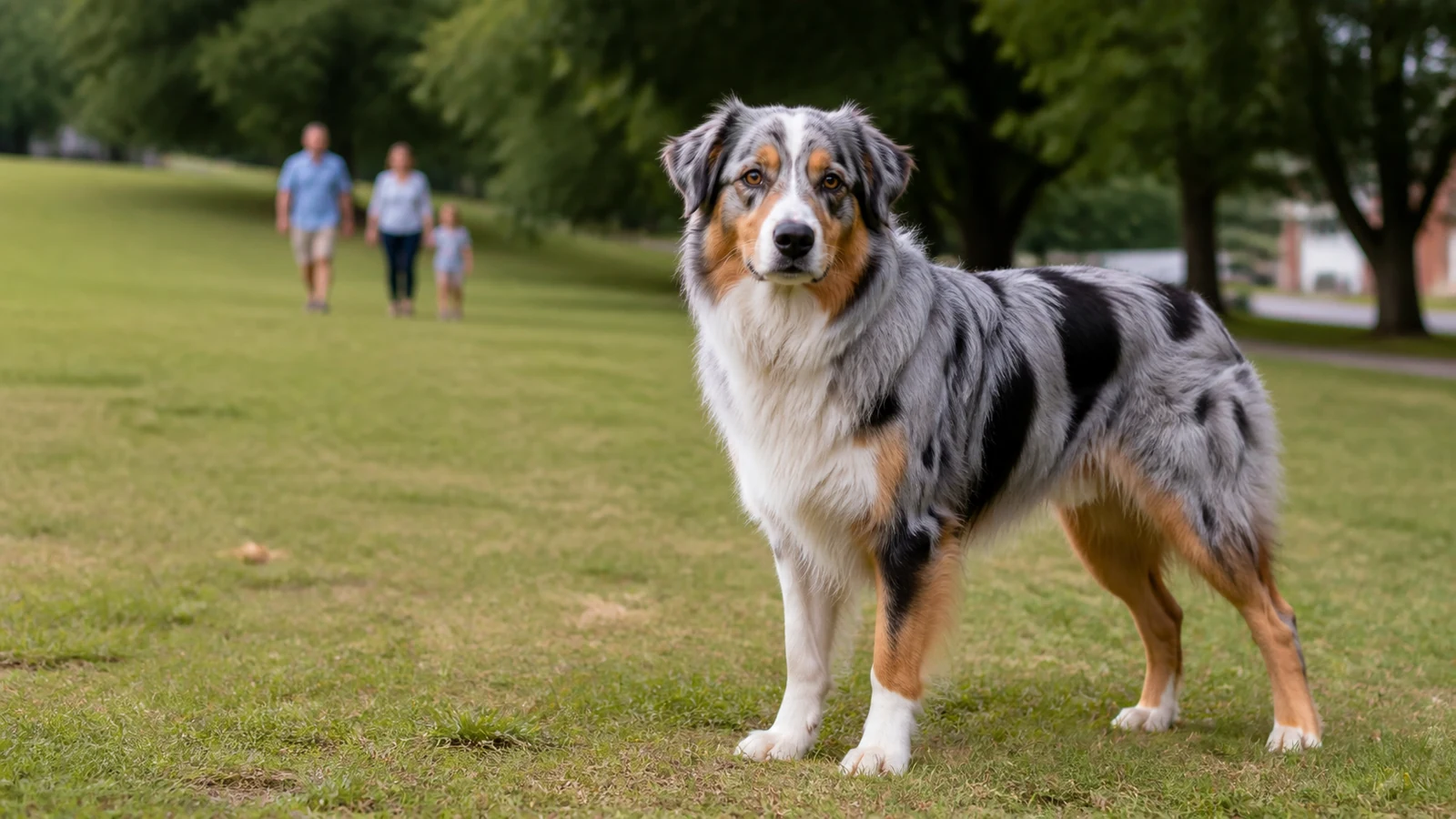
Complete breed guide
Australian Shepherd OWNERSHIP GUIDE
The Australian Shepherd, despite its name, is a breed developed in the United States, with roots tracing back to Basque shepherds who brought their dogs to America in the 19th century. These dogs were prized for their herding ability and versatility, and they became particularly associated with the American West. Today, the Australian Shepherd is recognized by the FCI under standard number 342, and it is known for its intelligence, agility, and strong work ethic.
Prospective owners should understand that the Australian Shepherd is a high-energy, intelligent breed that thrives on activity and mental challenges. They are not a breed for a sedentary lifestyle; they require ample exercise and engagement to be happy and well-adjusted. This guide aims to provide a balanced overview of the breed's characteristics, care requirements, and potential challenges, helping you decide if this remarkable dog is the right fit for your home.
Origin and Purpose
The Australian Shepherd's history is a fascinating tale of migration and adaptation. Despite its name, the breed was refined in the United States, particularly in the western states, where it became an indispensable partner to ranchers and shepherds. The ancestors of the Australian Shepherd likely came from the Basque region of Europe, and they were brought to America in the 1800s, possibly via Australia, which may explain the breed's name. These dogs were bred for their herding instincts, intelligence, and endurance, making them excellent workers in challenging terrain.
The breed's purpose has always been to work, primarily herding livestock such as sheep and cattle. This heritage is deeply ingrained in the Australian Shepherd's temperament and behavior. They are known for their strong herding instincts, which can manifest in nipping at heels or circling family members. Understanding this background is crucial for prospective owners, as it explains the breed's high energy levels, need for mental stimulation, and strong desire to be involved in family activities. The FCI recognizes the breed under the name 'Australian Shepherd' with standard number 342, and it is classified in Group 1, which includes sheepdogs and cattle dogs.
Temperament and Variation
The Australian Shepherd is renowned for its intelligence, loyalty, and versatility. They are often described as 'people-oriented' dogs that form strong bonds with their families. They are typically alert and enthusiastic, with a keen desire to please their owners. However, it is important to note that individual temperament can vary widely based on genetics, socialization, and training. Some Australian Shepherds may be more reserved with strangers, while others are outgoing. Early and ongoing socialization is essential to help them develop into well-rounded adults.
There is also variation within the breed in terms of coat color and pattern, including blue merle, red merle, black, and red, often with white and copper markings. These variations are purely cosmetic and do not affect temperament or health. Prospective owners should be aware that the breed's herding instincts can lead to behaviors such as chasing moving objects, including cars or bicycles, so a secure environment and proper training are necessary. Overall, the Australian Shepherd is a dynamic and engaging companion for those who can meet its needs.
Exercise and Mental Work
The Australian Shepherd is a high-energy breed that requires substantial daily exercise to maintain physical and mental well-being. This is not a dog that will be content with a short walk around the block. They thrive on activities that challenge them both physically and mentally, such as running, hiking, agility, obedience, and herding trials. Without adequate exercise, they may become bored and develop destructive behaviors like chewing or excessive barking. Prospective owners should be prepared to dedicate at least one to two hours of vigorous activity each day, though individual needs vary.
Mental stimulation is equally important for this intelligent breed. Australian Shepherds excel at problem-solving and enjoy tasks that engage their minds. Puzzle toys, training sessions, and interactive games can help satisfy their need for mental work. They are also known for their ability to learn complex commands and tricks, making them a joy to train for those who enjoy the process. However, this intelligence also means they can be manipulative if not given clear boundaries. A consistent routine and plenty of positive reinforcement will help channel their energy productively.
Training and Socialisation
Training an Australian Shepherd is typically a rewarding experience due to their high intelligence and eagerness to please. They respond best to positive reinforcement methods, such as treats, praise, and play. Harsh training techniques can be counterproductive and damage the trust between dog and owner. Early training should focus on basic obedience, impulse control, and recall, as these are essential for safety, especially given their herding instincts. Consistency and patience are key, as these dogs can be sensitive to changes in tone or routine.
Socialisation is equally crucial for Australian Shepherds. Exposing them to a variety of people, animals, environments, and situations from a young age helps prevent shyness or aggression. Puppy classes and regular outings can provide valuable experiences. While they are generally good with children and other pets when raised together, their herding instinct may lead them to try to herd small children or animals, so supervision and training are necessary. A well-socialised Australian Shepherd is typically confident and adaptable, making them excellent companions in various settings.
Family and Pets
Australian Shepherds can make wonderful family dogs for active households. They are known for their loyalty and affection towards their family members, and they often form particularly strong bonds with children. They are playful and protective, and they enjoy being involved in family activities. However, their herding instincts can sometimes lead them to nip at heels or try to round up children, which can be startling for young kids. Teaching children how to interact respectfully with dogs and providing proper training can mitigate these behaviors.
When it comes to other pets, Australian Shepherds can coexist peacefully with other dogs and cats, especially if they are raised together. However, their herding drive may cause them to chase smaller animals, so introductions should be managed carefully. They may also be territorial and protective of their home and family, which can be an asset but also requires proper socialisation to prevent over-guarding. Overall, with the right upbringing, Australian Shepherds can be excellent companions for families that can provide the time and energy they need.
Grooming and Health
The Australian Shepherd has a double coat that sheds moderately year-round and heavily during seasonal changes. Regular brushing, at least two to three times a week, is necessary to manage loose hair and prevent matting. During shedding season, daily brushing may be required. They do not require frequent baths, but regular nail trimming, ear cleaning, and dental care are important for overall health. Their coat is relatively low-maintenance in terms of styling, but prospective owners should be prepared for a significant amount of hair in the home.
Like many purebred dogs, Australian Shepherds are prone to certain health conditions, including hip dysplasia, elbow dysplasia, and various eye disorders such as cataracts and progressive retinal atrophy. They may also be affected by epilepsy and certain genetic conditions like the MDR1 gene mutation, which affects sensitivity to certain medications. Responsible breeders screen their breeding stock for these conditions, and prospective owners should ask for health clearances. Regular veterinary check-ups and a healthy diet can help maintain their well-being, but it is important to be aware of potential health issues and associated costs.
Costs and Responsibility
Owning an Australian Shepherd involves significant financial and time commitments. The initial cost of purchasing a puppy from a reputable breeder can range from several hundred to over a thousand dollars, depending on location and bloodline. Additionally, there are ongoing costs for food, veterinary care, grooming supplies, and training classes. Emergency medical expenses can be substantial, so pet insurance is often recommended. Prospective owners should also consider the cost of preventive care, such as vaccinations and flea/tick prevention.
Beyond finances, Australian Shepherds require a considerable investment of time and energy. They are not a breed that can be left alone for long periods; they thrive on human interaction and can become anxious or destructive if neglected. Prospective owners must be committed to providing daily exercise, mental stimulation, and training throughout the dog's life, which can be 12 to 15 years. It is also important to consider the responsibility of owning a dog that may have strong herding instincts, requiring careful management in public spaces. For those who can meet these demands, the Australian Shepherd is a rewarding and loyal companion.
Clear answers
FREQUENTLY ASKED QUESTIONS
Are Australian Shepherds good with children?
Australian Shepherds can be excellent with children, especially when raised together. They are loyal and protective, and they often enjoy playing and being active with kids. However, their herding instincts may lead them to nip at heels or try to herd young children, so supervision and training are important. Teaching children how to interact respectfully with dogs and providing proper socialization can help ensure a positive relationship.
How much exercise does an Australian Shepherd need?
Australian Shepherds are a high-energy breed that requires substantial daily exercise to stay happy and healthy. This typically includes at least one to two hours of vigorous activity, such as running, hiking, or playing fetch. They also need mental stimulation through training, puzzle toys, or dog sports. Without enough exercise, they may become bored and develop behavioral issues like excessive barking or chewing.
Do Australian Shepherds shed a lot?
Yes, Australian Shepherds shed moderately throughout the year and heavily during seasonal changes, typically in spring and fall. Their double coat requires regular brushing, at least two to three times a week, to manage loose hair and prevent matting. During shedding season, daily brushing may be necessary. Prospective owners should be prepared for a significant amount of hair in the home.
Are Australian Shepherds easy to train?
Australian Shepherds are highly intelligent and eager to please, which makes them generally easy to train. They respond best to positive reinforcement methods, such as treats and praise. However, they can be sensitive and may become bored with repetitive training, so variety and mental challenges are important. Early socialization and consistent training are essential to channel their energy and intelligence appropriately.
What health issues are common in Australian Shepherds?
Australian Shepherds are prone to certain health conditions, including hip dysplasia, elbow dysplasia, and eye disorders such as cataracts and progressive retinal atrophy. They may also be affected by epilepsy and the MDR1 gene mutation, which affects sensitivity to certain medications. Responsible breeders screen for these conditions, and regular veterinary check-ups are important. Prospective owners should be aware of potential health issues and associated costs.
Sources and further reading
Scores describe typical breed tendencies from 1 to 10. They are not a quality ranking or a prediction for an individual dog.
Size and presence6/10
CompactVery large
Physical strength5/10
LightExceptional
Energy level9/10
LowRelentless
Exercise demand10/10
ModestVery demanding
Mental work needed10/10
ModerateDaily job
Trainability9/10
ChallengingExceptional
Everyday manageability4/10
SpecialistStraightforward
First-time owner fit4/10
Poor fitGood fit
Family-life fit7/10
LimitedExcellent
Dog sociability6/10
SelectiveVery social
Prey drive7/10
LowVery high
Guarding tendency7/10
MinimalSerious
Independence5/10
Handler-focusedSelf-directed
Grooming demand8/10
LightHeavy
Apartment fit4/10
Poor fitGood fit