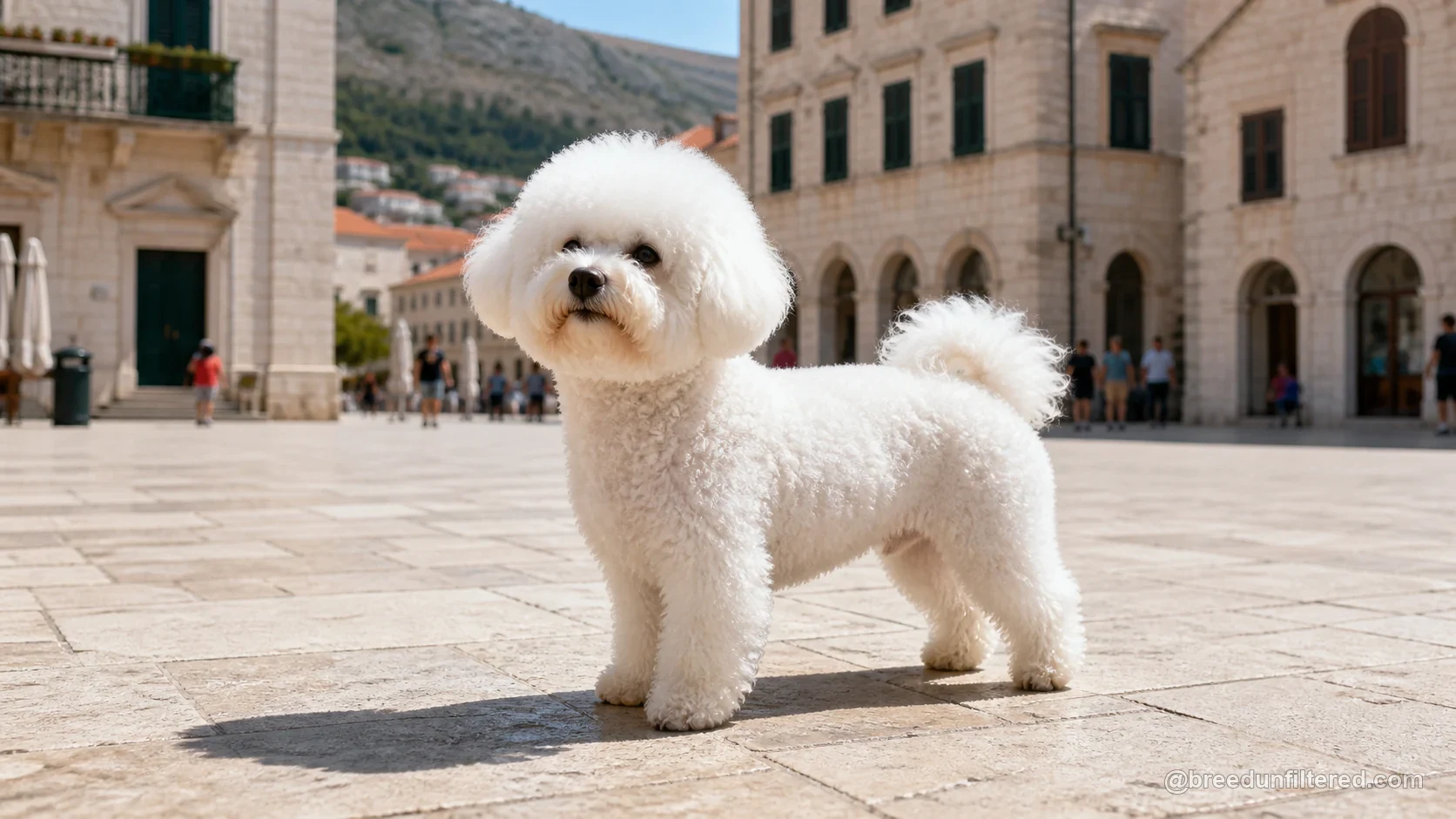
Complete breed guide
Bichon Frise OWNERSHIP GUIDE
The Bichon Frise is a small, cheerful companion dog known for its white, fluffy coat and affectionate nature. Originating from the Mediterranean region, this breed has a long history as a beloved pet and circus performer. With its playful and sociable personality, the Bichon Frise often thrives in family settings and adapts well to various living environments, including apartments. However, prospective owners should be prepared for the breed's significant grooming requirements and its need for regular human interaction.
This guide aims to provide a balanced overview of the Bichon Frise, covering its origins, temperament, exercise needs, training, health considerations, and the responsibilities of ownership. By understanding the breed's characteristics and potential challenges, you can make an informed decision about whether this charming dog is the right fit for your lifestyle. Remember that individual dogs vary, and early socialization and consistent care are key to a happy relationship.
Origin and Purpose
The Bichon Frise is believed to have descended from the Barbet water spaniel and was developed in the Mediterranean region, particularly in France and Spain. Historical records suggest that the breed was popular among French royalty during the Renaissance and later became a favorite of commoners and circus performers. The name 'Bichon' is derived from the Old French word 'bichonner,' meaning to pamper, reflecting the breed's role as a cherished companion.
The Bichon Frise was officially recognized by the Fédération Cynologique Internationale (FCI) in 1933, with the current standard (number 215) placing it in Group 9, Companion and Toy Dogs. The breed's primary purpose has always been companionship, and its cheerful disposition and hypoallergenic coat have made it a popular choice for families and individuals seeking a small, affectionate pet. Today, the Bichon Frise remains a beloved companion, often participating in dog sports and therapy work.
Temperament and Variation
The Bichon Frise is generally known for its cheerful, playful, and affectionate temperament. These dogs often enjoy being the center of attention and form strong bonds with their owners. They are typically sociable with strangers and other animals, though early socialization is important to ensure they develop into well-rounded adults. While individual personalities vary, many Bichons are described as intelligent and eager to please, which can make them responsive to training.
There is some variation within the breed, as some Bichons may be more reserved or independent than others. Factors such as genetics, early experiences, and training play a significant role in shaping a dog's behavior. Prospective owners should meet the parents of a puppy if possible and work with reputable breeders who prioritize temperament. It is also essential to provide consistent, positive reinforcement training to bring out the best in this breed.
Exercise and Mental Work
The Bichon Frise has moderate exercise needs. Daily walks and playtime are usually sufficient to keep them healthy and happy. They enjoy interactive games like fetch and can excel in dog sports such as agility and obedience. While they are not high-energy dogs, they do require regular physical activity to prevent obesity, which can be a concern in small breeds. A fenced yard is not essential, but supervised outdoor time is beneficial.
Mental stimulation is equally important for this intelligent breed. Puzzle toys, training sessions, and scent games can help keep their minds engaged and prevent boredom-related behaviors like excessive barking or chewing. Bichons are often eager to learn and enjoy participating in activities that involve their owners. Providing a variety of enrichment activities can contribute to a well-balanced and contented dog.
Training and Socialisation
Training a Bichon Frise is generally a positive experience due to their intelligence and desire to please. They respond well to positive reinforcement techniques such as treats, praise, and play. Harsh methods are not recommended and can damage the trust between dog and owner. Consistency and patience are key, as some Bichons may have a stubborn streak. Early puppy classes can provide a solid foundation for obedience and socialization.
Socialisation is crucial for Bichon Frise puppies. Exposing them to a variety of people, environments, and other animals during their first few months helps them grow into confident adults. Well-socialized Bichons are typically friendly and adaptable, but those lacking socialisation may become timid or overly reactive. Regular, positive experiences with different stimuli can reduce the likelihood of fear-based behaviors and promote a well-mannered companion.
Family and Other Pets
The Bichon Frise is often an excellent choice for families, including those with children. They are generally gentle and playful, though supervision is recommended when interacting with very young children to prevent accidental injury. Their small size makes them more vulnerable to rough handling, so teaching children how to properly interact with dogs is essential. Bichons typically thrive on attention and may not do well if left alone for long periods.
With proper introduction, Bichons usually get along well with other dogs and even cats. Their sociable nature often makes them adaptable to multi-pet households. However, as with any breed, individual temperament varies, and gradual, controlled introductions are advisable. Early socialisation with other animals can help ensure peaceful coexistence. Bichons may also exhibit some jealousy if they feel their owner's attention is divided, so fair and consistent attention is important.
Grooming and Health
The Bichon Frise has a double coat consisting of a soft, dense undercoat and a curly outer coat. This coat is considered hypoallergenic, but it requires regular maintenance. Daily brushing is recommended to prevent mats and tangles, and professional grooming every four to six weeks is often necessary to keep the coat in good condition. Regular ear cleaning, nail trimming, and dental care are also important aspects of grooming.
Like many purebred dogs, Bichons may be prone to certain health conditions, including allergies, patellar luxation, and eye issues such as cataracts. Responsible breeders screen for these conditions, and prospective owners should ask about health clearances. Regular veterinary check-ups and a balanced diet can help maintain overall health. While the breed has a relatively long lifespan, being aware of potential health concerns can help you provide the best care.
Costs and Responsibility
Owning a Bichon Frise involves financial and time commitments. Initial costs include the purchase price from a reputable breeder, which can vary significantly, as well as supplies such as a crate, bedding, and food. Ongoing expenses include high-quality dog food, routine veterinary care, grooming services, and pet insurance. Grooming costs can be substantial due to the breed's coat requirements, so it is wise to budget accordingly.
Beyond finances, owning a Bichon Frise requires a significant investment of time and attention. These dogs are social and do not thrive when left alone for extended periods. They need daily exercise, mental stimulation, and grooming. Prospective owners should consider their lifestyle and ability to meet these needs. Adopting from a rescue or shelter is also an option, and many Bichon-specific rescues exist. Responsible ownership involves a lifelong commitment to the dog's well-being.
Clear answers
FREQUENTLY ASKED QUESTIONS
Are Bichon Frise dogs hypoallergenic?
Bichon Frise dogs are often described as hypoallergenic because they have a curly, low-shedding coat that produces less dander. However, no dog is completely hypoallergenic, and individual reactions vary. Regular grooming and cleaning can help minimize allergens, but it is important to spend time with the breed before committing if you have allergies.
How much exercise does a Bichon Frise need?
Bichon Frise dogs have moderate exercise needs. A daily walk of about 30 minutes, along with playtime, is generally sufficient. They enjoy interactive games and can adapt to their owner's activity level. Mental stimulation is also important to keep them engaged and prevent boredom.
Are Bichon Frise good with children?
Bichon Frise dogs can be good with children, especially when raised with them. They are playful and affectionate, but their small size makes them vulnerable to rough handling. Supervision and teaching children how to interact gently are essential. Early socialisation helps them become comfortable around kids.
How often should a Bichon Frise be groomed?
Bichon Frise dogs require daily brushing to prevent mats and tangles. Professional grooming every four to six weeks is typically recommended to maintain their coat's appearance and health. Regular ear cleaning, nail trimming, and dental care are also part of the grooming routine.
Do Bichon Frise dogs bark a lot?
Bichon Frise dogs are known to be alert and may bark to announce visitors or unusual sounds. They are not typically excessive barkers, but they can develop the habit if not properly trained. Consistent training and mental stimulation can help manage barking behavior.
Sources and further reading
Scores describe typical breed tendencies from 1 to 10. They are not a quality ranking or a prediction for an individual dog.
Size and presence3/10
CompactVery large
Physical strength3/10
LightExceptional
Energy level6/10
LowRelentless
Exercise demand5/10
ModestVery demanding
Mental work needed6/10
ModerateDaily job
Trainability6/10
ChallengingExceptional
Everyday manageability5/10
SpecialistStraightforward
First-time owner fit7/10
Poor fitGood fit
Family-life fit8/10
LimitedExcellent
Dog sociability7/10
SelectiveVery social
Prey drive4/10
LowVery high
Guarding tendency3/10
MinimalSerious
Independence7/10
Handler-focusedSelf-directed
Grooming demand9/10
LightHeavy
Apartment fit8/10
Poor fitGood fit